Tag Archives: Drought

RED MEAT SONNET

We’ve let the commentators have their say
as if they understand the price of beef.
We’ve let politicians have their day
pontificating plans that create grief
among both cowmen and folks in town
trying to overhaul how the market works
when demand is more and supply is down
due to drought and the rising costs that hurts
us all. We let them talk, let them repeat
to show what they don’t know when numbers shout
that we have more mouths to fill with red meat
with fewer cows and cowmen due to drought.
We pray for rain and to be left alone
with a little meat still left on the bone.

Beef

Lots of commentary on the cattle business lately with a focus on the price of beef. But relative to inflation, $20 will buy a cheeseburger, fries and a soda or a USDA Choice New York steak at Costco. What a deal!

Our 4-year drought (2012-2016) doesn’t seem that long ago when we had to cull some older bred cows for slaughter in order to feed the rest of our herd expensive hay. A good part of the reason why producing cow numbers are at a 75 year low. Though the media has its red meat theories, nobody mentions that the US population has more than doubled since 1951. This is simple to understand: supply and demand.

KEEPING SECRETS

How do they know, these old fat cows
that read a baggy sadness in my walk
among them checking irons as they pull

alfalfa stems apart to tongue green leaf
in the corral? The gates are set, waiting
for the truck to town. There is nothing

right about the moment, that they know—
little consolation in my voice, they eye me
suspiciously searching for details

in my muted gestures. If I told them
all I know of town, of auction rings
and rails, they would all revolt

for the brushy hills, lay fences down
to take their chances without water
through the summer—that I know.

-JCD (“Best of the Dry Years, 2012-2016”)

The three variables for the cattle business are weather, price and politics, any one which can reduce our once-a-year paycheck to a loss, but two or more can be an economic disaster—none of which have we, nor the government, any control over.

In the photo above, Robbin and I fed a few replacement heifers before the forecast Atmospheric River. The grass geminated last month has become short and spotty and we have to keep them in shape to cycle and breed when we turn the bulls out in two weeks—just part of the business.

As I write, it’s been raining overnight.

TANGIBLE FANTASY

When the rains come right
and knee-deep green feed hides
beneath Fiddleneck in the flats,

we forget the bare, baked slopes
cut by dusty cow trails plunging
to the murmur of the diesel truck

spilling alfalfa flakes the length
of undressed pastures—lost bawling
calves and slow thin cows.

So blessed to have disremembered
the lean dry times, we believe
the miracle is normal, that Hera

and her daughters will set-up camp
and stay a fruitful future for man
and beast, creeks in the canyons—

a tangible fantasy for the thriving
when the rains come right
to change our way of thinking.

Weather Change

After a brutal summer, we are enjoying a major change in temperature: a high of 87 yesterday and 55 this morning as storms hit the northwest and Canada.

As I’ve posted before, my father’s model for predicting the weather was based on a 30-day cycle beginning with noticeable changes in the month of August. If these changes were confirmed in September, he would count on rain on those days in October and/or November. My brother and I still rely to some degree on his model, but with the volatility of the weather in recent years, it’s anyone’s guess.

We’ve begun feeding as we wait for our first calves to arrive. We’ve moved our calving date back two weeks, from the first to the fifteenth, in response to the trend of high temperatures in early September. Not only is the heat hard on calving cows, but often there’s always a couple of first-calf heifers that leave their newborns in a hundred degree sun.

September also brings the catalogs for bull sales in California that offer a wide array of Genomic Enhanced Expected Progeny Data as well as links to videos of the bulls. I still rely on my eye, but it’s a far cry from the old days when I was starting out.

As the days get shorter, we still expect the temperatures to return to the century mark, but for the moment it’s delightful.

BODY BURNING DETAIL


                  Arms shrunk to seal flippers

                  Charred buttocks thrust skyward

                  They burned for five days.

                                    – Bill Jones (“The Body Burning Detail”)


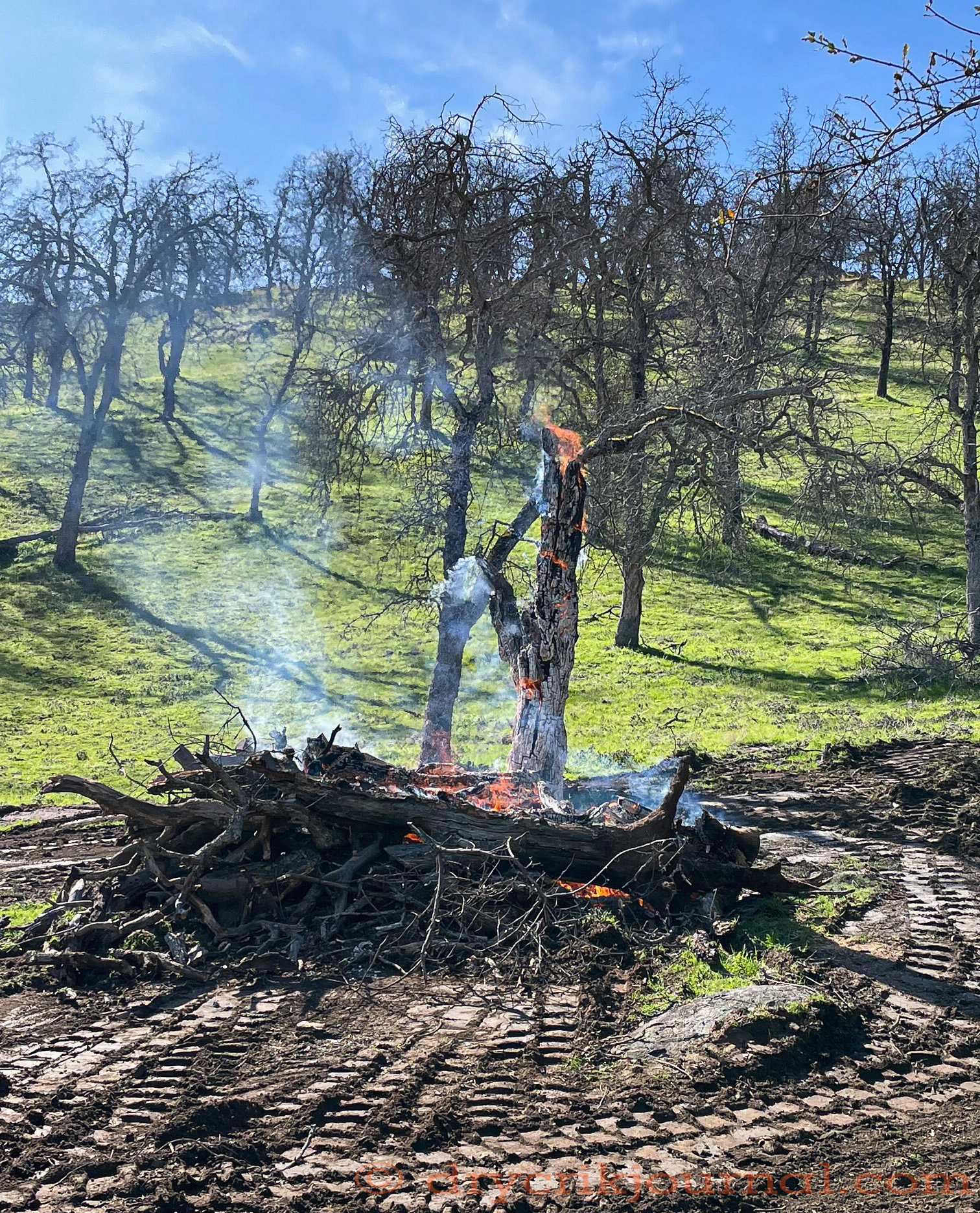
The tangle of limbs piled

like Bill’s poem from Nam,

oak skeletons and cadavers


turned hard and brittle

ache from drought,

rings parched of memory,


native history become ash

up in smoke. Perhaps my years

personify the tree, allow


empathy for these witnesses

to wild centuries before the West

was tamed, offering acorn meal


and shade for cattle,

ever-tuned to the telepathic

as they chew their cuds.


ANOTHER WEATHER FORECAST


With all the hoopla surrounding Climate Change and the approaching El Niño, suddenly the world is focused on the weather and a myriad of conflicting scientific observations and conclusions, heretofore ignored by most in the past.  But for those of us involved in grazing livestock and dependent on the bounties of Mother Nature, October is the beginning of our rainy season as we try to look ahead into our futures.


Historically, “The Old Farmer’s Almanac” has offered as accurate a forecast as any:


PACIFIC SOUTHWEST

November 2023

             4° below average

             Precipitation 5” (1” below average)

December 2023

            4° below average

            Precipitation 3” (4” below average)

January 2024

            3° below average

            Precipitation 5” (1” below average)

February 2024

            2° above average

            Precipitation 6.5” (2” above average)

March 2024

            3° above average

            Precipitation 1.5” (2.5” below average)

April 2024

            2° above average

            Precipitation 5” (1.5” above average)

May 2024

            2° above average

            Precipitation 0.5” (1.5” below average)

June 2024

            1° below average

            Precipitation 0.05” (1” below average)

For what it’s worth, the rain total comes to 27”, well above our 15” average.  We’ll just have to wait and see.

PERSEVERANCE


Called too soon, persistence rooted

where peaceful dreams beneath their leaves

spilled downhill at dawn—a slow awakening


like death in reverse, never thinking

of other ways to pass the time. Weathered

skeletons of young Blue Oaks cling


to where their acorns fell to rest

before the wet and stormy springs

kept a chance of an idyllic life alive.


Truth is: no right or wrong of it—

no philosophy to make fit

what we’ll not need to understand.


ACORNS


            One by one off trucks,

            hooked or boomed into the barn

            banked for the unknown.


Sweaty, sleeveless shirt, Dusty

Bohannon, until he died, unloaded

thousands of bob-tailed trucks


before the booms pitched bales inside,

before the squeezes stacked dumps up

for unknown winter times


like grounded vermin store

in tunneled chambers, or cackling birds

in fenceposts pecked with holes.


HIGH RISK FIRE AREA

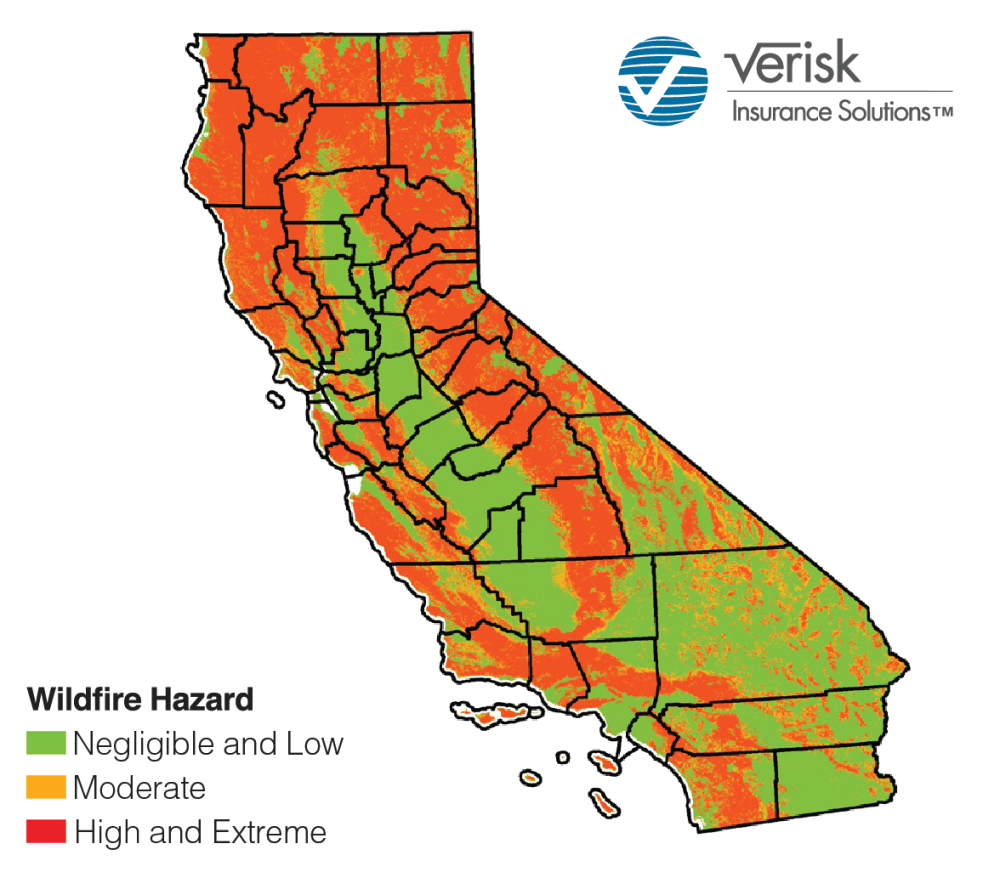
We are among the many home and ranch owners whose insurance policies have been canceled because they were located in the revised California’s High Risk Fire Area that includes almost half of the state.

Drought conditions in 2017, 2018, 2020 and 2021 combined with poorly maintained PGE transmission lines in Northern California charred over 8 million acres that left insurance companies holding the bag for losses and fire suppression costs. After a month-long process, we found one other carrier with less coverage at twice the cost.

A decade or so ago, Tulare County used to spray the weeds on the shoulders of Dry Creek Road to reduce fire danger from catalytic converters, hot brakes and dragging safety chains. Currently, 4-foot tall dry weeds encroach on the eroding asphalt adding to our risk of fire.

An independent onsite inspection was necessary to establish baseline conditions for home, barns, tack room and shop. I waited at the end of the driveway for the inspector from the Bay Area who had become lost.  Up the drive in a cloud of dust she parked in the shade of a redbud as I followed in the Kubota. As she stepped out of her 2017 Chevy Volt, it began to roll down the slope, as she grabbed the door trying both to hold it and to get back in, towards our 500 gallon fire-fighting water wagon to veer at the last moment into the skid steer. She could have been seriously injured.

Though the hybrid rocked the skid steer upon impact, it survived unscathed. After assessing the damages to her car, we tied the plastic together with duct tape and hay string and tested the brake and turn signal lights. Drivable and legal, she went about her business of asking questions and photographing the structures while I showed her our firebreaks, plumbing for filling fire trucks and water wagon from our wells, while explaining that I had even stopped one fire myself with the skid steer.  

Having made it home safely, she conducted the remainder of her inspection with questions over the phone and texts over the next two days.  I repeated many of the photographs she had taken because of the glare from her cell phone, plus additional pictures of electrical service boxes and their manufacturers with interiors of all structures. In order not to have to dedicate another afternoon for another inspection, I essentially accomplished the onsite portion of her inspection.

I recount this calamitous and ill-advised process from a 75 year-old’s perspective, dumbfounded by the inefficient technological progress in that span of years.  Frankly, she had no more business navigating and assessing rural California than we would be navigating and judging San Francisco, the ironic culture clash between us resounding loudly.

Weaning Steers


I think we’ve finally caught up and close to being on time with our ranch work since the last Atmospheric River at the end of March.  We got across the creek towards the end of April when flow was down to 90 cfs to see our cows while trying to get our fences up to hold them when we gathered and weaned.  Since the ARs, Dry Creek is spider-webbed with streams of sand in new high-water channels requiring some leveling with the skid steer to replace fencing and to approach the creek.  Meanwhile on this side of the road and creek, we’ve had a crew building fence to better accommodate the acreage changes since Robbin and I have scaled down our activities.


But on time, our first bunch of calves will be weaned and ready for Visalia Livestock Market’s “Off the Grass Sale” on Wednesday, May 17th.  They are 7-weight Vintage-sired steers.  The market has been strong, though slightly weaker  lately.  With our cow numbers down due to acreage changes and past years of drought, we will need whatever extra money the market will offer us.


After seven days a week for nearly two months, it’s a relief to feel caught up.