Tag Archives: coyote

EQUINOX 2014

IMG_3871


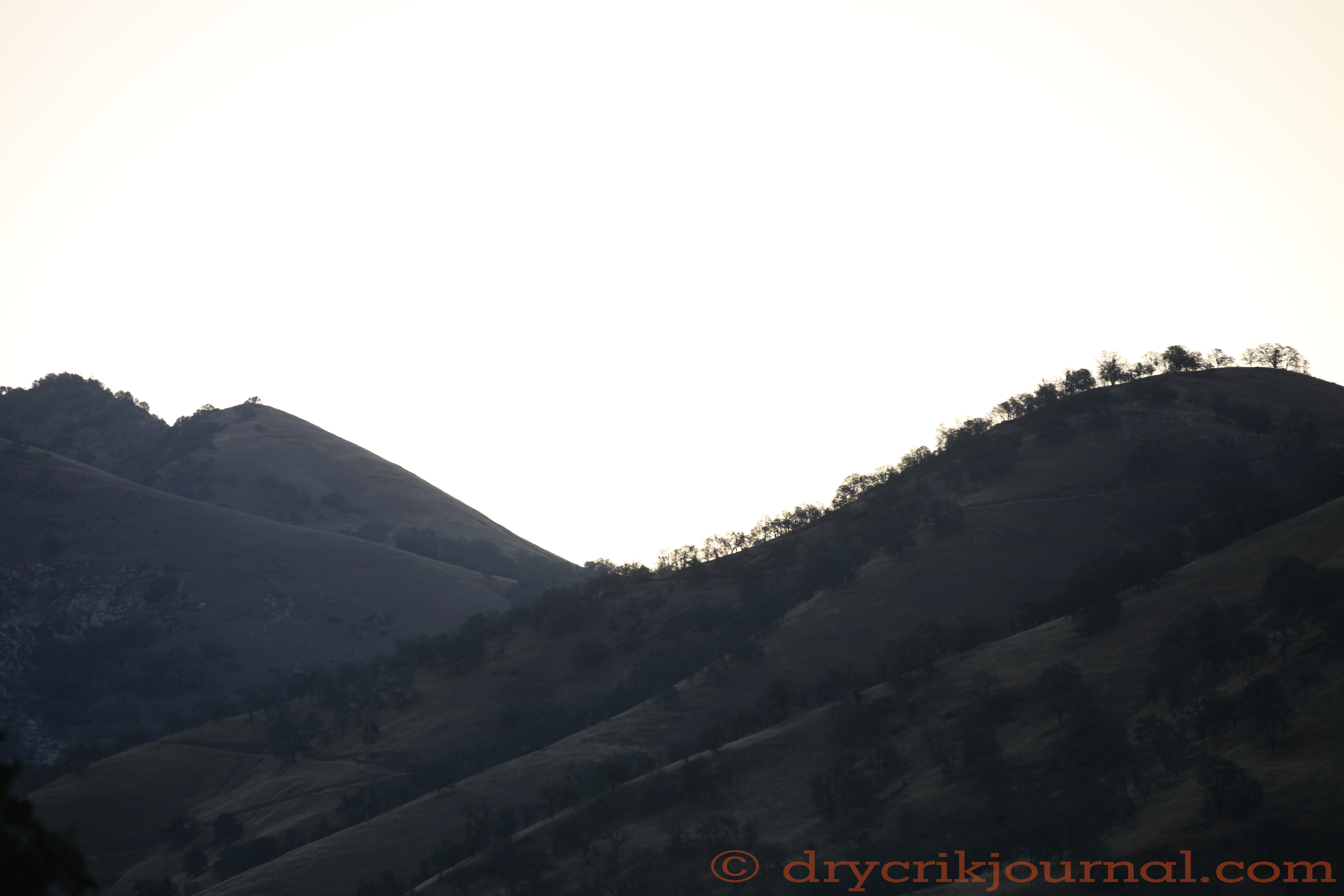
The air smells damp at first light
beyond the jagged silhouette of ridges
that frame my mind—no straight lines,
no ‘only’ connections between heaven
and earth as I glance up in disbelief
inhaling dark moisture around me.

First dew after a drought confounds
the senses armed for more hot and dry
and I want out—out of summer
and into pastures with the heifers
nursing their first calves. I follow
fresh coyote tracks in last night’s dust

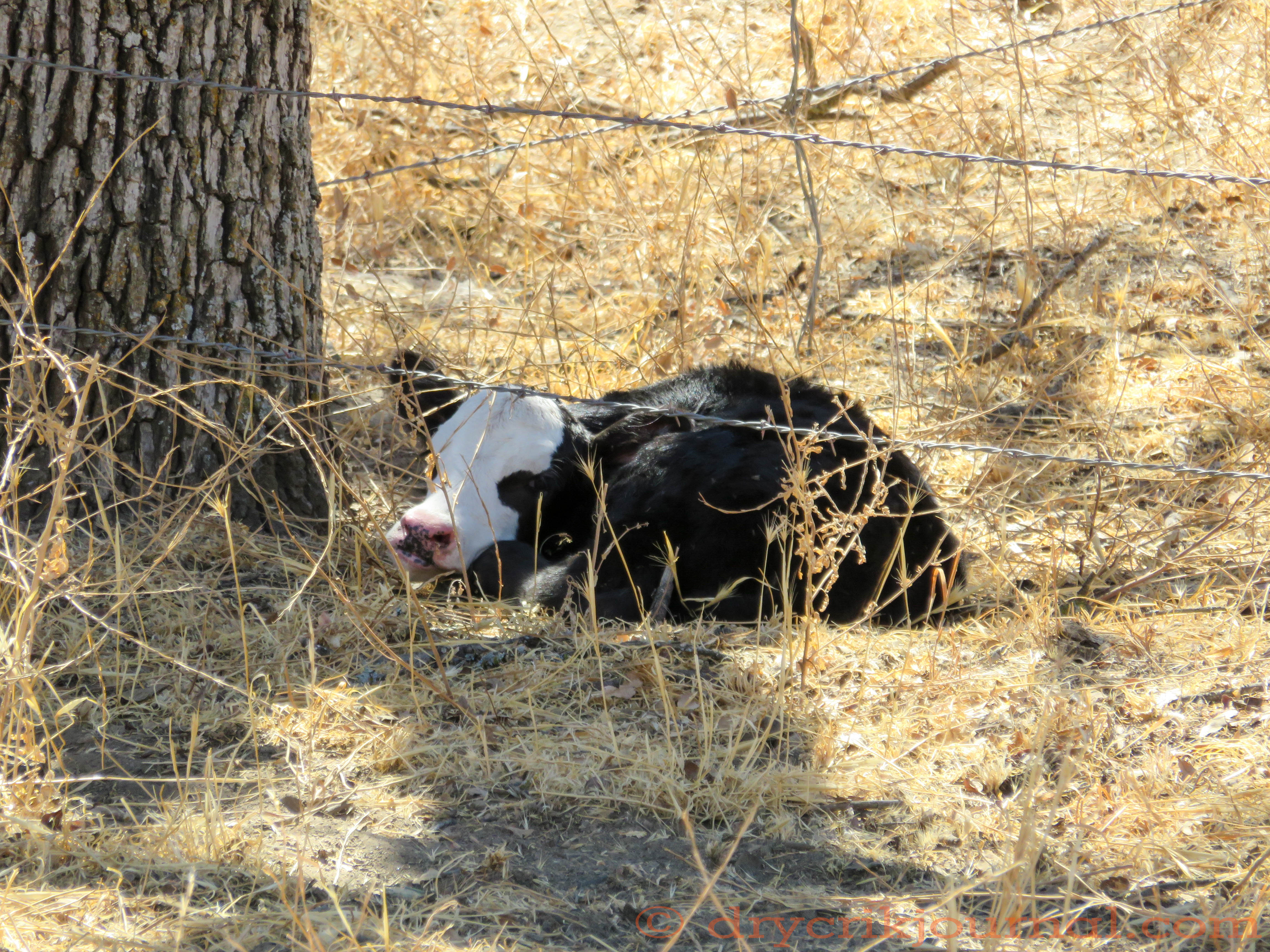
to an isolated draw for yesterday’s newborn,
watching for motion among the boulders
and Blue Oaks that haven’t moved
in my lifetime, where the spring went dry
two weeks after we drilled our well
deep into the hardrock to artesian

a half-mile away. We had to trench
a pipeline back to the trough
from the pump—no straight lines
above or under this old ground
holding us together best it can—
and there I find them: fine.

We are tough enough to submit
to long days beneath a blazing sun,
wear mental armor, gnash our teeth
into lockjawed grins to get by, but
searching, ever-searching for new sign:
fresh proof that nothing stays the same.


WPC(2) — “Endurance”

FULL MOON

Scat at the feedsacks,
it’s become a moonlit game
slipping shadows from shop

to horse barn, yips close
drawing dogs away.
A partial blur beyond

the Blue Oaks disappearing
up rocky draws, as I check
first-calf heifers—he taunts

crosshairs day and night,
breaks into my dreams.
But I am learning

to rise with the spotlight
flashing before he leaves
for a couple hours sleep.


THIS BUSINESS OF REVENGE

The daughters and sons of bitches
know where I live, yip at my window—
feel my anger build long distance:

that red flush from the loins
warming the whole of me, the air
I breathe in a hundred degree canyon:

too far gone, gray necrotic hock
of a newborn shot, red dot
between its eyes. And I must go there

to get the job done. But I hate this part
of me, this part of our nature
where wars begin that never end.


IMG_0088


First Wagyu X 2014


THE TROUBLE WITH DRONES

IMG_2619


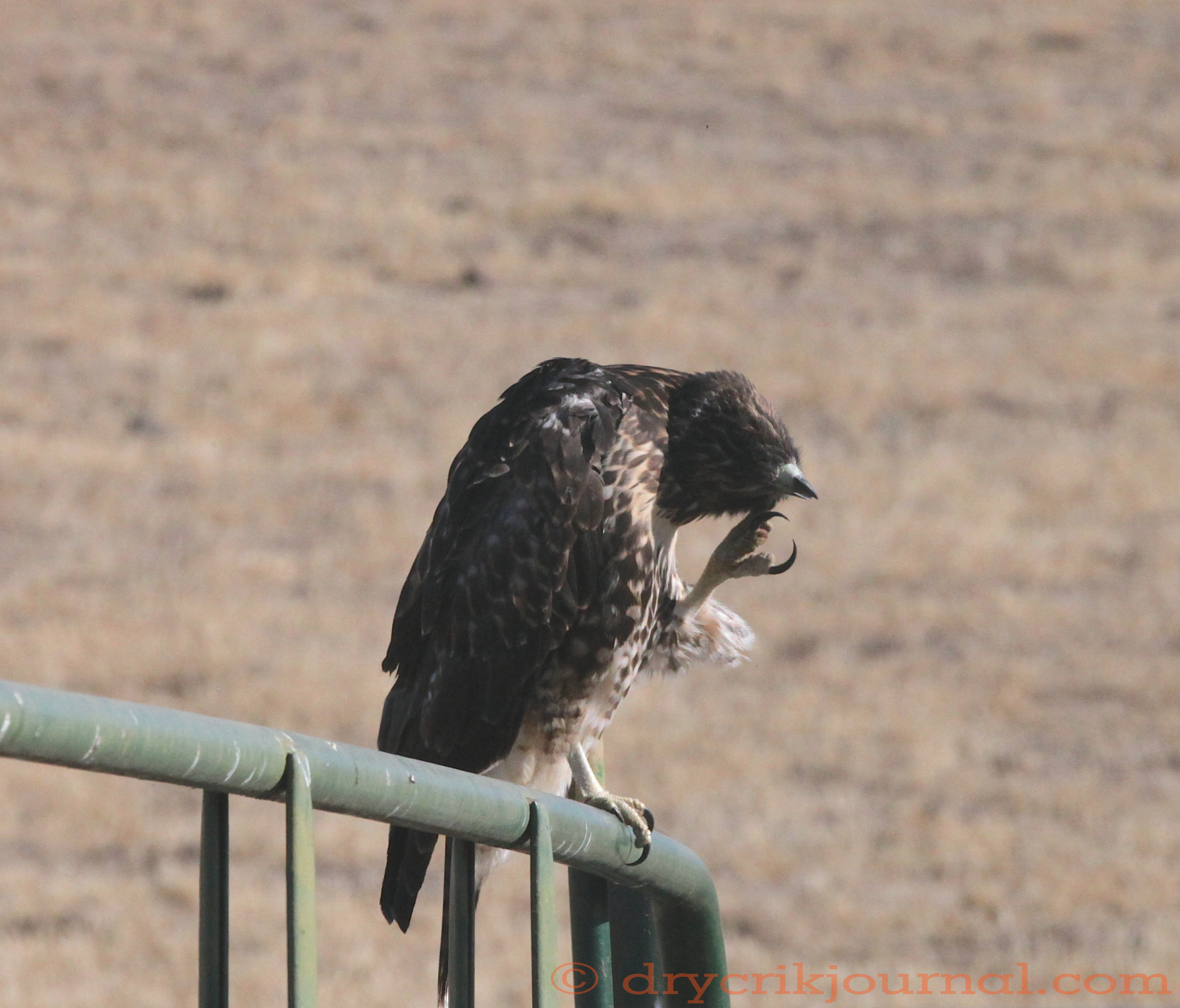
The Red Tails lift and glide above me,
circling our gather within oak trees, chemise
and fractured granite that hasn’t moved

for centuries on this mountain. One of few
humans they know, I have wished
upon their wings and eye, like a falconer,

to inform, to lead me to what I can’t see
grazing peacefully. Someday, maybe—
or resort to drones to do my bidding,

watch the calving, check feed and water,
be on patrol for coyotes and bears,
instead of me. But who would we be,

streaming sci-fi cowboy poetry? Who
would ever know enough to welcome us
into this other world, their home?


COCKTAIL AT DUSK

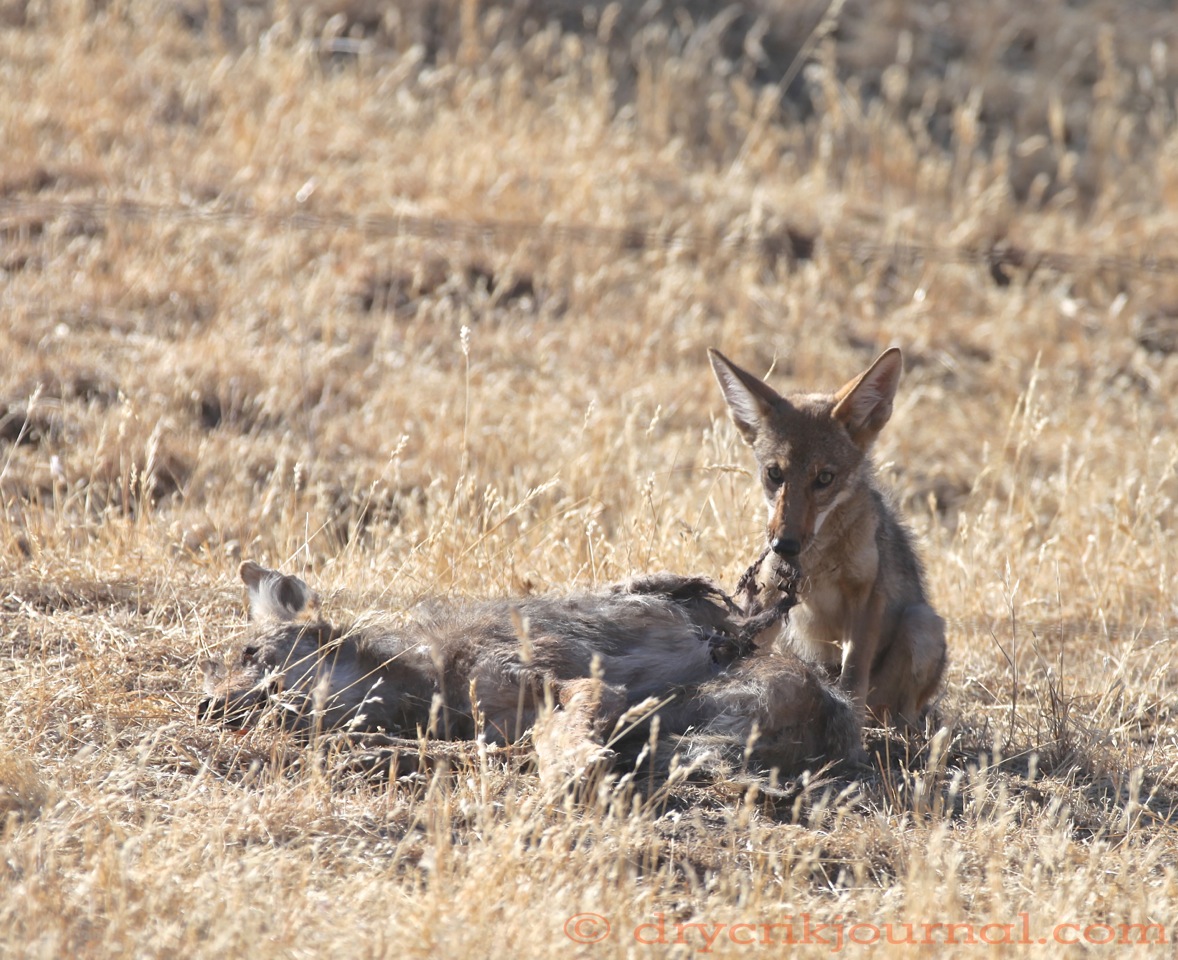
The startled rock pigeons fly in a bunch from the pasture ahead of a drab figure making a game of the hunt, with extra bounds in the short grass for fun. Between them ground squirrels scattering that I can’t see. Bobcat, Coyote in the glasses at 400 yards? A long tail stops to listen to me holler at the house as it leaves, and then again as I repeat myself, winter hair shining like a well-groomed German Shepherd at dusk, looking back over its shoulder at a human outpost in this world. The good dog growls beside me.


Calves big, pups ahead—
even fine specimens
can make a living fun.


Image

Raw

IMG_2854

TRICKY TRADEOFFS AT HALLOWEEN

The earth sinks at the middle spring,
at the fairly flat and brushy head
of Ridenhour Canyon, huge Blue Oaks
and gooseberries covering forgotten
gossip rocks. I think of Effie riding
her white horse, string of ‘wolves’
beside her cattle following at a walk—

me on the Kubota, salt and mineral,
backtracking for my lost hay hook hung
on the flatbed rail to disengage Spencer’s
trailer backed beneath the pickup hitch
to transfer bales he borrowed for
his daughter’s party—lighter trailer rising
as the loaded feed truck bears down.

Gulf War veteran, he’s had a key since
he was sixteen, goes where he wants,
grins with canine teeth as he talks coyotes,
calls them in for instant death. A silhouette
at rest in the shade of gray chemise,
the bunch behind me, rises in my scope.
Mangy old dog down, forever relieved.

As they regard him crossways in their track,
a tall Brangus turns to search the manzanita,
ears flicking, another leaving I never see
though I comb hillsides clear to the corrals.
Ahead, bawling cows tuck two more tails, chase
chuckling tongues over year-old shoulders.
One down, but one slips off before I head to

Effie’s cabin, cows and calves come to salt,
hope for hay, survey and study another
nosing leaves beneath an oak on Wuknaw ridge,
animals’ rock circle—Yokuts Creation Place.
Three for three, cow dogs living with cattle,
waiting for the mother of the latest calf
to go to water. Haven’t found my hay hook, yet.

HEADLINES

Even now, the news glides like manes
and tails over me to pass beneath the sun—
sometimes precursors to a good rain,

a dark storm, but mostly mean nothing
to horses and cows, to the bobcat planted
at the outskirts of Squirrel Town, haunches

frozen in the filtered light. There was a time
I yearned to find my legs elsewhere, test
the edge and taste the wild among the crowd,

lust in love and make news of my own.
But born in the sticks, more like a coyote
than a house dog, I crave the space to grow

gray within my nature, stay to the canyon
and let the headlines pass like one more
empty cloud and save my howling for the moon.

Practice with Coyotes

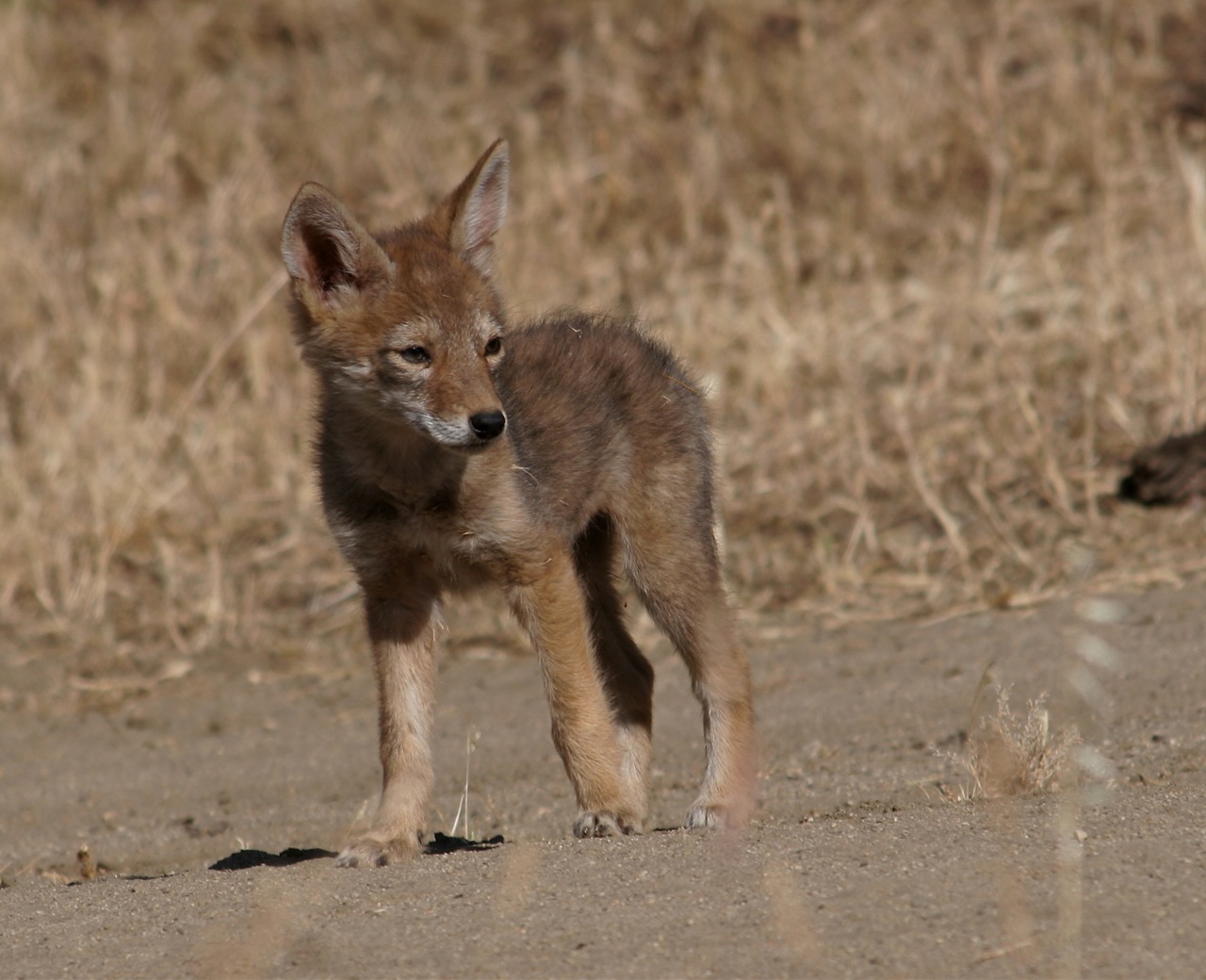
Certain topics of ranch life are seldom shared with the public, but risking to offend the politically correct, I offer our ‘Practice with Coyotes’.
May 26, 2007

A couple of decades or more ago, I took a page from Dayton Hyde’s book, Don Coyote, and let the coyotes on the ranch alone, hoping their population would stabilize to fit our rodent population. We ran stockers then to help cover the expenses of our cow herd, and the coyote’s threat to our commercial calves was minimal, in part because our mother cows were a diluted heterosis of Hereford, Angus, Brahma and Longhorn mix that could fend for themselves and their calves. In those days, we really didn’t have a breeding program. We bought good bulls and our good mothers stayed, but their multicolored and uneven calves became increasingly difficult to market.

Though I admire Hyde’s experience and philosophy, I haven’t convinced the coyotes to leave our small Wagyu-cross calves alone. From a coyote’s perspective, a pasture scattered with first-calf heifers and sleeping, fifty-pound calves does not go unnoticed. Thirty to forty pounds lighter than our straight English calves, the Wagyu bulls allow us to breed yearling heifers instead of two-year olds, but the Wagyu-cross babies are too tempting for even the shyest coyote.

Primarily tied to the rodent population, ground squirrels, gophers and mice, coyotes also clean-up carrion that limits potential diseases on ranchlands. Between the feral hogs and coyotes, the eagles and vultures, a wild or domestic carcass doesn’t last long. But ultimately, it is the variables of winter temperatures and rain, grass growth and seed that dictate our rodent, and hence the coyote’s, population.

From an economic standpoint, a Wagyu-cross calf can generate $800-900 seven months after it’s born. The extra costs associated with breeding a yearling heifer, keeping her in shape to raise her calf and breed back again might total $500-600. Each heifer that loses a calf can get costly in a hurry.

Daring to play coyote psychologist, we don’t want our calves to become the new main course, our calving fields the easiest place to go for a free meal, so we discourage their presence by beginning in August, a month before calving, with a rifle. We tend to leave the coyotes alone by January, as most our calves are big enough by then to take care of themselves.

So what do I know? What seems to be our impact on the coyote population? Depending upon our competence with a gun, I’d like to believe that we have become part of the natural selection of the coyote, eliminating the slower and more naïve individuals, and educating the rest. 60-70% of my 15-20 coyote kills in August are juveniles, almost full-grown, but most of which would probably not kill a calf in the year they were born. By the end of September, I might shoot five more, almost all adults, and maybe five more adults by December, by which time the juveniles look like adults, especially with longer hair.

Over the past decade, the coyote population remains vibrant, vacillating with weather conditions and food supply. At no time have I entertained the notion that I have truly impacted their numbers, though I do believe I have discouraged their presence in certain pastures, which is what I’ve intended.

Looking back at the days when the use of 1080 squirrel poison was commonplace, we may have had less coyotes. But it also seems in the 1960s that we had many times more ground squirrels, despite the poison’s 95% success rate. Because 1080 would also kill other species that might consume the poison-coated grain, retained in the carcass, it would also kill whatever fed upon the carcass before it became illegal to employ. This was especially good for the coyote.

Comfortable in town and Valley orchards, the coyote may be one of our most adaptable species, and most admirable in these quickly changing times. Even the Native Wukchumni identified with the coyote, a clever symbol of self-reliance and survival that yet endures here.

Additional reading: New York Times, September 27, 2010

Motherhood

1240 – September 11, 2011

1240 – September 11, 2012

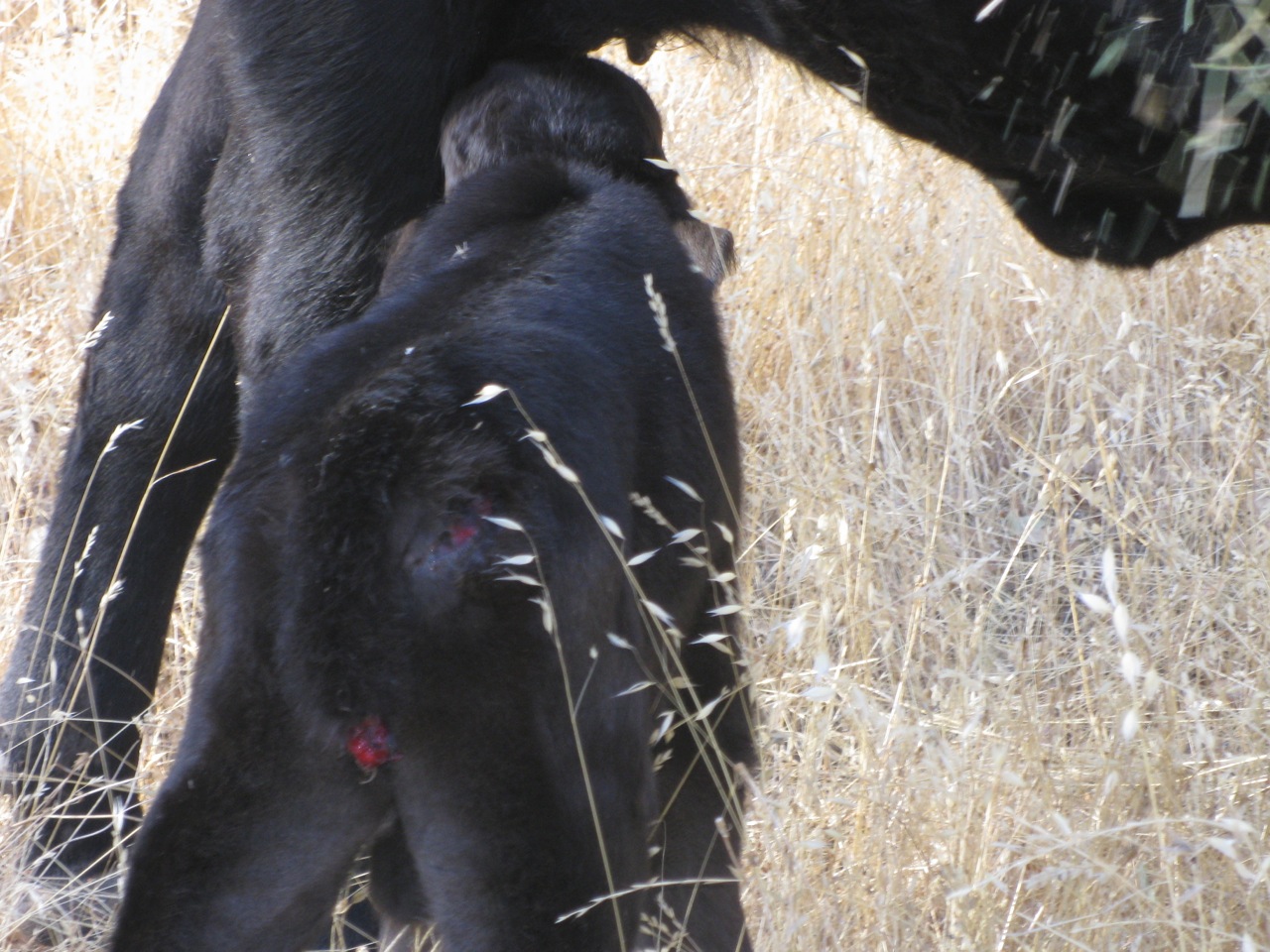
I was a little concerned Monday morning when I made my rounds of the first-calf heifers, 1240 leaving her brand-new Wagyu X calf right where she’d had it to be with the rest of the heifers. Tuesday morning I found her in the same place with four other concerned cows, the calf having just escaped a coyote less than an hour before, but without the end of his tail.

Our selection process for replacement heifers requires fertility that is established by the Wagyu bulls when the heifers are yearlings. If they are bred and can have the calf, we note the good and mediocre mothers as they raise their calves. As this calf is just now getting its breakfast in the photo, 1240 apparently had left it in the same place, scent of afterbirth upon the grass, to graze and socialize. As the cows were still surrounding the pair when I arrived, the coyote hadn’t been gone long. 1240 gets poor marks for judgment. Whether she redeems herself as a mother depends on whether she’s learned to be more attentive to her calf. Just like humans, the ability to have a calf doesn’t necessarily mean that she’ll be a good mother.