Tag Archives: Blue Oaks

TWO POEMS

IGNITION

The hillside Blue Oaks beneath the fog
round as mushrooms upon December green,
darkened mounds that have survived

the seasons for centuries speaking
what I can’t translate, yet admire above
the sycamores that hem the creek

as they catch fire—flaming colors
on the thirteenth successive day of fog
warm heart and mind despite the gray.

****

MURMURATION

The starlings swarm like bees,
murmuration, hundreds synchronized
in flight by unspoken cues to flare

and light en masse to peck and graze
the green, before that cerebral notion rises
into the sky with a synchronized dance.

PERSEVERANCE


Called too soon, persistence rooted

where peaceful dreams beneath their leaves

spilled downhill at dawn—a slow awakening


like death in reverse, never thinking

of other ways to pass the time. Weathered

skeletons of young Blue Oaks cling


to where their acorns fell to rest

before the wet and stormy springs

kept a chance of an idyllic life alive.


Truth is: no right or wrong of it—

no philosophy to make fit

what we’ll not need to understand.


State of the Oaks


20160622-A40A1046


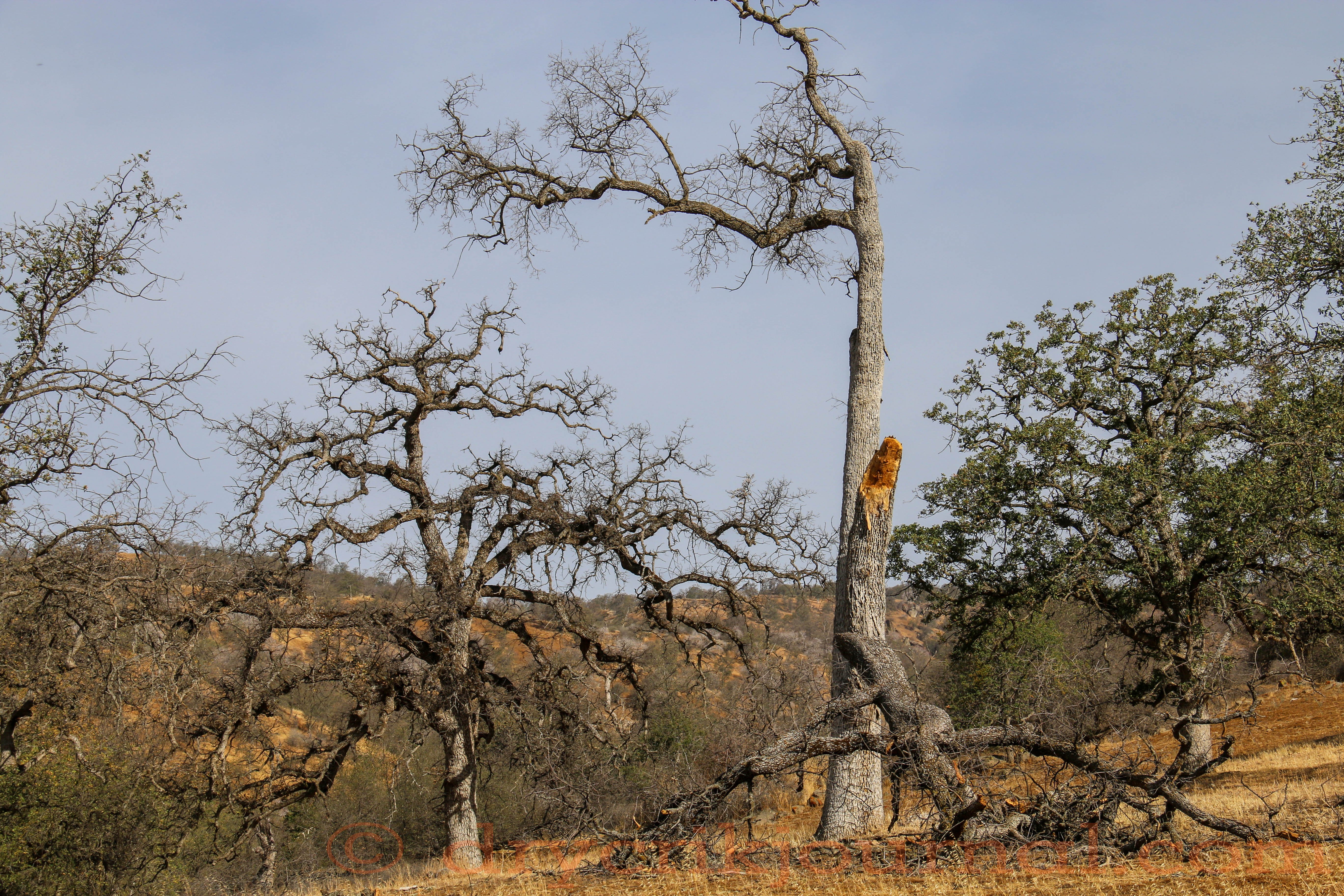
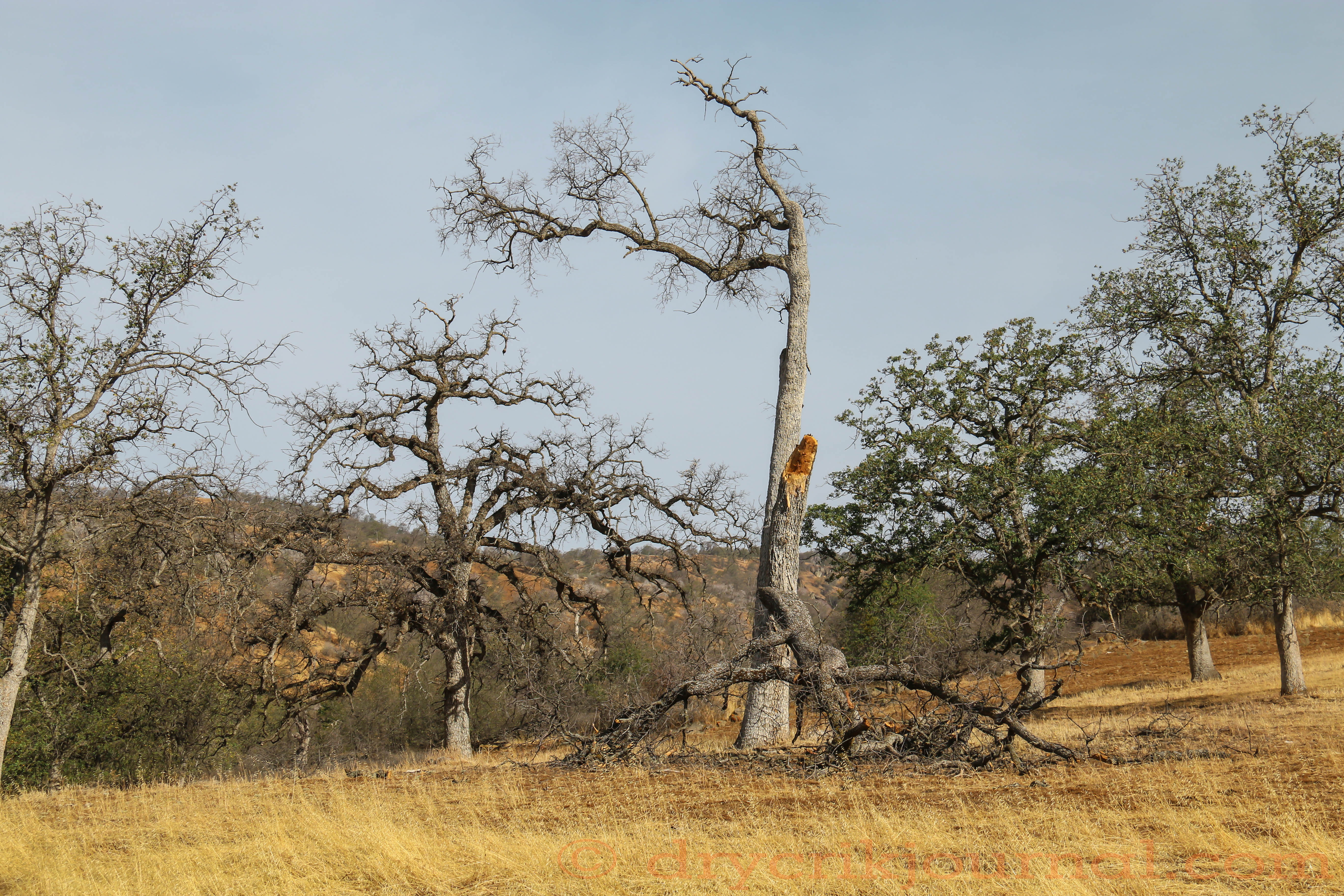
Twenty-plus inches of rain last winter and spring was not enough to save the oaks stressed by four years of drought, 30-50% of the trees, some 100 years old or more. Many Blue Oaks showed signs of recovering last spring, but now hang in limbo with a single limb of green as they face a hot summer and dry fall. Whole slopes of dead trees, such as the photo above on Dry Creek, are evident everywhere in our lower foothills, adding dry fuel to the potential of fire. Usually located on better moisture, the Live Oaks have fared worse.

The word ‘devastation’ comes to mind, new trees and limbs fallen on fences and roads, as a chain saw becomes necessary equipment to navigate the ranch. Devastation much more serious than that proclaimed by a young botanist where horses gathered and watered around a stockwater pond, years ago, when we were exploring a conservation easement. It may be centuries before the Blue Oaks recover.

We, and the ground around us, haven’t escaped the drought. Already, one hard rock well that supplied stockwater with a solar pump throughout the drought has failed despite our above average rainfall. The trend is dry as the hangover from the drought continues to tax the landscape.


OBITUARY


20160402-A40A0483


Bright color in the thin shade
of dry casualties: proud skeletons
of fathers and grandfathers,

generations of Blue Oaks standing
stoically against the sky, against
time as the earth comes alive.

Each silent prayer is a short nod
in passing—too many decomposing
monuments for long eulogies

no one will remember—
we dance past death
as the last obstacle to life.


NOT THAT KIND


20150705-IMG_0185-2


Not like Redbuds
rooted laterally
towards moisture,

or Blue Oaks
chasing a granite crack
of snowmelt,

we can leave, anytime:
sell the cows
with the place,

go anywhere, retire—
feet and glasses up
to toast new skies.

But who would want to
at this late date,
we’re not that kind.


REQUIEM FOR THE BLUE OAKS, 2015


December 2014

December 2014


Skeletons and broken limbs, old friends
of two or three centuries passing seasons
in one another’s shade, listening

to fathers telling sons how to survive.
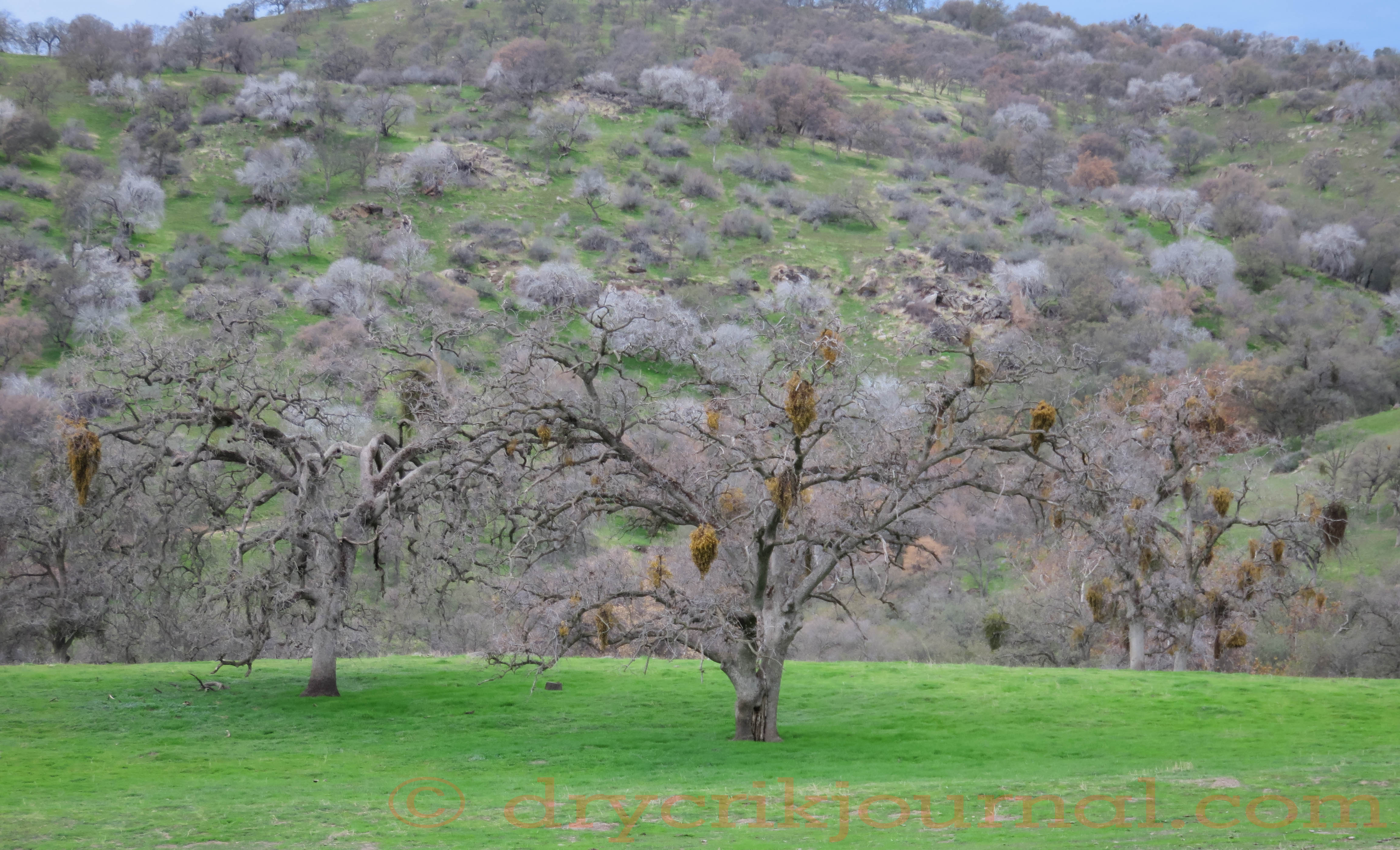
Clumps of brown and yellow mistletoe
hang from arms like grapes becoming raisins,

all giving-in and giving-up their ghosts,
their loosening bark in lieu of acorns
to this bear invasion as the canyons

and draws crawl with shaggy scavengers
after the war is over—as the slowly fading
wounded watch, brittle roots without water.

This old girl will never be the same,
not reclaim her lush good looks
for generations that will never know

the difference nor her endless bounty.
Nothing stays the same beyond the void
of emptiness—everlasting, ever changing.


October 14, 2015 - Greasy, Horse Lot

October 14, 2015 – Greasy, Horse Lot


BETTER-NATURED


20150806-IMG_0399


When it rains, all the trees are leafless
women dead or dying, chests bared
to low gray skies, canyons running full

between limbs and hardened breasts, crying
helplessly with hope, with a taste for life.
And we join them, eyes cast upwards

to bare our thirsty flesh to gods returned
from far diversions, drink until the dust
runs off to settle with the mud.

We will sigh, rest easy for a moment—
count ourselves among the blessed
survivors, plod along with the better-natured.


DEAD AND DYING

 
20150806-IMG_0391


The dry casualties,
more cordwood and deadfall fuel,
litter the landscape.


Wool Sower Oak Galls


20150805-IMG_3315


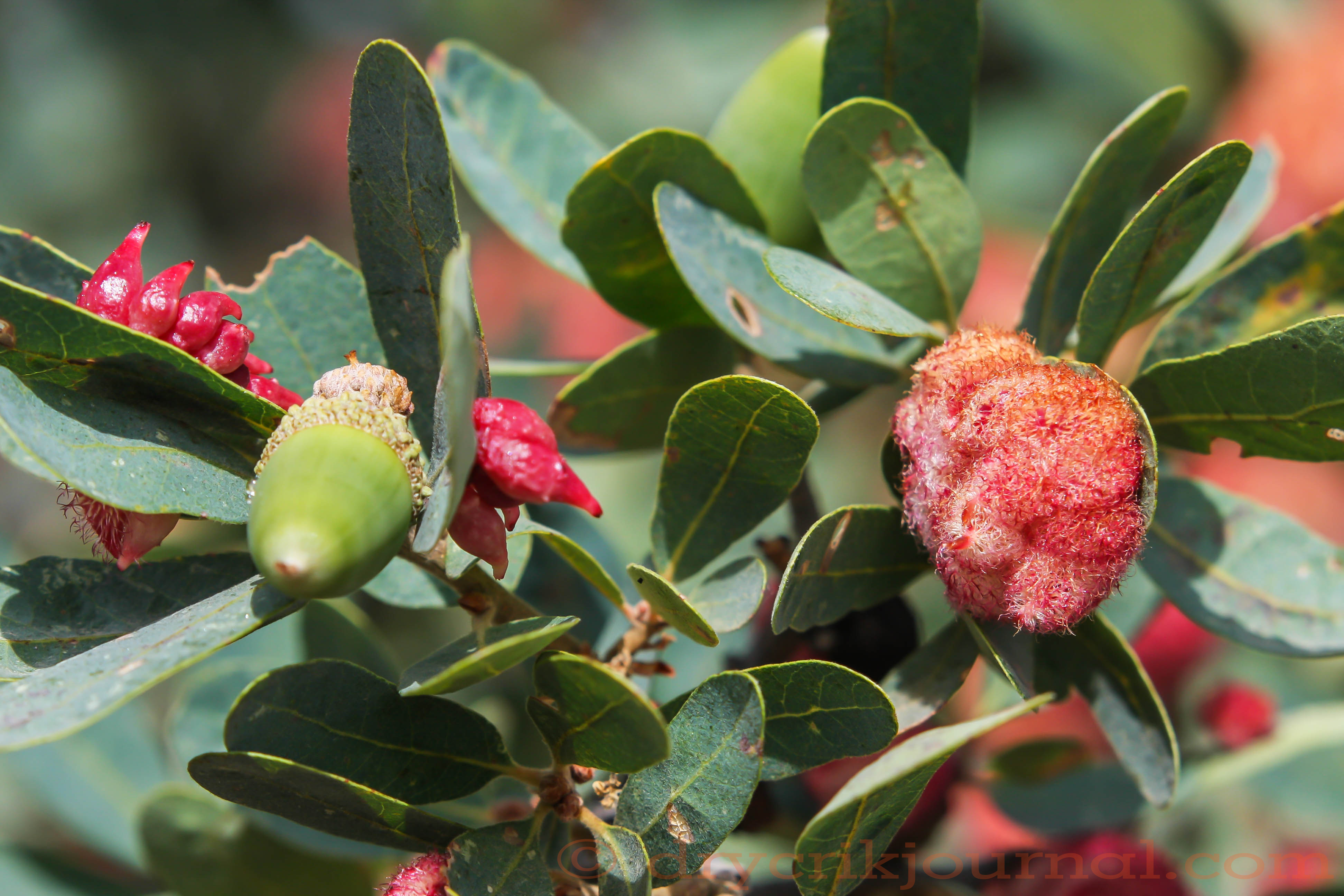
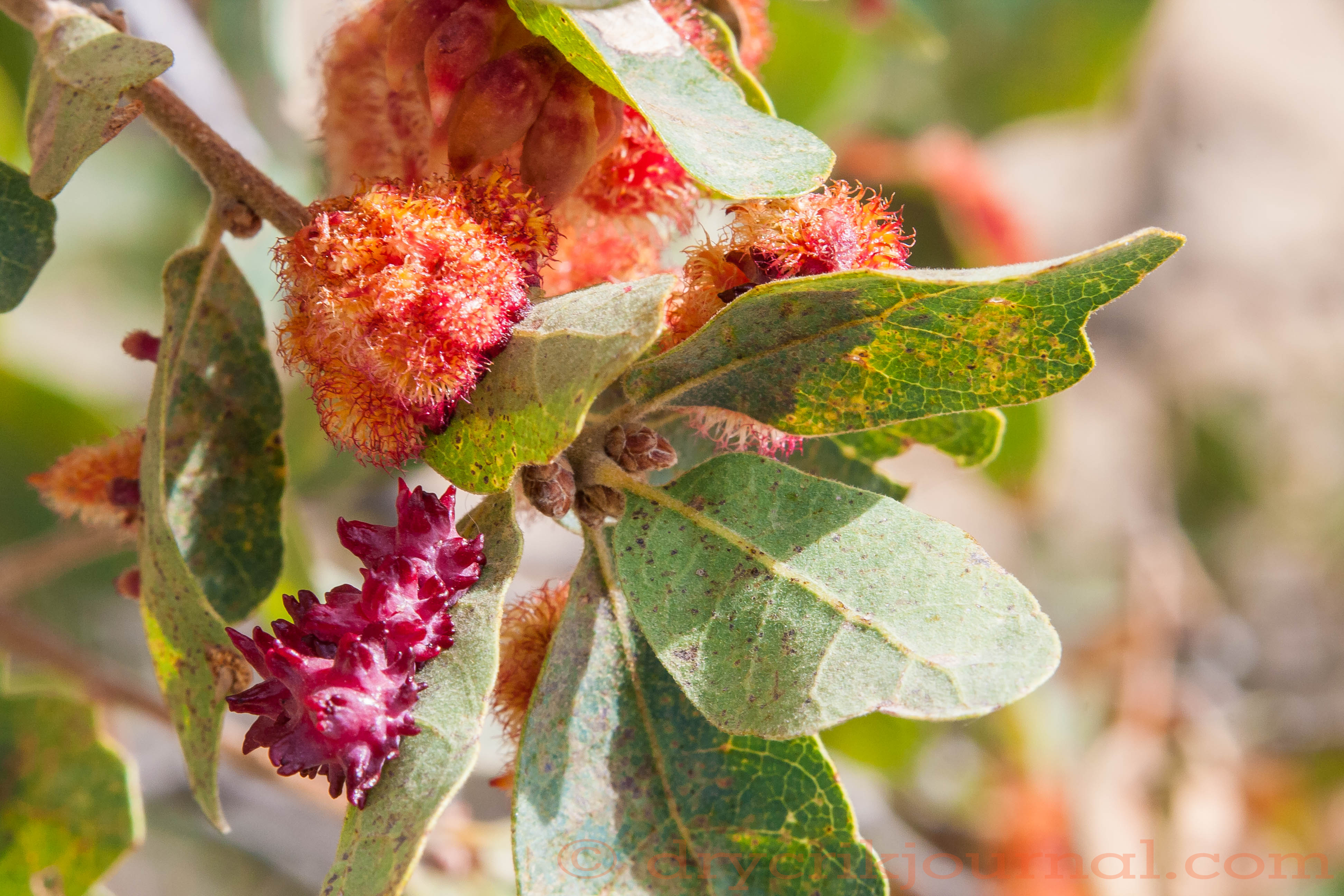
Several Blue Oaks (Quercus douglasii) at the 2,200′ elevation were covered with these galls, ranging in color from rosy red to orange. There are over a dozen different kinds of oak galls, but I’d never seen these before. After a cursory search of the Internet, I’ve identified them as Wool Sower Galls. We have been concerned about the current drought’s impact on the Live and Blue Oaks on the ranch, killing a conservative 10-15%, though we have stands of 10-20 acres that are only leafless skeletons.

Exerts from Glenn Keator’s “The Life of an Oak”, (1998 Heyday Books) is fascinating reading: Whether galls harm oaks is uncertain; their prominence on weak trees suggests that possibility, although most studies don’t implicate galls in the death of oaks. This notwithstanding, heavy infestations may further weaken trees that are already stressed.

One highly specialized group of insects–the cynipid wasps (family Cynipidae)–is responsible for the majority of oak galls. White oaks host the greatest numbers of gall species. And among the white oaks, Quercus douglasii, the California foothill species called blue oak, harbors the most lavish diversity of them all.

Life for a cynipid begins as an egg laid in the young, active meristematic tissues of twigs, buds, leaves, or flowers. Meristems, where cells actively divide to add new growth. Because the newly formed cells have not yet taken on any specialized mature form–they do that later–they are able to accept new “programming.” This is what the cynipid hosts provide.

Some researchers have even gone so far as to suggest that there be actual bits of DNA from viruses in the larvae’s saliva. Viral DNA can replace the genetic machinery of host cells, completely reprogramming them and their activities, though how and why these viruses would have entered into such a specific relationship with the larvae is not clear.

My photos below suggest the Wool Sower Gall evolves from a small red growth that explodes into a hard, wooly-looking gall. It should be noted that these blue oaks are relatively healthy, especially compared to the many around them already losing leaves. It should also be noted that we haven’t seen many acorns for the past three years with the exception of these trees this year. I’ll try to keep track of these oaks and galls going forward, but any more info would be appreciated.
 

20150805-IMG_3292


20150805-IMG_3320


20150805-IMG_3311


Weekly Photo Challenge (3): “Inspiration”


EXPECTANT

IMG_0788


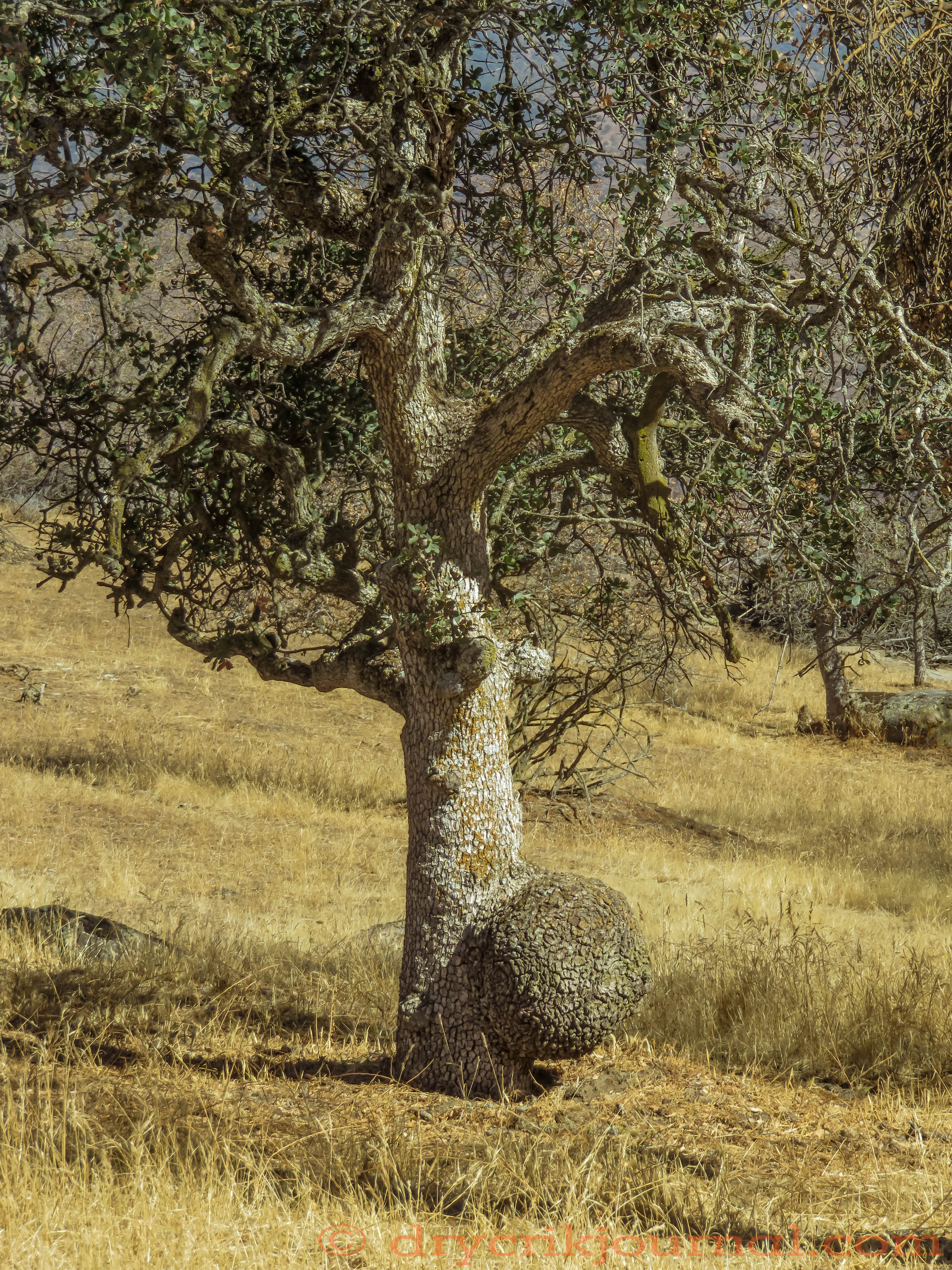
Blue Oak mama,
belly full of young dryads—
let the dancing begin.