Category Archives: Ranch Journal

MID-AUGUST 2015


20150816-IMG_0576


Too early to know
what the day brings—
plans mixed with dreams.

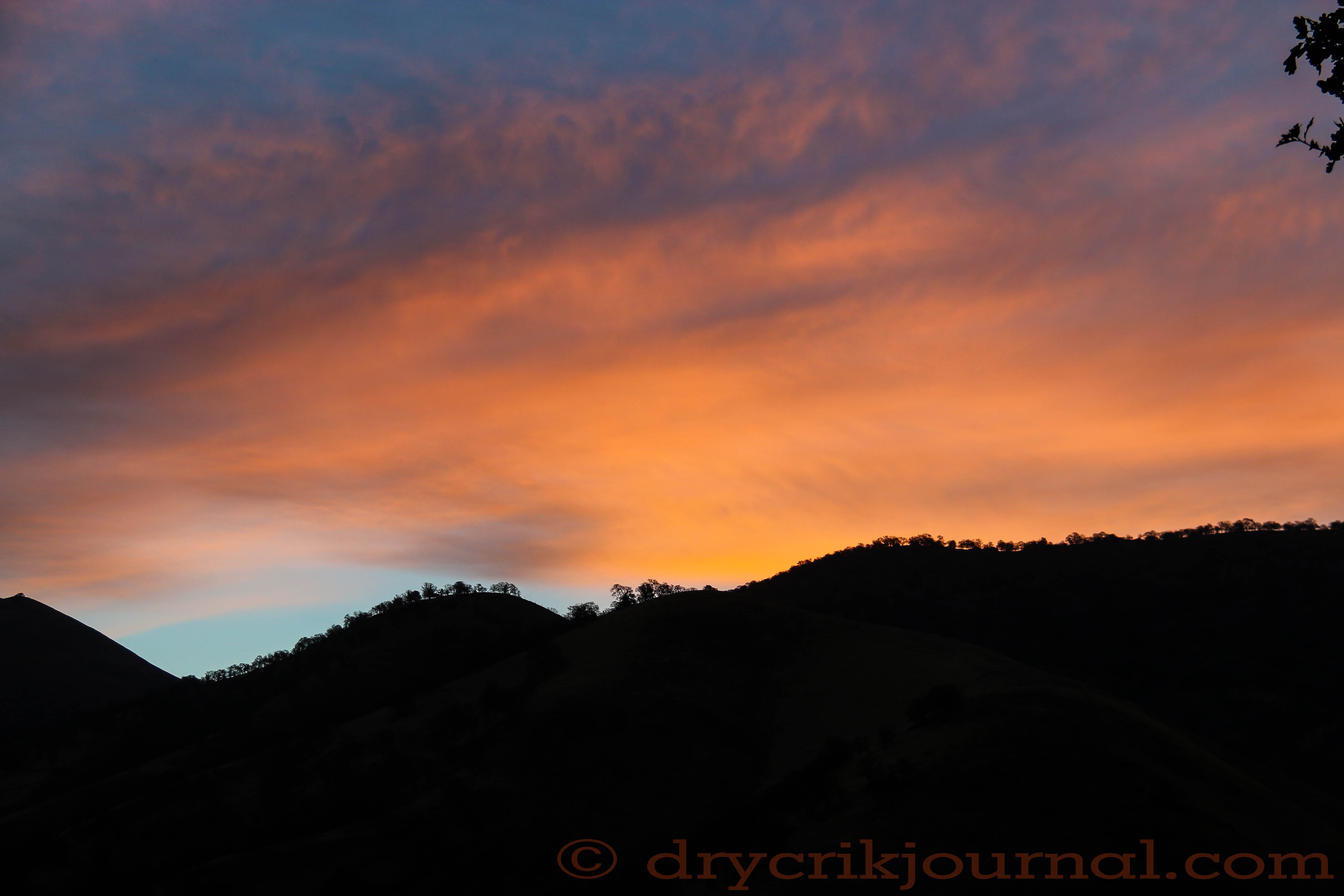
Ridgelines stay the same
except rooted trees
lose their leaves

or dress in early spring
with iridescent greens
hard to imagine from August.

But the errant clouds help,
forecasting change
beginning each day.


IDES OF AUGUST, 2015


20150816-IMG_0563


The hills black,
faint pink cloud
over Sulphur

in first light cool.
Nights grows longer
with the shadows

when we dream
of winter storms,
four years dry.

We feed our future hay
until the time comes
we have nothing else to do.


Spring Box @ Railroad


20150815-IMG_0526


There are several different ways to install a spring box depending on the water source and materials at hand. With backhoe and shovel work, David and I uncovered about two square feet of a hard flat rock with a horizontal crack that was leaking the water. We scrubbed the rock with a brush to remove all the mud so the mortar mix would stick, then built a small dam of smaller rock around our 1½” PVC pipe until the water pooled behind it to rise and exit the pipe. We leveled the dam and sides until the discharge pipe was secure, the ran about 80 feet of pipe down the trench to the troughs and backfilled it before placing larger rocks around our spring box to keep the loose dirt and debris out.

Our placement was about three feet deeper and five feet away from the original spring box, also constructed of rock, which enclosed a seep in native soil that had to be dug out regularly to free the water to rise into a pipe. I’m guessing the original spring box was installed in the 20s or 30s with only a shovel.

The inside dimensions of our box at the top are approximately 7” x 14” and about 18” to the hard rock bottom, making it fairly easy to clean for any silt or sediment that might accumulate over time. I’ll be back Monday with some short 2 x 6s and screws to fashion a lid to keep leaves and small critters out, but for now, the disc blade covers that space.

While I went to Ragle Springs to install a new overflow pipe to utilize a 6’ x 6’ concrete trough built by Earl McKee, Sr. and Lee Maloy in the 30s, having packed the sand and cement on mules from the Kaweah River some four miles and 2,000 feet below, David continued to clean out the pond at Grapevine Spring that had accumulated a substantial amount of water overnight and several thousand gallons by the time we came off the hill late afternoon. Wahoo!

We will return Monday morning to finish up at Grapevine and cover my overflow pipe at Ragle Springs with a dirt pad for a new trough, should the old concrete trough leak.


Dirt Works @ Railroad Spring


20150814-IMG_0509


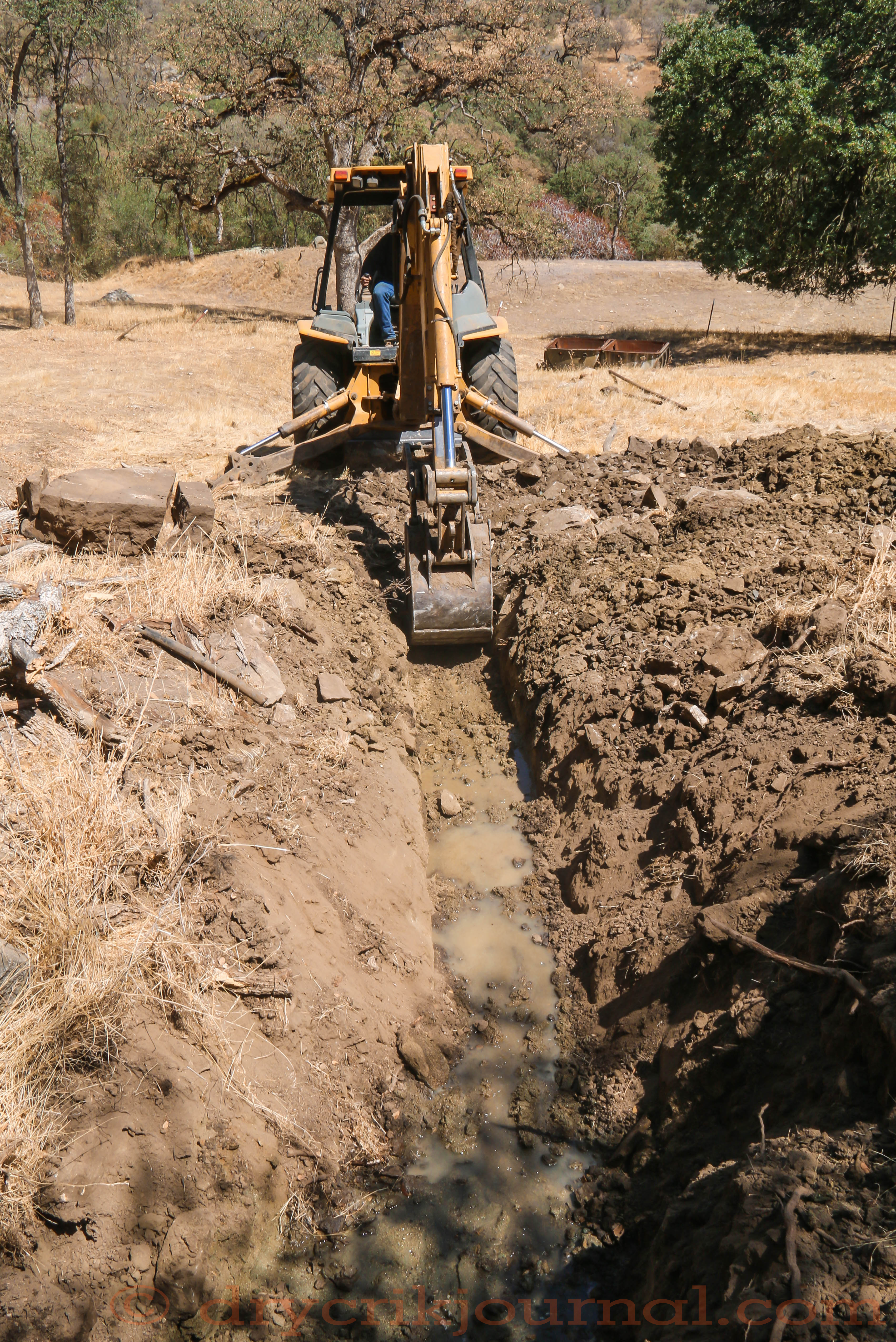
We’ve been on David Langton’s list for well over a month as he moves ranch to ranch with his four-wheel drive backhoe improving stock water. Railroad Spring has been nearly dry for two years, with not enough water in the spring box to reach the pipe. Hand dug and constructed of concrete and rock with a disc blade lid, it’s provided good water since well-before my time with the exception of the droughts of 1938-39 (anecdotal) and 1976-77.

(Heavy equipment working at the 2,400-foot elevation 4-5 miles from the asphalt is always a clash of sensibilities for me.) In the photo, David has dug about three feet below the original spring box and gotten to a flowing crack in the hard rock, nearly an impossible task to reach with a pick and shovel. He’s trenching the pipeline we will install this morning to the troughs in the background, which will presumably overflow in a normal year to the dirt tank beyond them.

When the trench was completed, we measured the flow at 1½ gallons/minute, that if sustainable would amount to well over 4,000 gallons/day, however, as so often is the case, the flow subsided to about ¾ gallons/minute after about five hours. We intend to work around the original spring box some more before installing our new spring box and pipe. Meanwhile, we broke a little water loose at the Grapevine spring a 1/4 mile away, and mucked out enough silt to form a basin where the cows can water, previously preferring to drink the fresher water pooled in their hoof prints than the warm stale remnants at Railroad Pond. Open to two other pastures with water, my count at Railroad was 24 head of cows getting ready to calve.


GODZILLA HAIKUS


20150807-IMG_0428-2


Any day now—soon,
any day, the pundits say
we might wash away.

We dig for water,
bring David and the backhoe’s
hydraulic muscle:

big jaws and steel teeth—
hope and pray to break some loose
to water cattle.

California’s map
in flames, burning inside out
to greet El Niño.


Still in Velvet


20150811-IMG_0482


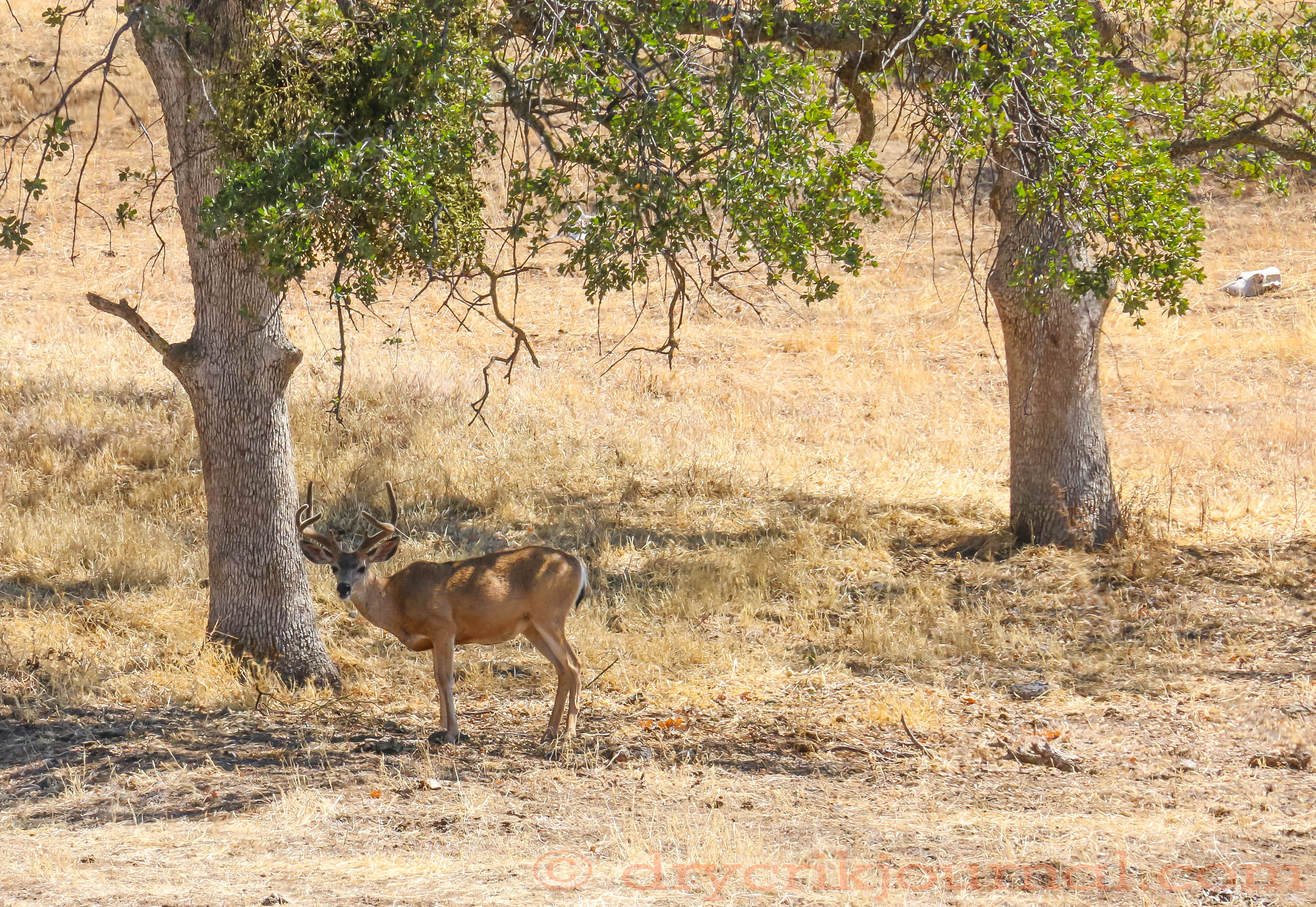
While checking our stock water, we’re also feeding hay to our cows at the higher elevations, now three weeks away from beginning to calve. We culled heavy in May when we weaned our last year’s calves knowing that our stock water would be limited, especially on Top. We’ve opened those cows into two other pastures with springs that are struggling to maintain a flow into troughs. While feeding yesterday, we ran into this young buck, still with a little velvet, at the salt, reminding us that deer season opens soon, bringing us a little closer to the end of summer, shorter days and a chance of rain. We closed the ranch to deer hunting last year because of drought, feed conditions and lack of cover, and will again this year, allowing this buck a better chance to grow up.


Surprise


20150809-IMG_0451


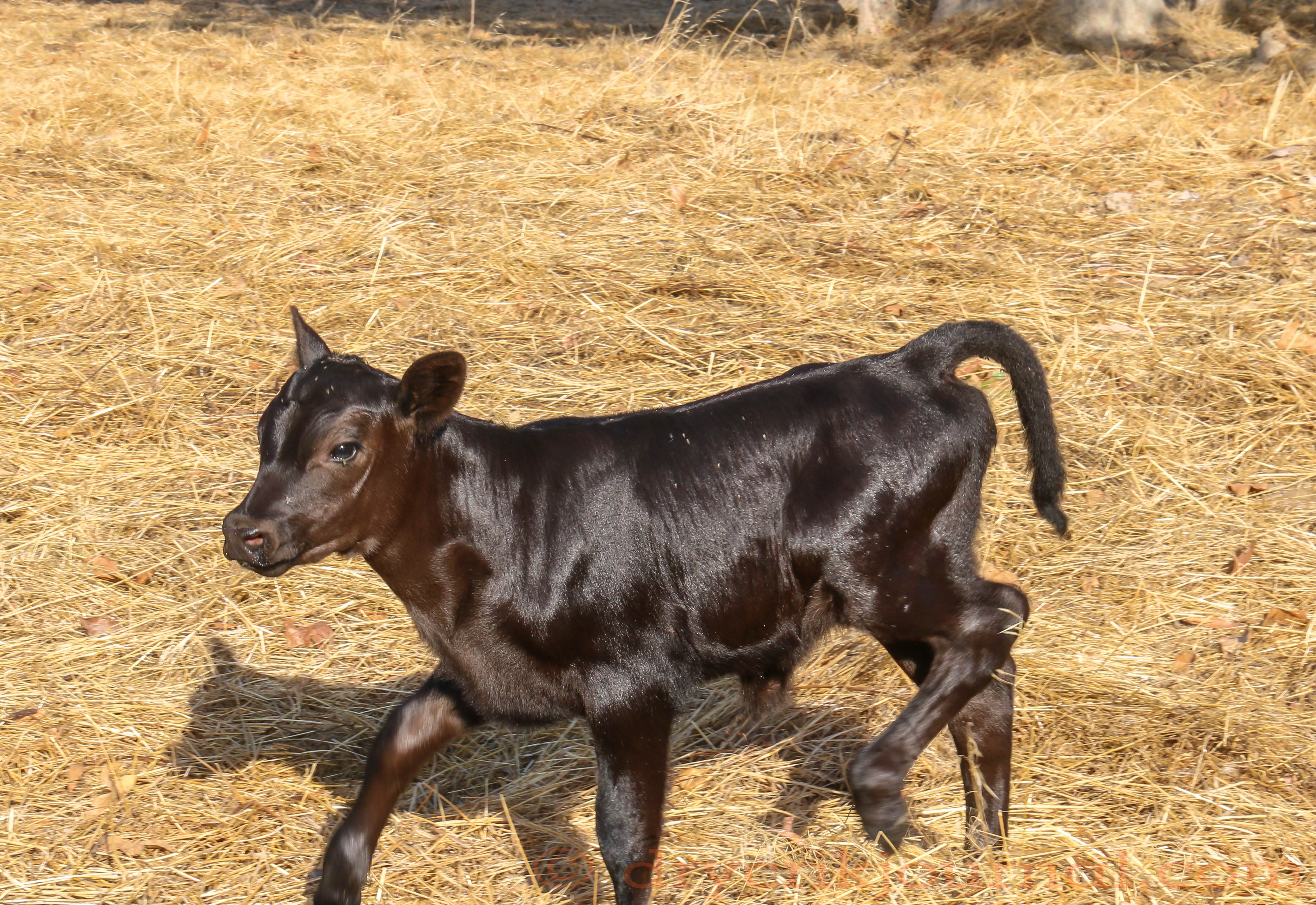
One of four calves born a month early. A quick review of our records indicate that a bull fight occurred last October 26th when two bulls gained entry into the pasture of the second-calf heifers. Fence fixed and bulls out the next morning. But we’ll take a rain or a calf anytime.


TURKEY HEN


20150731-IMG_4516


On the way to water, she’s learned
to like mustard seed in August,
lives up the dry creek bed alone.


Wool Sower Oak Galls


20150805-IMG_3315


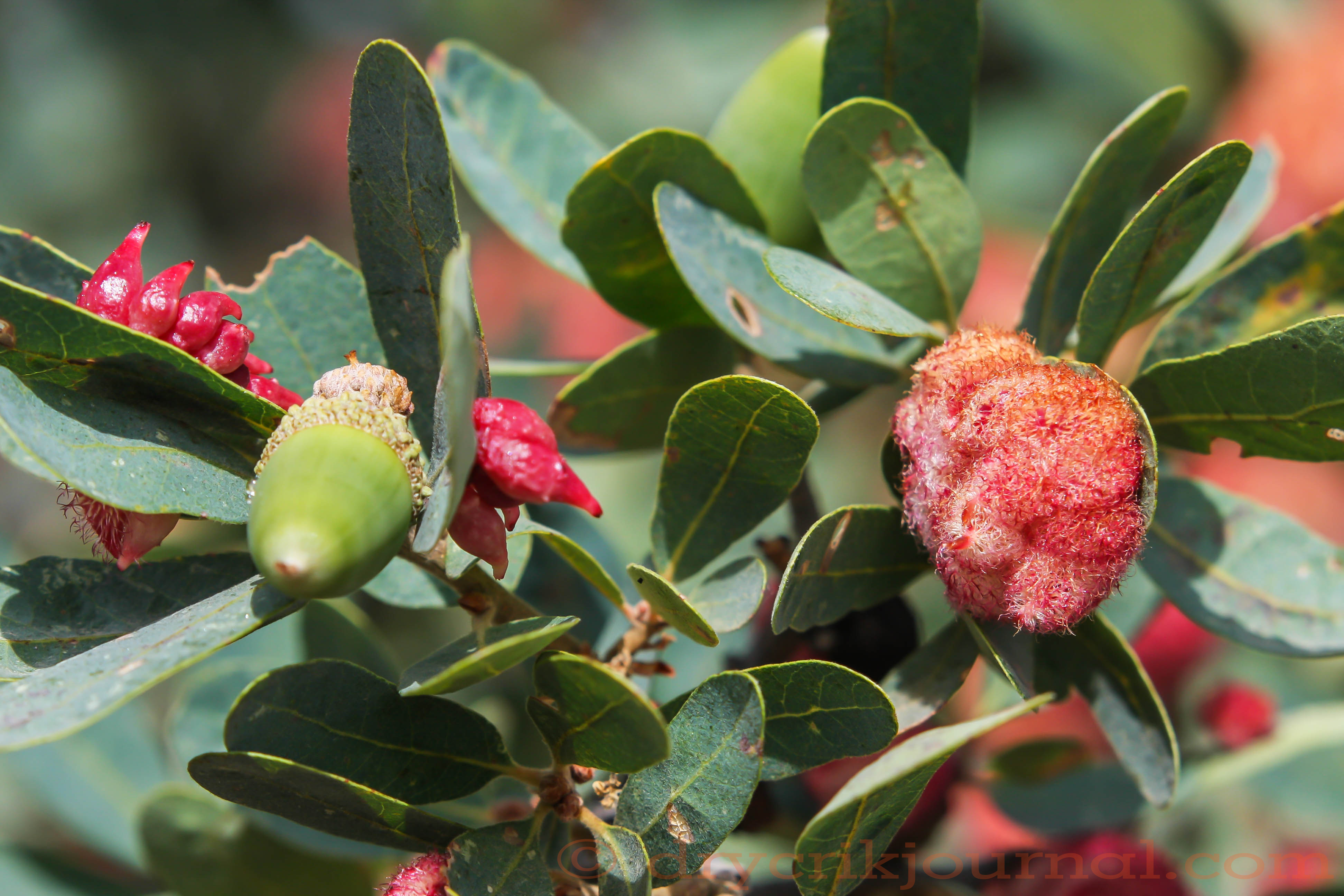
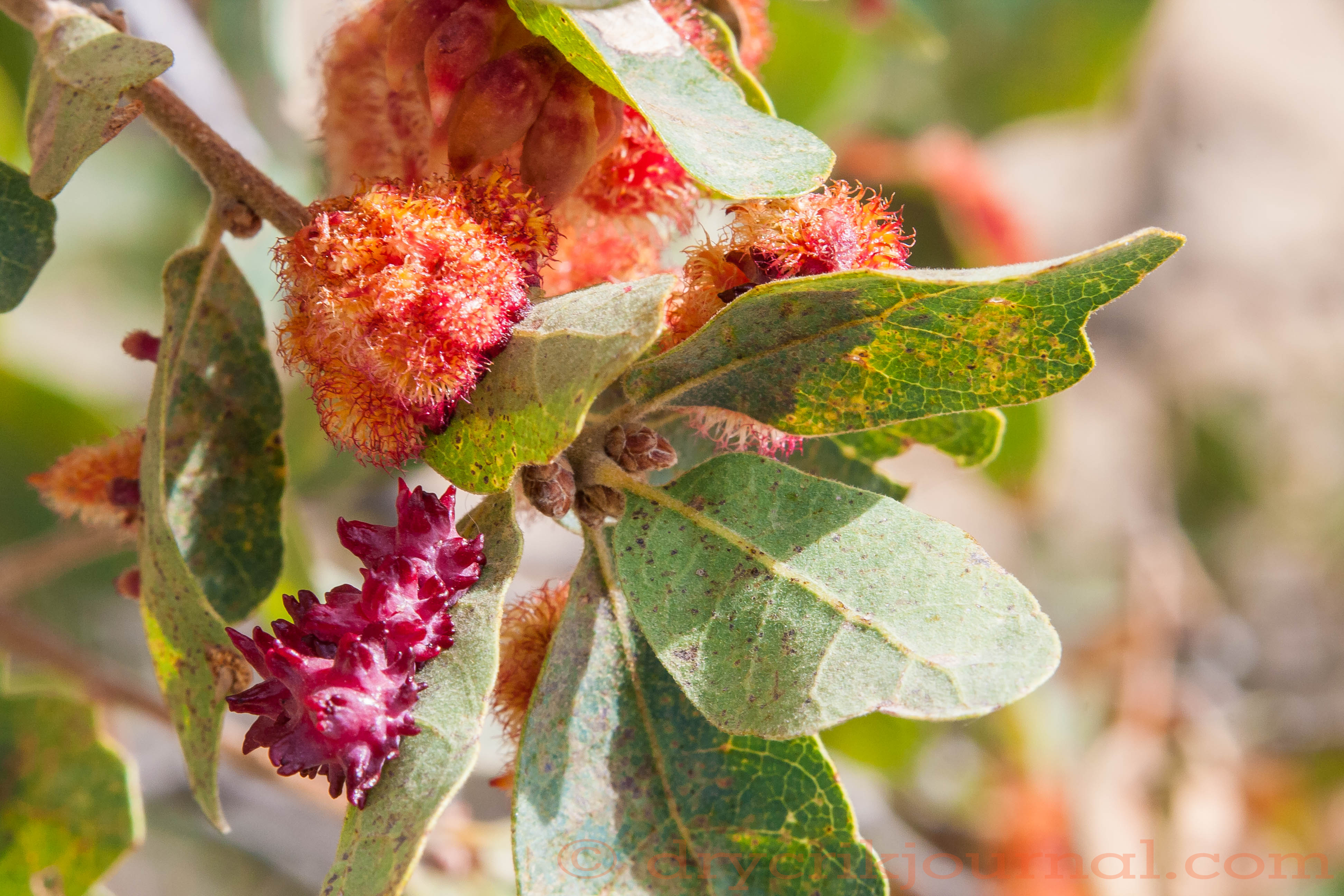
Several Blue Oaks (Quercus douglasii) at the 2,200′ elevation were covered with these galls, ranging in color from rosy red to orange. There are over a dozen different kinds of oak galls, but I’d never seen these before. After a cursory search of the Internet, I’ve identified them as Wool Sower Galls. We have been concerned about the current drought’s impact on the Live and Blue Oaks on the ranch, killing a conservative 10-15%, though we have stands of 10-20 acres that are only leafless skeletons.

Exerts from Glenn Keator’s “The Life of an Oak”, (1998 Heyday Books) is fascinating reading: Whether galls harm oaks is uncertain; their prominence on weak trees suggests that possibility, although most studies don’t implicate galls in the death of oaks. This notwithstanding, heavy infestations may further weaken trees that are already stressed.

One highly specialized group of insects–the cynipid wasps (family Cynipidae)–is responsible for the majority of oak galls. White oaks host the greatest numbers of gall species. And among the white oaks, Quercus douglasii, the California foothill species called blue oak, harbors the most lavish diversity of them all.

Life for a cynipid begins as an egg laid in the young, active meristematic tissues of twigs, buds, leaves, or flowers. Meristems, where cells actively divide to add new growth. Because the newly formed cells have not yet taken on any specialized mature form–they do that later–they are able to accept new “programming.” This is what the cynipid hosts provide.

Some researchers have even gone so far as to suggest that there be actual bits of DNA from viruses in the larvae’s saliva. Viral DNA can replace the genetic machinery of host cells, completely reprogramming them and their activities, though how and why these viruses would have entered into such a specific relationship with the larvae is not clear.

My photos below suggest the Wool Sower Gall evolves from a small red growth that explodes into a hard, wooly-looking gall. It should be noted that these blue oaks are relatively healthy, especially compared to the many around them already losing leaves. It should also be noted that we haven’t seen many acorns for the past three years with the exception of these trees this year. I’ll try to keep track of these oaks and galls going forward, but any more info would be appreciated.


20150805-IMG_3292


20150805-IMG_3320


20150805-IMG_3311


Weekly Photo Challenge (3): “Inspiration”


First Indicator of August


20150805-IMG_0380


Some readers of this blog know that August is our weather indicator month for the following three months, 30-day cycles that presumably will intensify into winter when another ninety-day cycle sets up. We track our indicators and wait for confirmation in September, and hopefully storms in October.

Check out the link for current details for weather and fires in California, and a weekend forecast for Northern California.

Pacific Weather & Fires