The prospect of having to gather this country ahead of the Rough Fire is daunting.


7:20 a.m., Sept. 11, 2015
Smoke continues to get worse throughout the Valley as the Rough Fire moves within a mile of the 2,000 year-old General Grant Tree and grove of giant Sequoias, also threatening the communities of Wilsonia and Pinehurst as it moves up the Mill Creek drainage, and towards the town of Dunlap on the western edge of the fire. Currently consuming 128,000 acres in the Kings River watershed with only 29% containment, the fire is expected to burn rapidly through the drought and pine beetle impacted timber today. Cost to date to fight the fire, that began with a single tree struck by lightening on July 31st, approaches $80 million. 2,570 personnel, 14 helicopters and 18 dozers battle the blaze in rough terrain.
Mandatory evacuation orders have kept Dry Creek Road busy. We helped haul four gooseneck loads of horses and mules from Miramonte yesterday, the last of the stock removed from the Cedar Grove Pack Station ahead of the fire that now burns upcanyon past Hotel Creek and towards Granite Lake. Park and pack station structures were saved.
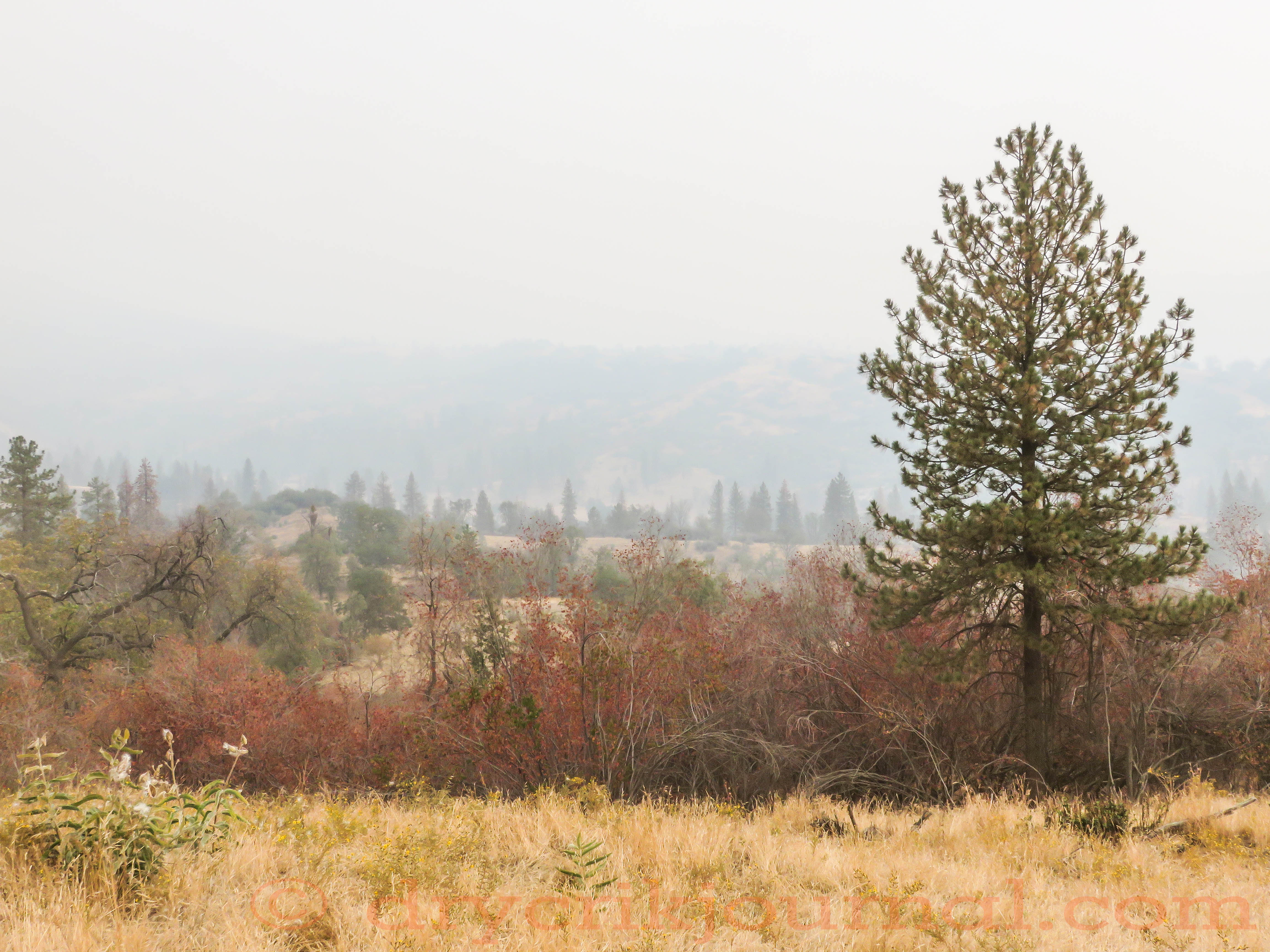
Miramonte – 10:00 a.m., September 11, 2015
Cooler weather is forecasted after today and into next week that should help firefighting efforts.
Posted in Photographs, Ranch Journal
Tagged Cedar Grove Pack Station, Giant Sequoias, Grant Grove, Rough Fire
For a moment,
we succumb,
give in, yield
to our senses,
to the unknown—
forgetting everyone
we have been
or may ever be—
to let each second
wash over us
as we consume
each detail
that becomes
our flesh melting
into timelessness
gone beyond
any hope
to hold its shape,
waiting to explore
that prolonged moment
as if in the womb again.

Pacific Southwest Summary:
Although the early part of the winter season will feature above normal rainfall, the drought will continue as rainy periods will diminish in the season’s second half and precipitation will be below-normal for the winter season as a whole, with below-normal mountain snows not helping ease the drought. The stormiest periods will be in mid- to late November, early to mid-December, early January, and early March. Overall, temperatures will be slightly cooler than normal. The coldest period will be in late December, with other cold periods in early and late January and mid-February.
April and May will be cooler and slightly rainier than normal.
Summer will be hotter than normal, with near-normal rainfall. The hottest periods will be in early June, early to mid- and late July, and early to mid- and late August.
September and October will be slightly cooler than normal, with near-normal rainfall.
Facing continued smoke from the Rough Fire and 110 degrees before week’s end, we’re looking forward to the end of summer.
The pair of eagles
returning early to ride
our foothill thermals
elicits surprise:
‘what do they know that we don’t?’
we agree to say.
No water, no place
to fish in a four-year drought—
it must be something.
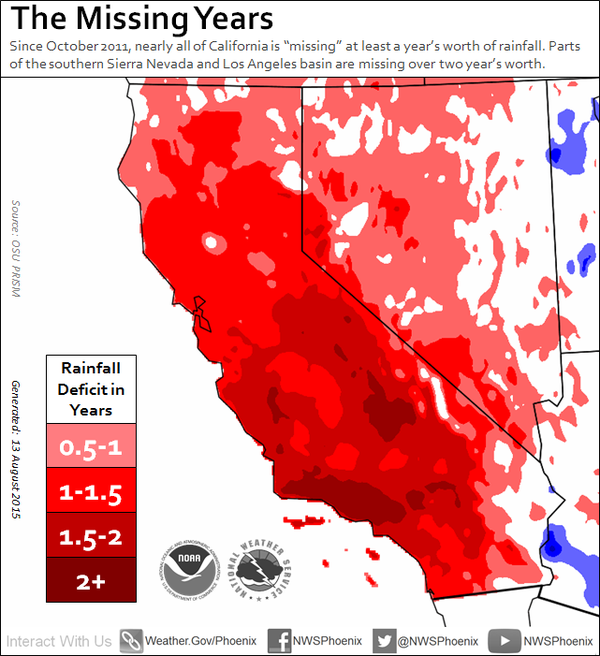
It’s difficult, after four years of drought, to think in terms of rain. Making preparations for a wet winter may offend the superstitious, or seem contrary to the priorities of recent years, but Daniel Swain’s blog offers a most comprehensive forecast for the coming months. Should California be the target of a “Record-strength El Niño,” its impact on the West may be exacerbated by current and recent wildfires.
83,000+ acres
25% containment
@ Cedar Grove, Converse Basin, Buck Rock Lookout
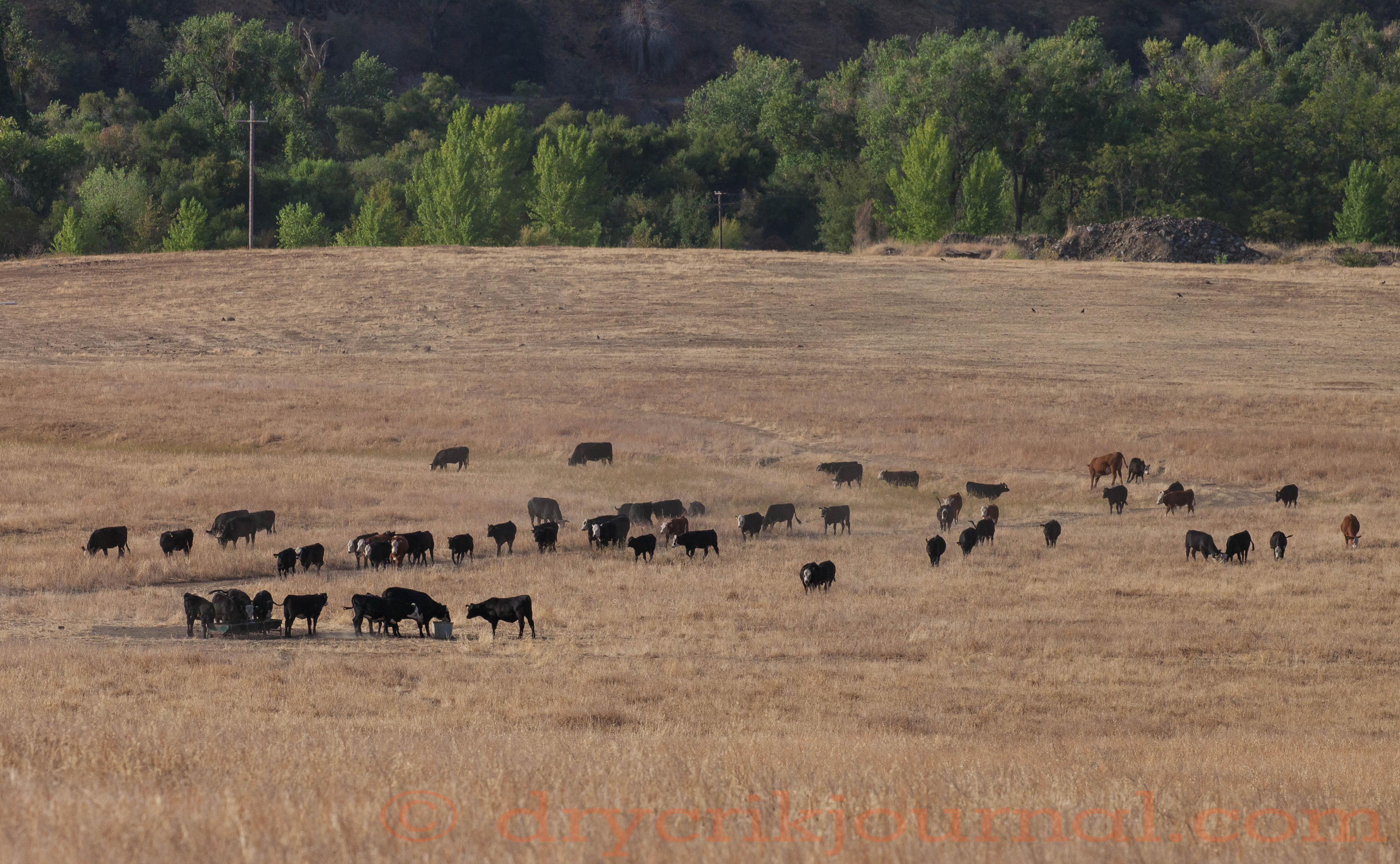
We feed our future,
as it approaches, plenty
of alfalfa hay.
Posted in Haiku 2015, Photographs, Ranch Journal
Tagged alfalfa hay, future, Replacement Heifers

We begin
when calves come
trailing their mothers
out of seclusion
to hay—children
added to explore
this old ground,
wind shuffling leaves.
In their eyes,
fresh innocence
and a chance
for improvement.
Posted in Photographs, Poems 2015, Ranch Journal
Tagged beginnings, Calves, innocence, September
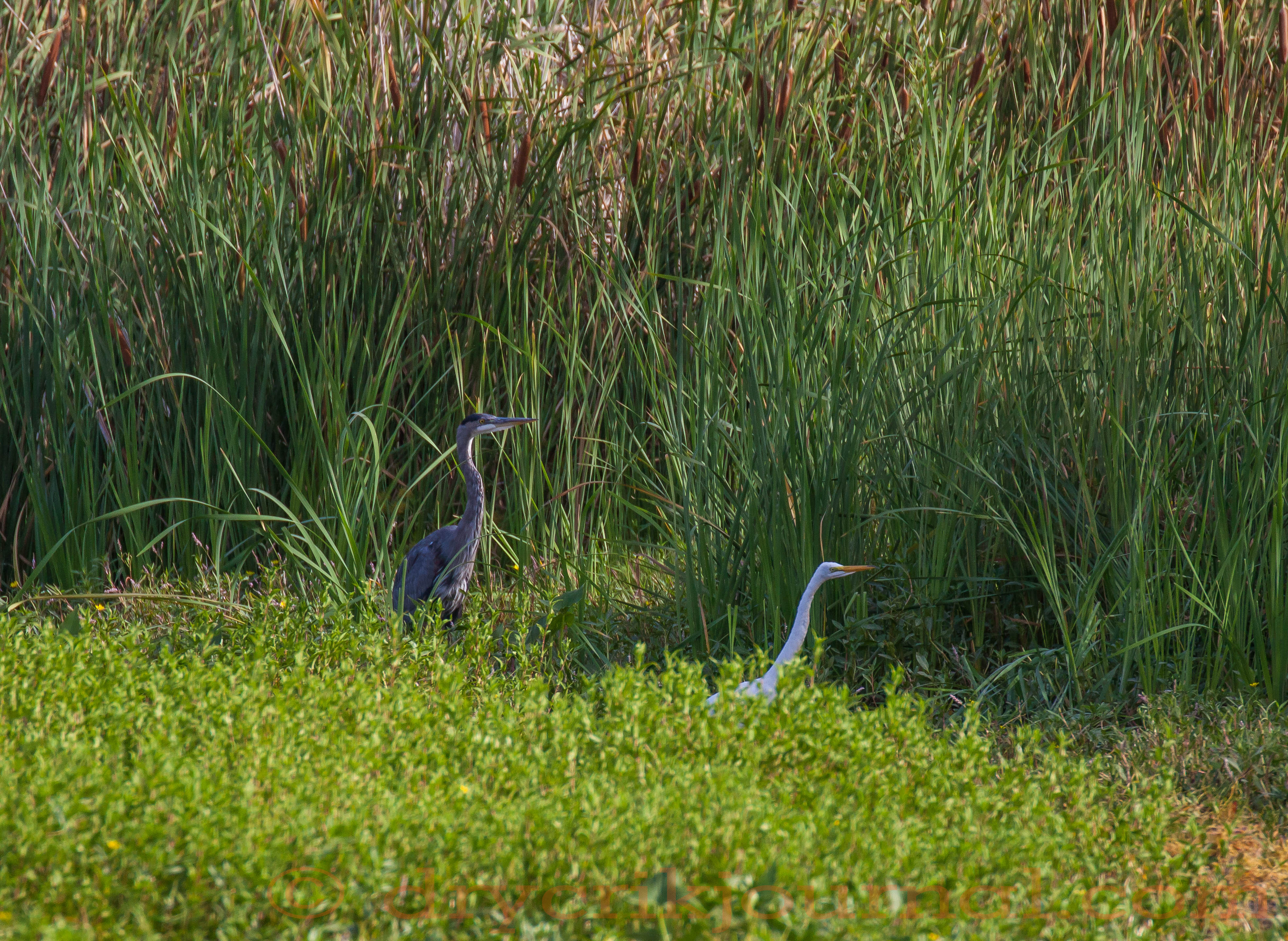
A game since April, my presence, while irrigating, interrupts the daily routine of wading the edges of the pond for this Great Egret and Great Blue Heron. Usually one or the other, they generally fly when I get within a 100 yards of them to light a safe distance away on dry ground to watch and wait until I’m done. Sunday morning as the pipeline filled, they both circled to a secluded spot in the cattails instead, just barely within range of my camera lens.
Not quite a siege of herons.
Billowing from behind the barn before dawn
rising, clouds hang and drift, coat everything
as saddle horses wake to play over fences
in August, when there is no dew nor brittle stems
to cling to. Expectant mothers waddle to the water
trough, dragging their feet in soft, deep powder
pounded fine enough to float, to trail behind them.
Within the Palo Verde’s safe thatch of thorny limbs,
the reveille of quail brushing dreams from their eyes
before their morning march to the rock pile
in the middle of the bare horse pasture—even
the tiny feet of laggards catching-up stir the dust.
The first dry leaves lift in a swirl of weather changing,
distant premonitions that stir the flesh to ask
if the stage is set to settle this ever-present dust
with rain.