Category Archives: Ranch Journal

Milkweed


20160624-A40A1074


After most wildflowers have disappeared and the green grass fades to a brittle bronze, Milkweed becomes the sole attractant for bugs and pollinators, especially the ubiquitous Tarantula Hawks, flying low and slow on erratic, yet undeterred courses. We, and most other animals, move around them.

Unlikely partners yesterday while checking the stockwater and cows on the Paregien ranch, I caught this Tarantula Hawk and a butterfly I’ve never seen before. I Googled lots of black and red moths and butterflies without a match. Now, I wish I’d spent more time and taken some macro shots.


Weekly Photo Challenge: “Partners”


State of the Oaks


20160622-A40A1046


Twenty-plus inches of rain last winter and spring was not enough to save the oaks stressed by four years of drought, 30-50% of the trees, some 100 years old or more. Many Blue Oaks showed signs of recovering last spring, but now hang in limbo with a single limb of green as they face a hot summer and dry fall. Whole slopes of dead trees, such as the photo above on Dry Creek, are evident everywhere in our lower foothills, adding dry fuel to the potential of fire. Usually located on better moisture, the Live Oaks have fared worse.

The word ‘devastation’ comes to mind, new trees and limbs fallen on fences and roads, as a chain saw becomes necessary equipment to navigate the ranch. Devastation much more serious than that proclaimed by a young botanist where horses gathered and watered around a stockwater pond, years ago, when we were exploring a conservation easement. It may be centuries before the Blue Oaks recover.

We, and the ground around us, haven’t escaped the drought. Already, one hard rock well that supplied stockwater with a solar pump throughout the drought has failed despite our above average rainfall. The trend is dry as the hangover from the drought continues to tax the landscape.


SUMMER SOLSTICE


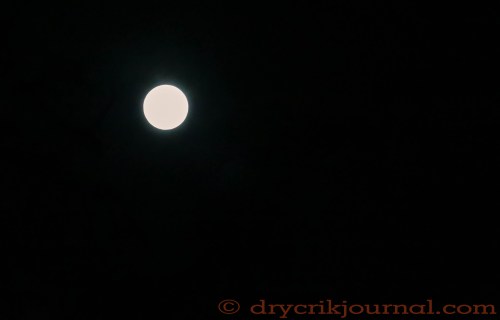
20160620-A40A0942


Seventy-five days old
the last time a full moon moved
through the shortest night:

1948—I wake at two to see
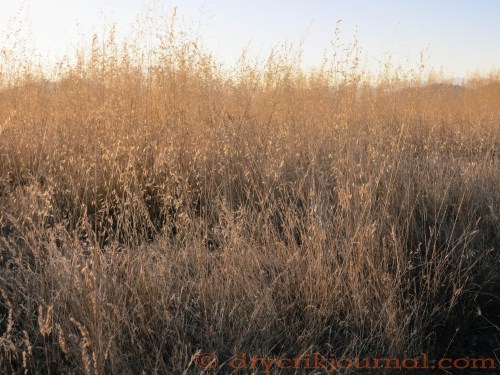
wild oats blond on sloping walls
as the dogs bark in the distance

on coyote business, like always.
Dry years in the San Joaquin,
Dad shipped thin steers in the rain

when I was born, bought some more
to feed on green into July
I can’t imagine possible, but

we stayed the droughts, like always,
in a canyon I’ve never left
for long—nowhere calling,

no other place to claim my tears
of sweat and blood, sentiments scattered
on dry ground like leaves of poetry.


ODE TO THE BULLFROG


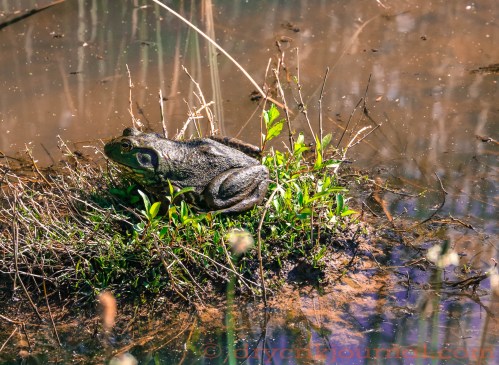
20160418-A40A0873


It’s not a clean world
where frogs can live like kings
on their own island

apart from the main
stream, where stagnant
boils under the summer sun

with new life they trust
will keep them fed
tomorrow. So far

from our marsh
and mire beginnings,
we tidy up instead.


Morning Harvest


IMG_1522


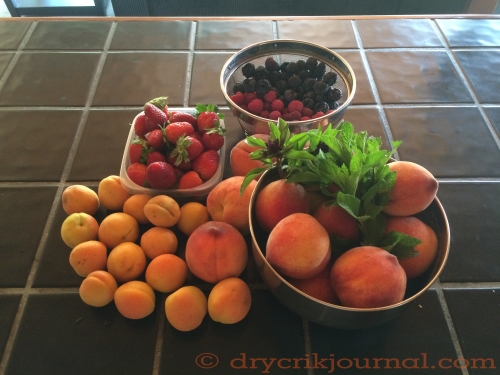
It’s hard to like summer in the San Joaquin, but my friend Barry Iden suggested that the only good thing about it are the tomatoes, alluding to the fruit and vegetables from our gardens. But full-time jobs when I think about the man, and mostly woman-hours, spent to germinate, plant, irrigate, weed, thin and pick the assorted crops, when I think about the ground squirrels that denuded our apple and pear trees last year, the raccoon families feasting at night and the risk of rattlesnakes lounging in the garden’s damp lushness. If time and money were the only considerations, it might be more economic to shop in town. But last night’s sliced, vine ripe tomatoes with salt, pepper and volunteer basil are not available just anywhere.

With more than half of June thus far over 100° and less than a week away from Summer Solstice, we’re in production: raspberries, strawberries, early peaches and apricots, we’ve fed the neighbors who in turn bring part of their own harvests. And that too, the exchange of produce that brings us together, a throwback to the old ways that makes summer in the San Joaquin more than bearable, but enjoyable.

Last of our crop of weaned steer calves head to town this morning.


MHW 1287 RUGER 010


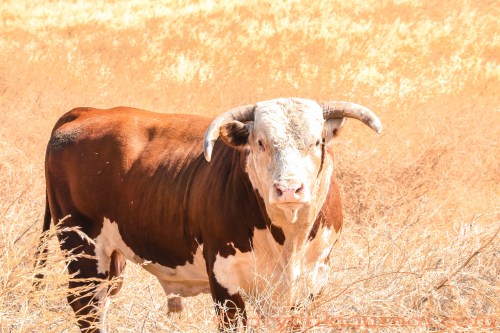
20160612-A40A0905


Five years of service: docile daughters
who have daughters of their own
camouflaged in black with bone,

he’s left his stamp, gets along
without much help, keeps the peace
when all the bulls are grumbling

on vacation in the shade. Another world
within the one we own, he could be
human, but with a better disposition.

                                             for Loren Mrnak


Tall Feed


20160601-IMG_5603


Doctoring eyes again this a.m. in our last big bunch of weaned calves, a problem exacerbated by tall feed. Temperatures have been running over 100 degrees, the creek’s quit running, summer’s here.

We’ve another small bunch of calves yet to gather and wean and then we’ll be done with weaning. Dark mornings and high heat have tempered my posting here. Not much in the mood for poetry or photography, but nothing stays the same ( I hope).


WET SPRING


20160414-A40A0660-2


The trails are gone,
hats above a sea of wild oats
like navigating ground fog

blind to rocks and ruts
in a slow gather
bringing tunnels together,

cows and calves. All the brags
of tying knots above the withers,
dally wraps around the horn,

ring tame and distant—
even the best broke horse
can’t resist temptation.


Weaning 2016


20160529-IMG_5598


As always, our primary concern during the weaning process is to reduce stress on the calves. Last week’s heifer calves above have adapted easily to their new routine on the irrigated pasture without mothers to comfort and direct them.


20160529-IMG_5575


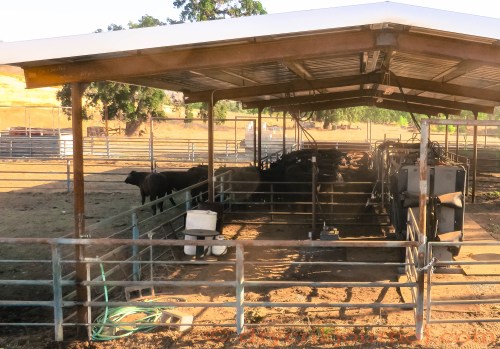
In the process of upgrading our processing area with a hydraulic squeeze and shed roof, we’ve also offered some shade in 100-degree temperatures. This week’s bunch of steers and heifers have found comfort in the new enclosure during the day, free to go to hay and water when they please.


20160529-IMG_5585


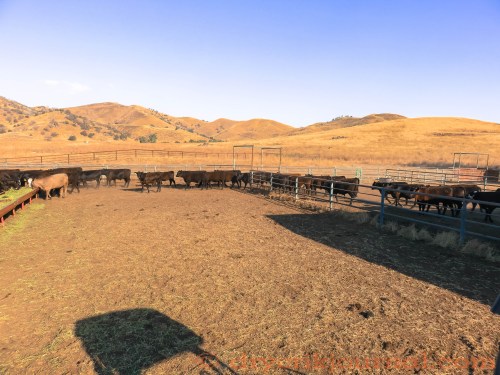
In the interests of journaling, these steers and heifers averaged 722 lbs. when unloaded at the corrals after a 45 minute haul, heavier than last week’s calves: steers averaging 731 lbs. in the auction ring, and the heifers averaging 712 lbs. before turned out on the irrigated pasture.


PEACHY


20160528-IMG_5548


Two weeks into weaning,
we celebrate real progress,
the gather, sort and haul—

the harvest down deep-rutted
dirt tracks, 4-wheel drive,
low-range gooseneck tow,

bawling calves to the asphalt—
our early peach
tequila margarita,

just-picked berry
and last season’s lime
juice frozen into a star.

Blank page and pencil,
this year rattles
everywhere we go.