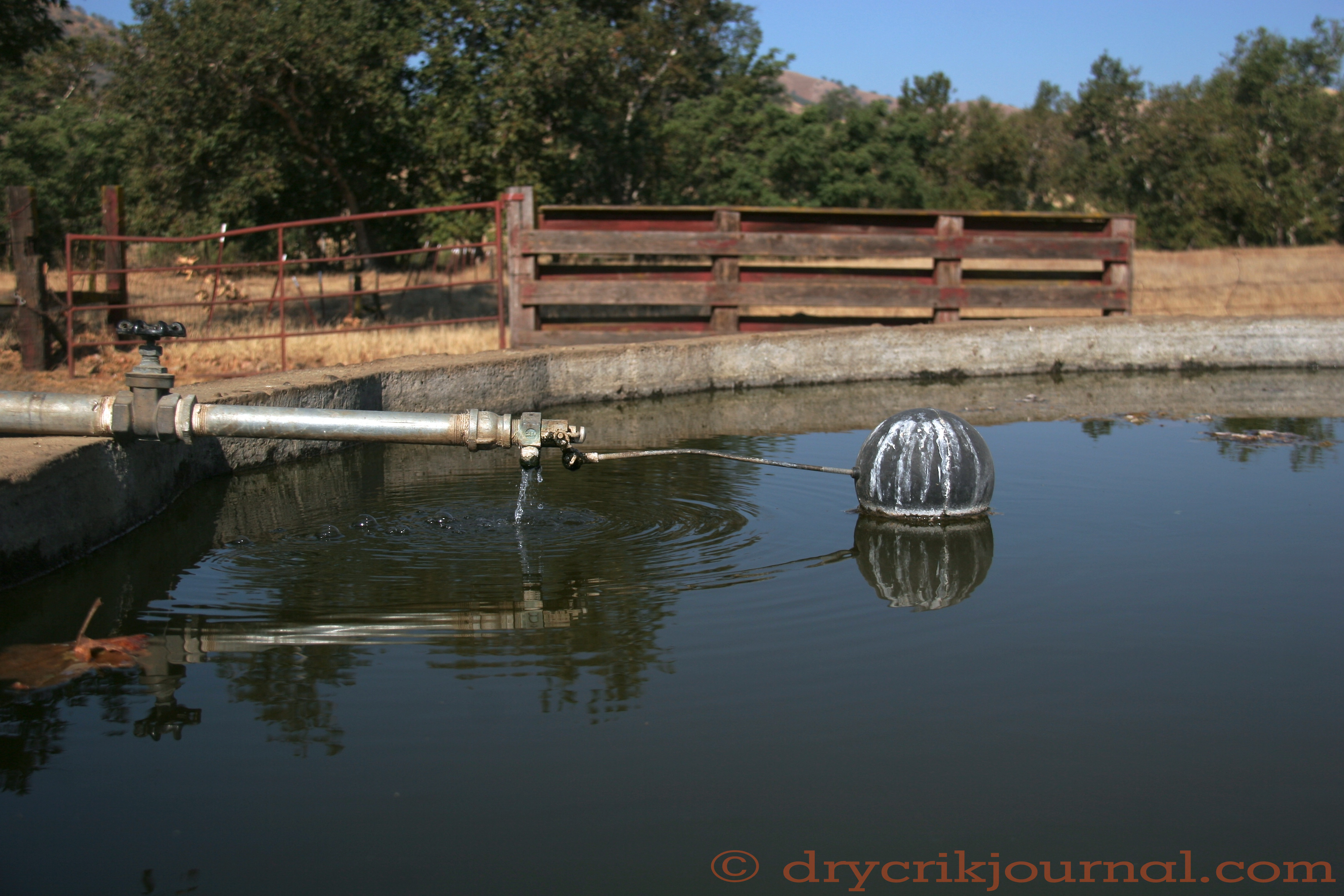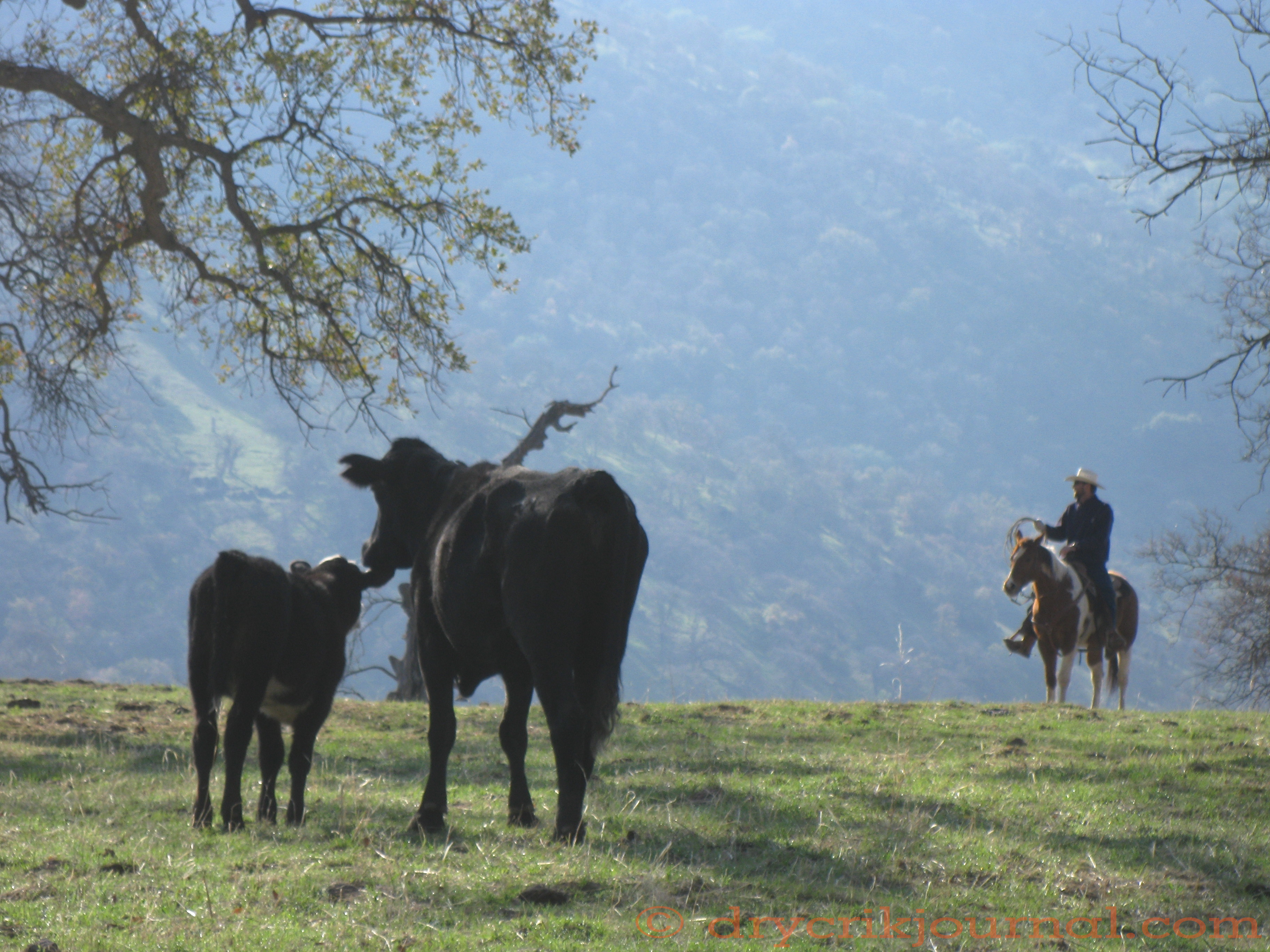
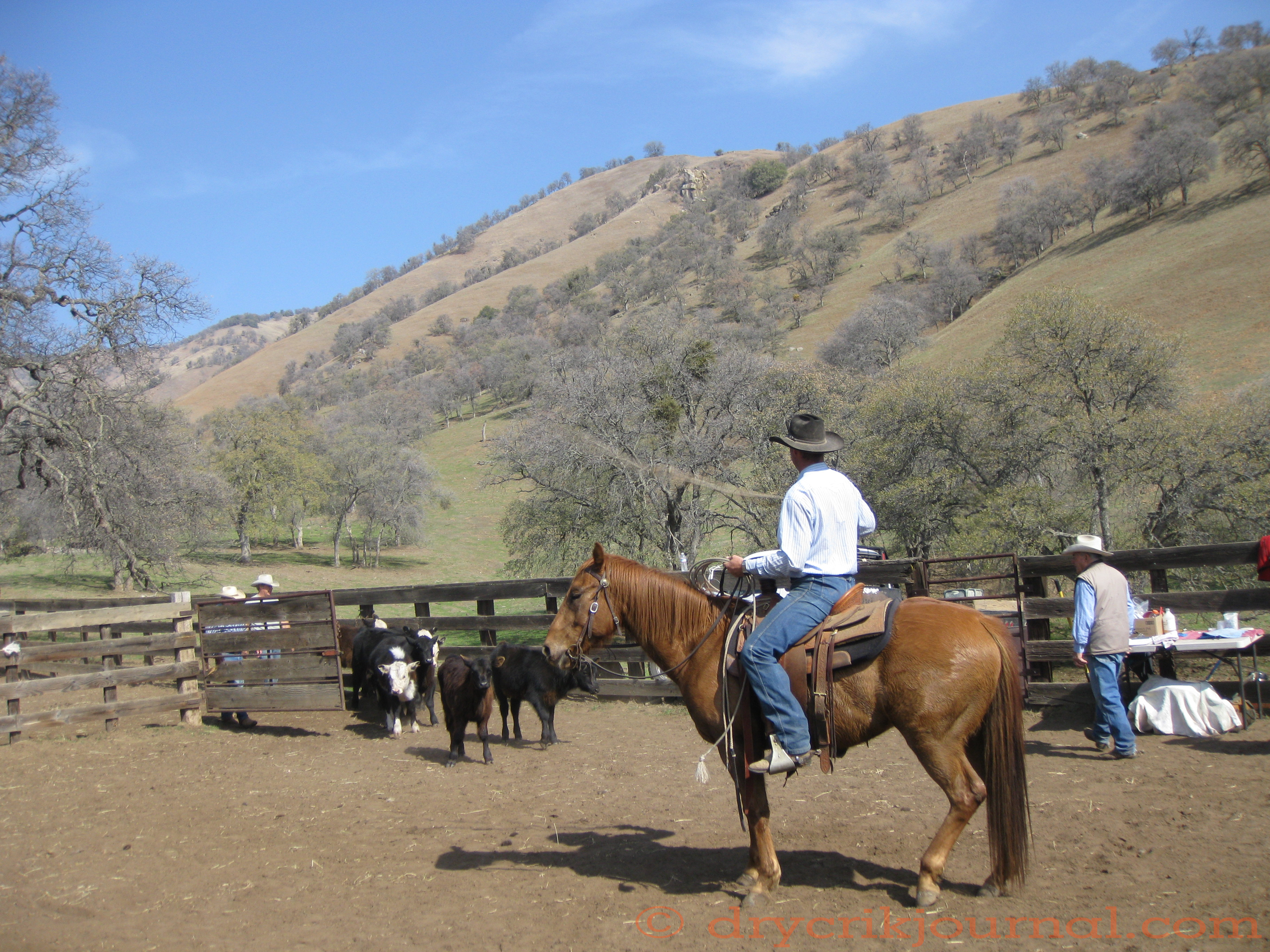
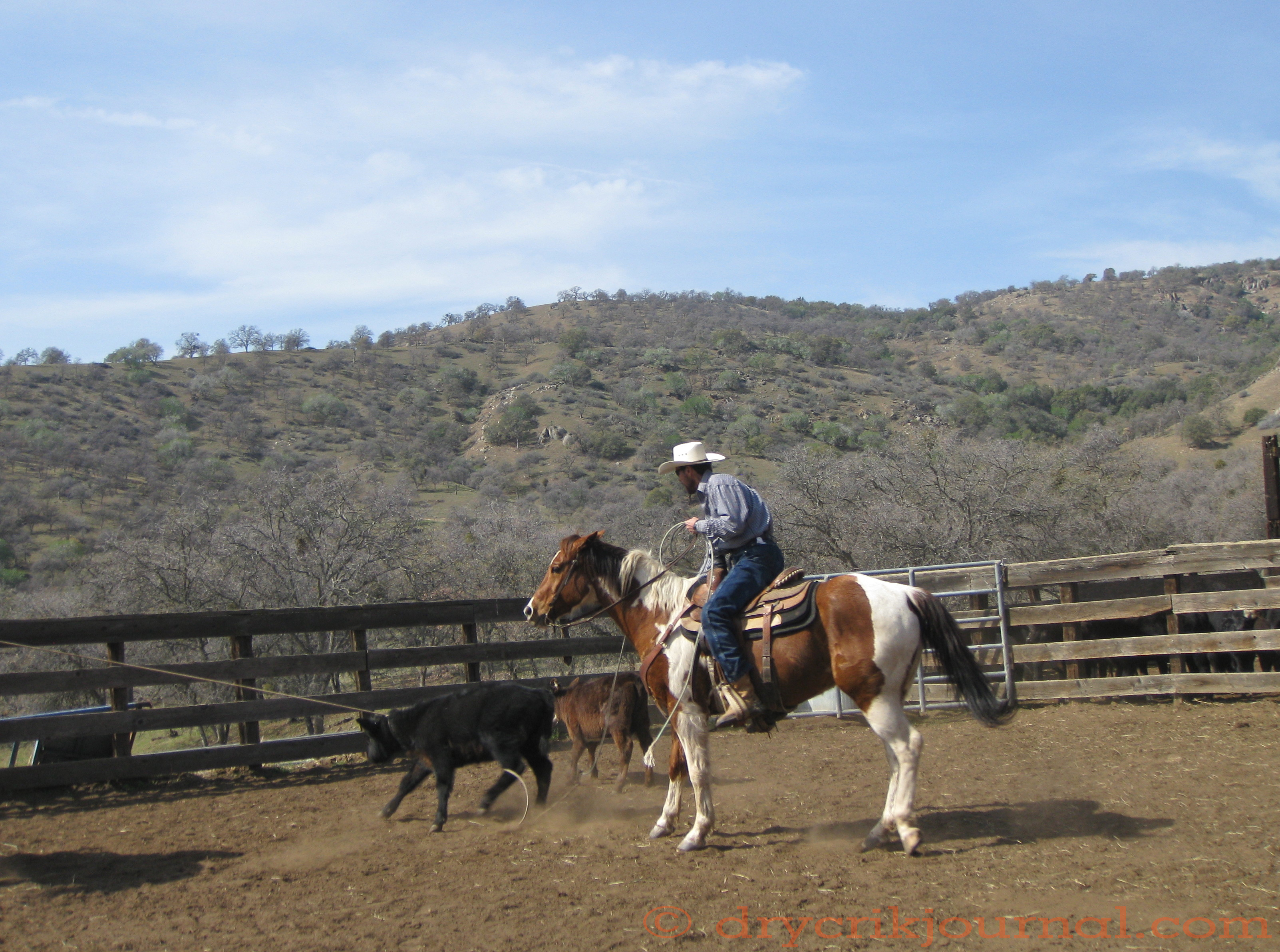
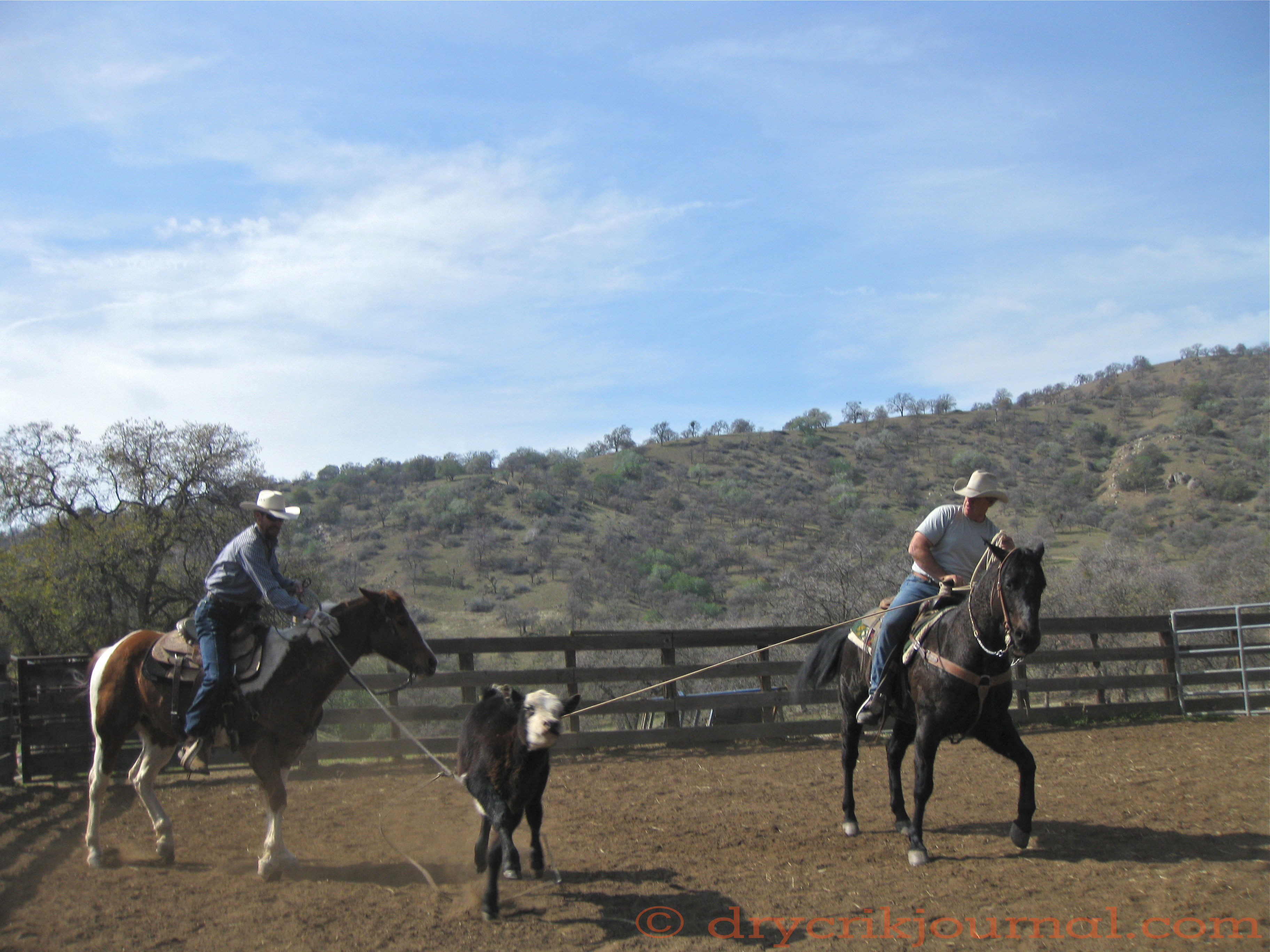
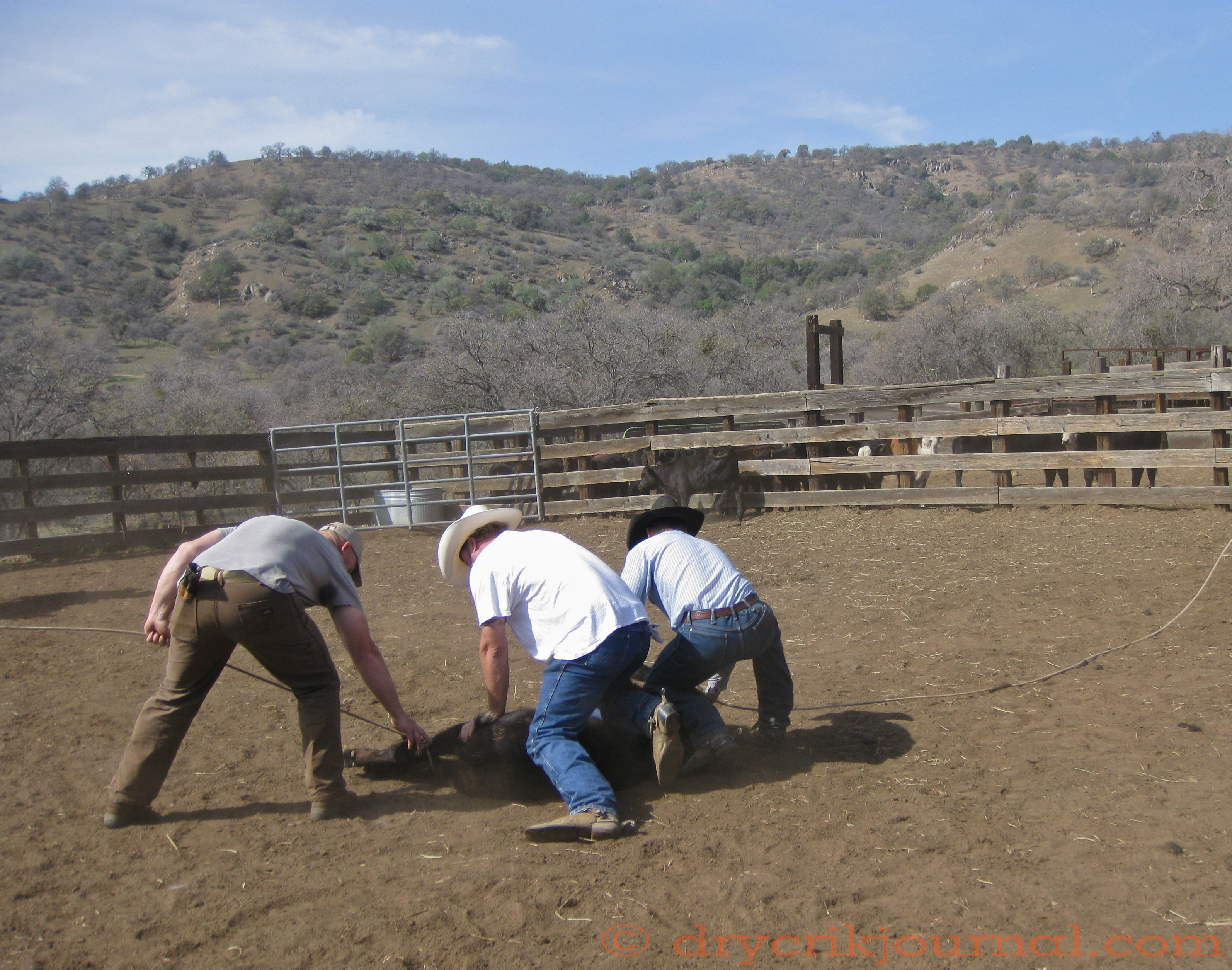
Cows thin, dry as hell, but everyone roped well. It seemed like such an easy day among good neighbors and friends.

Cows thin, dry as hell, but everyone roped well. It seemed like such an easy day among good neighbors and friends.
Posted in Photographs
We hear way off approaching sounds
Of rain on leaves and on the river:
O blessed rain, bring up the grass
To the tongues of the hungry cattle.
– Wendell Berry (“Sabbaths 2000, VIII”)
Perhaps the old trees grounded in granite
feel it flutter first, out of the southwest—
or the windmill that never lied, spinning
pointing, pumping water. We await
the screaming crescendo of wind rising
on the corner of cedar log ends to be sure—
the Siren’s song that can draw dry souls
from the flesh to fly with the first drops
sounding on the roof, the leaves, the earth.
No finer miracle than that moist moment
of redemption, inhaled and absorbed at once,
bringing grass to the tongues of hungry cattle.
____________________________________________________
A ‘promising chance’ is bantered about among local news and weather commentators for next Thursday, Friday and Saturday.
What we keep in our heart
is etched in our faces—
refined over time
it changes, and changes
us a little. That is
the adventure—holding
on and letting go—
finding a sharp knife
for the carving.
Posted in Photographs
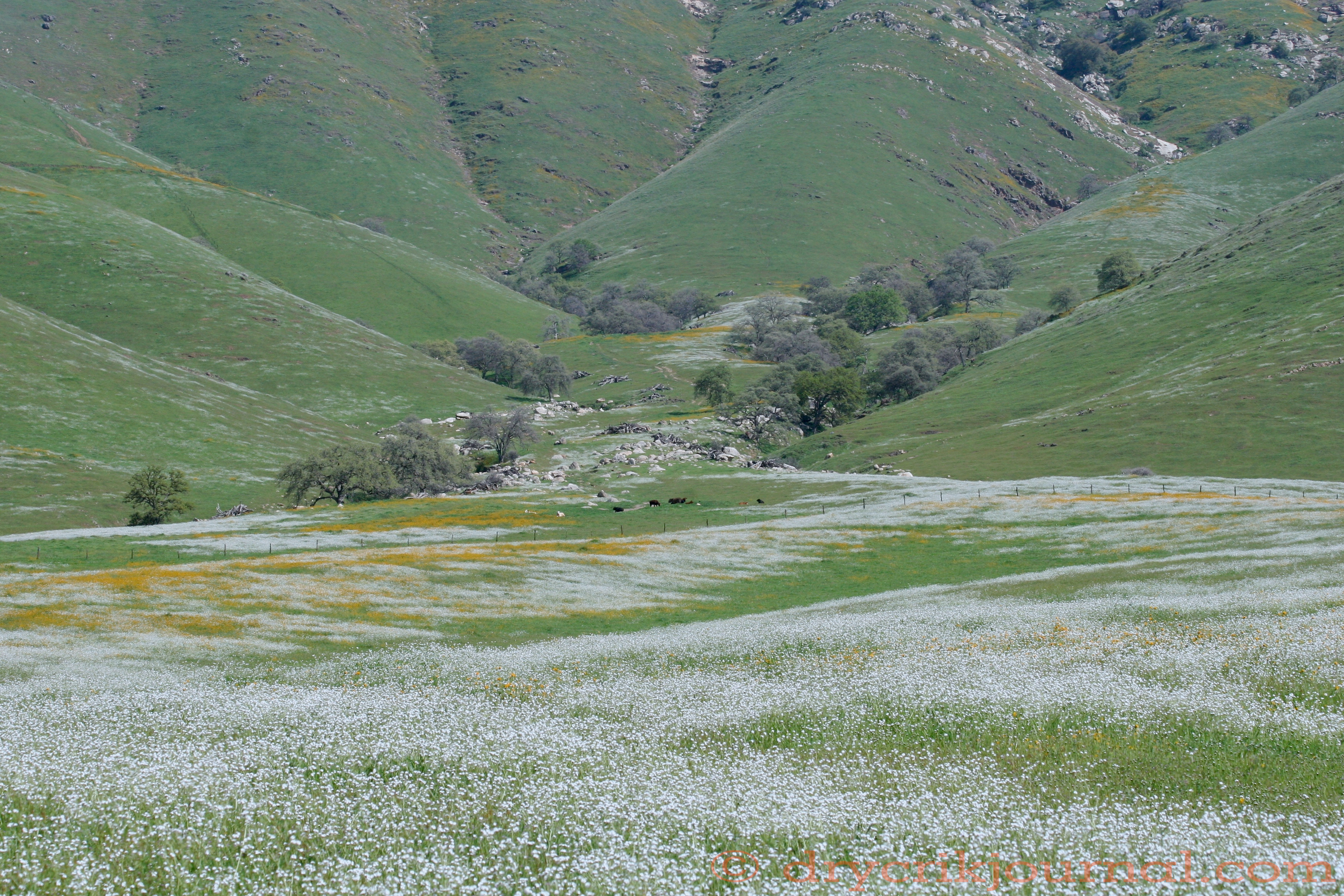
Pogue Canyon – March 14, 2008
With no rain in sight through the end of the month, we keep the chance of rain alive with images of spring stored in our minds, recalling full calves in tall green grass, cows milking well, hills colored with wildflowers, slopes covered with skiffs of snowdrops, golden poppies on peaks—lush and verdant memories that begin to seem so unreal now, we tend to doubt ourselves.

May 1, 2010
There are no programs, no operational plans for the worst drought since California began keeping records. Apart from reducing cowherds, some neighbors have weaned their calves three months early to save their cows, foregone branding and the normal 200-pound gain through May to reduce the cost of supplemental feeding.
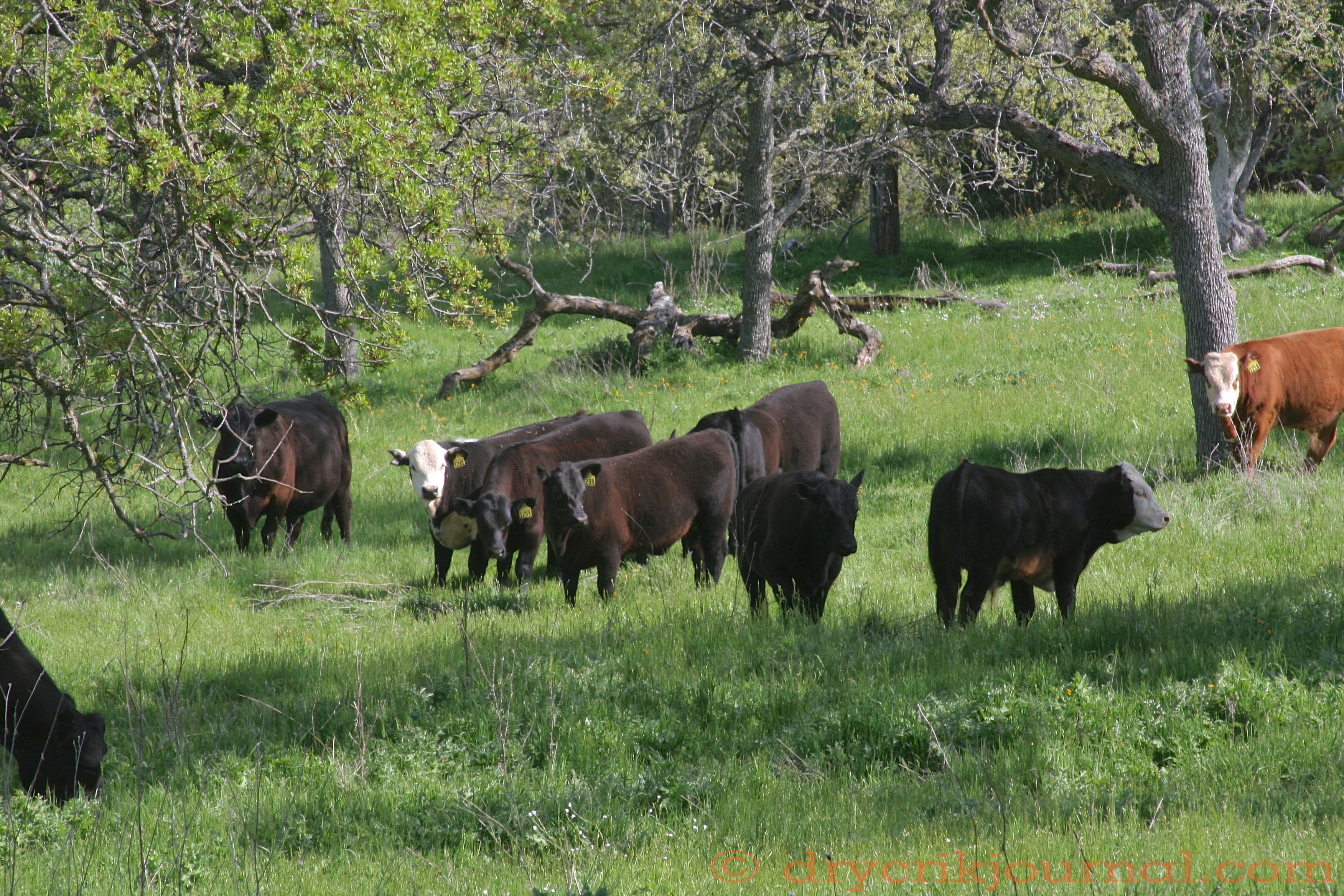
April 14, 2011
The south and west slopes may not recover this year, unable to germinate seed in the steep clay, absorbing every drop of very little rain before we see a cotyledon. After stacking two dry years on top of one another, the demands of the soil are great with less than 3 inches of rain since May 2013, and less that 10 inches in the year prior—12.25 inches of moisture spread over 32 months. The impact of the resulting lack of surface water to the San Joaquin Valley will be devastating to cities and farmers alike, to its culture, to California’s economy and the cost of food around the world. Drilling more and deeper wells in the Valley’s retreating groundwater is not a sustainable solution.
I’ve a dozen branding poems celebrating the rites of spring, of a community of foothill ranch families working, sharing stories and a meal together as the earth begins to bloom around and despite us. We keep going just like we had a brain—perhaps ingrained in our DNA.
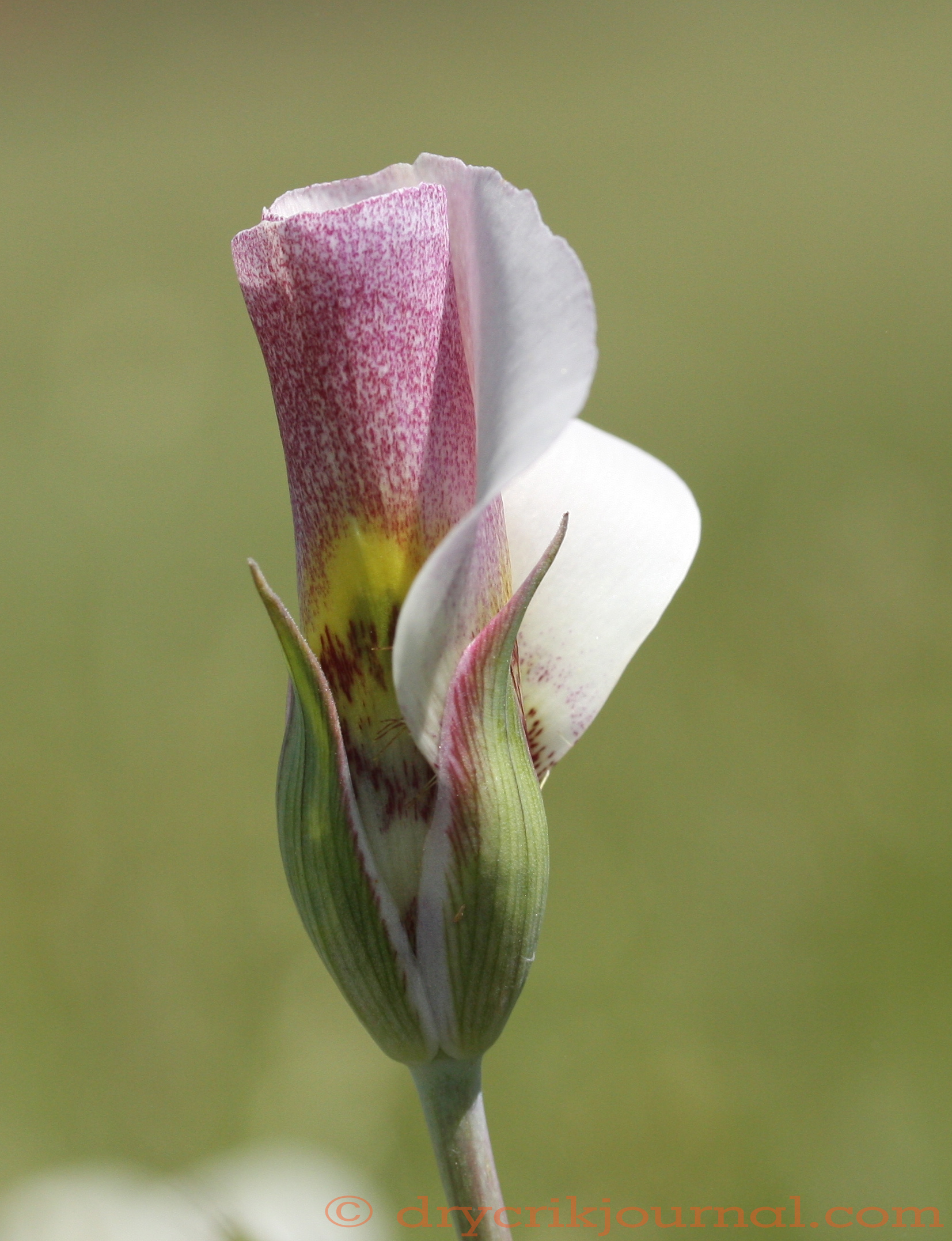
White Mariposa – April 20, 2011
Posted in Photographs
Hard pull on a slow Sabbath,
the gooseneck rattles over boulders
cobbled in the canyon bottom
beneath the torsos of sycamores—
long tunnel of bare white limbs
over the quiet stream and track up
to brand calves, four crow miles
and a hoard of long-gone faces
waiting to climb aboard
on each curve, in every draw.
Memories stacked like pages torn
from a bigger book, we inch
as fast as you can walk, you say
at 76, breaking a long pause
since someone’s last sentence.
This is not Nevada, yet
this wild canyon craves
the company of humans,
the chance to etch another rattle
in our machinery, in the minds
of this annual procession
of neighbors with other lives
during the week. This is not
church, but it could be heaven.
Posted in Poems 2014
Tagged Church, Craig Ainley Branding, East Fork Dry Creek, Mankins Flat, poetry, Sabbath
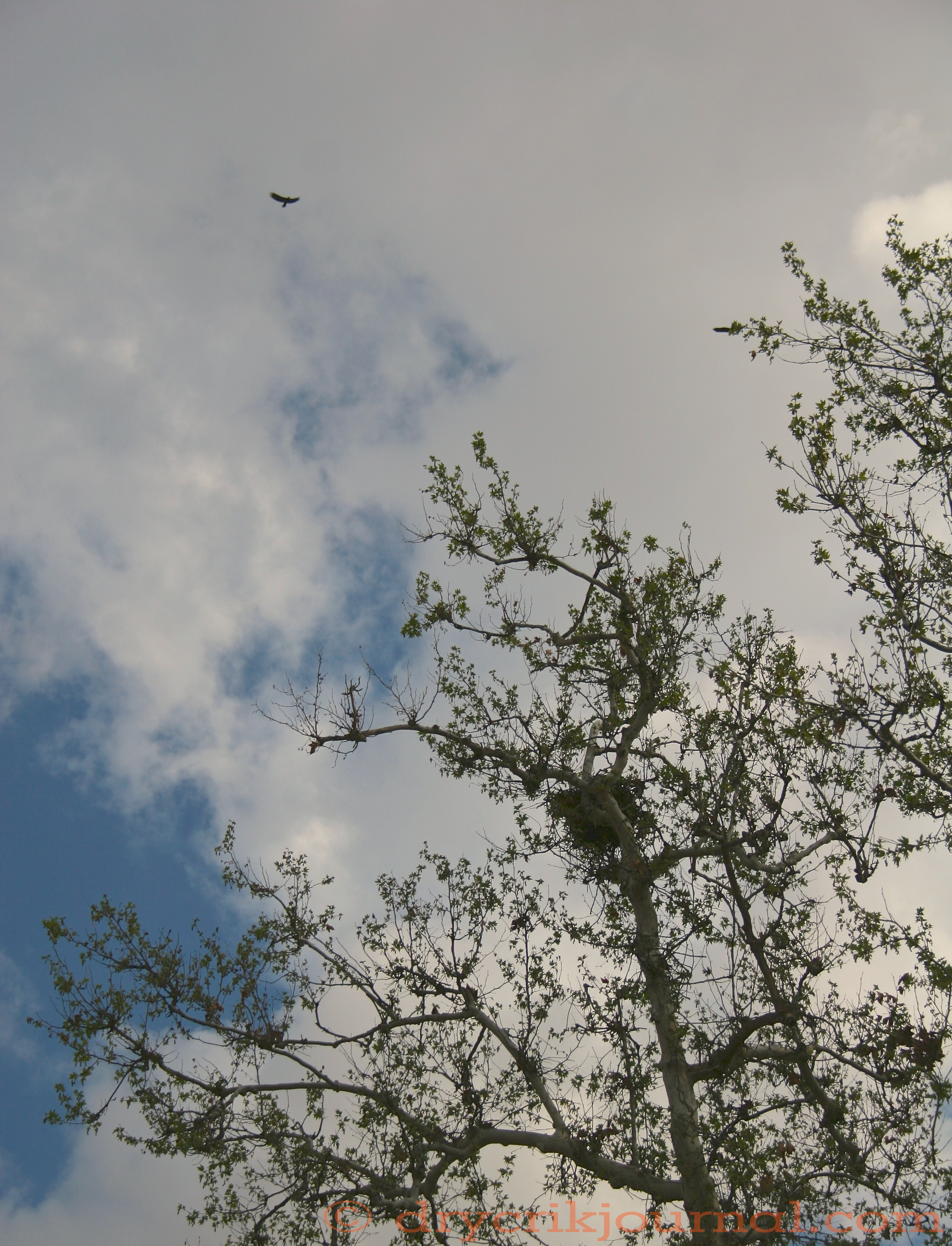
Despite the drought, it’s been a good year for hawks with an explosion of rodents last spring and very little dry feed for them to hide in. This time of year, a wide variety of birds of prey are busy everywhere, some migrant like the Prairie and Peregrine Falcons and Harris Hawk, and many natives like the Cooper’s and Red Tails. Soon the Red Tail nest in the sycamore above will be completely hidden in leaves, along with other hawk nests now waiting in the tops of Blue Oaks.
Anything can happen
anytime she wants—
normal means nothing now
as the blade retreats
within itself by dusk,
tender green fades to brown
on naked hillsides
weary with the day—
not morning fresh:
ground damp with dew
and darkened rest to reach
deeper into the soil.
We are not in love
nor casual acquaintances,
but bound to her nature—
an unpredictable disposition
with certain privileges—
with certain dues to pay.
Posted in Poems 2014
Every day, every evening, every
abject step or stumble has become heroic—
– William Stafford (“Waiting In Line”)
What once was wild play
when we could right ourselves
and dodge the ricochets,
reach and rope a dream
that danced on a long twine,
is no less heroic now
measuring each hoof beat,
every swing in the branding pen.
I have watched old men
ride closer to the center
of concentric circles in time
spinning quickly on the outside
to find their dot within
a slow-motion bull’s eye
just to inhale the details
that make each moment rich—
and dammit, that’s just what
I’ve gone and done.
Posted in Poems 2014
Tagged "Hay for the Horses", "Waiting In Line", Gary Snyder, William Stafford

February 12, 2014
First real accumulation of snow in the Kaweah watershed this season. It is light, temperatures here in the 70s, it may not last long unless we get another, colder storm soon. The grass is struggling on the south and west slopes where there is no cover of old feed, but overall doing better in the granite (higher elevations) than in the clay.
Not out of the woods by a long shot, we’re still feeding hay at all locations.
January 17, 2014: ‘No Snow’