

We are among the many home and ranch owners whose insurance policies have been canceled because they were located in the revised California’s High Risk Fire Area that includes almost half of the state.
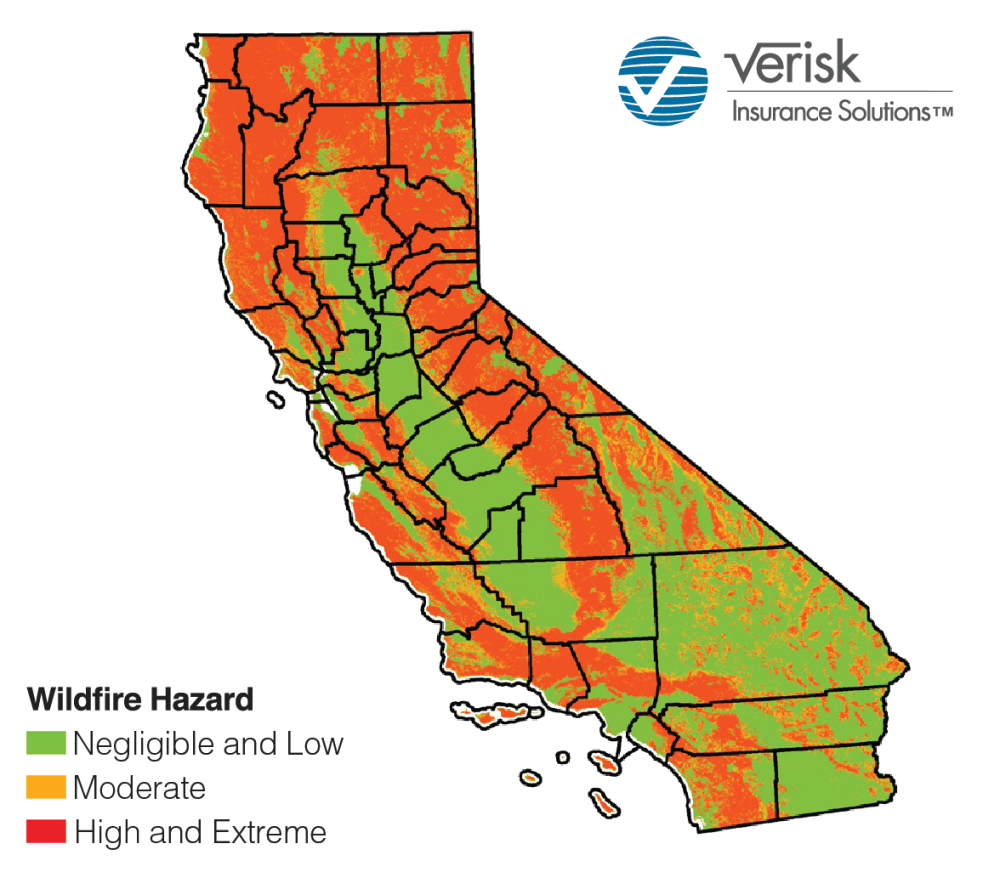
Drought conditions in 2017, 2018, 2020 and 2021 combined with poorly maintained PGE transmission lines in Northern California charred over 8 million acres that left insurance companies holding the bag for losses and fire suppression costs. After a month-long process, we found one other carrier with less coverage at twice the cost.
A decade or so ago, Tulare County used to spray the weeds on the shoulders of Dry Creek Road to reduce fire danger from catalytic converters, hot brakes and dragging safety chains. Currently, 4-foot tall dry weeds encroach on the eroding asphalt adding to our risk of fire.
An independent onsite inspection was necessary to establish baseline conditions for home, barns, tack room and shop. I waited at the end of the driveway for the inspector from the Bay Area who had become lost. Up the drive in a cloud of dust she parked in the shade of a redbud as I followed in the Kubota. As she stepped out of her 2017 Chevy Volt, it began to roll down the slope, as she grabbed the door trying both to hold it and to get back in, towards our 500 gallon fire-fighting water wagon to veer at the last moment into the skid steer. She could have been seriously injured.
Though the hybrid rocked the skid steer upon impact, it survived unscathed. After assessing the damages to her car, we tied the plastic together with duct tape and hay string and tested the brake and turn signal lights. Drivable and legal, she went about her business of asking questions and photographing the structures while I showed her our firebreaks, plumbing for filling fire trucks and water wagon from our wells, while explaining that I had even stopped one fire myself with the skid steer.
Having made it home safely, she conducted the remainder of her inspection with questions over the phone and texts over the next two days. I repeated many of the photographs she had taken because of the glare from her cell phone, plus additional pictures of electrical service boxes and their manufacturers with interiors of all structures. In order not to have to dedicate another afternoon for another inspection, I essentially accomplished the onsite portion of her inspection.
I recount this calamitous and ill-advised process from a 75 year-old’s perspective, dumbfounded by the inefficient technological progress in that span of years. Frankly, she had no more business navigating and assessing rural California than we would be navigating and judging San Francisco, the ironic culture clash between us resounding loudly.




 drycrikjournal
Hard to know how to comment on that!
janet
LikeLike
This commentary, maybe more than most others, describes the problem with such things today. Many have degrees or titles but are in need of “real life” comments sense experience. Just sayin’ and how are things anyway?
LikeLike
Our security blanket of common sense is unraveling at breakneck speed. Hold on, we’re hangin in there, Gary!
LikeLike
OMG…..
What next? Thanks for sharing John!
Terri
LikeLiked by 1 person
I enjoy reading your drycreekjournal. This one hit home in a different way. I have a home located in a high risk fire area. I’m 74. Snow build up caused our deck to collapse when we were not there. As things unfold with our insurance I have to say there’s a lot of a
mistakes, stalls and general miscommunication. If I’ve read the last insurance letter correctly our company will probably drop us at renewal time even though we’ve been with them forever. I hope you received a thank you from the adjuster. I look forward to another poem.
LikeLike
So, Calamity Jane came to see you and brought a cluster with her. No doubt a collage gal taking her first step into the world of real life experience.
LikeLike