
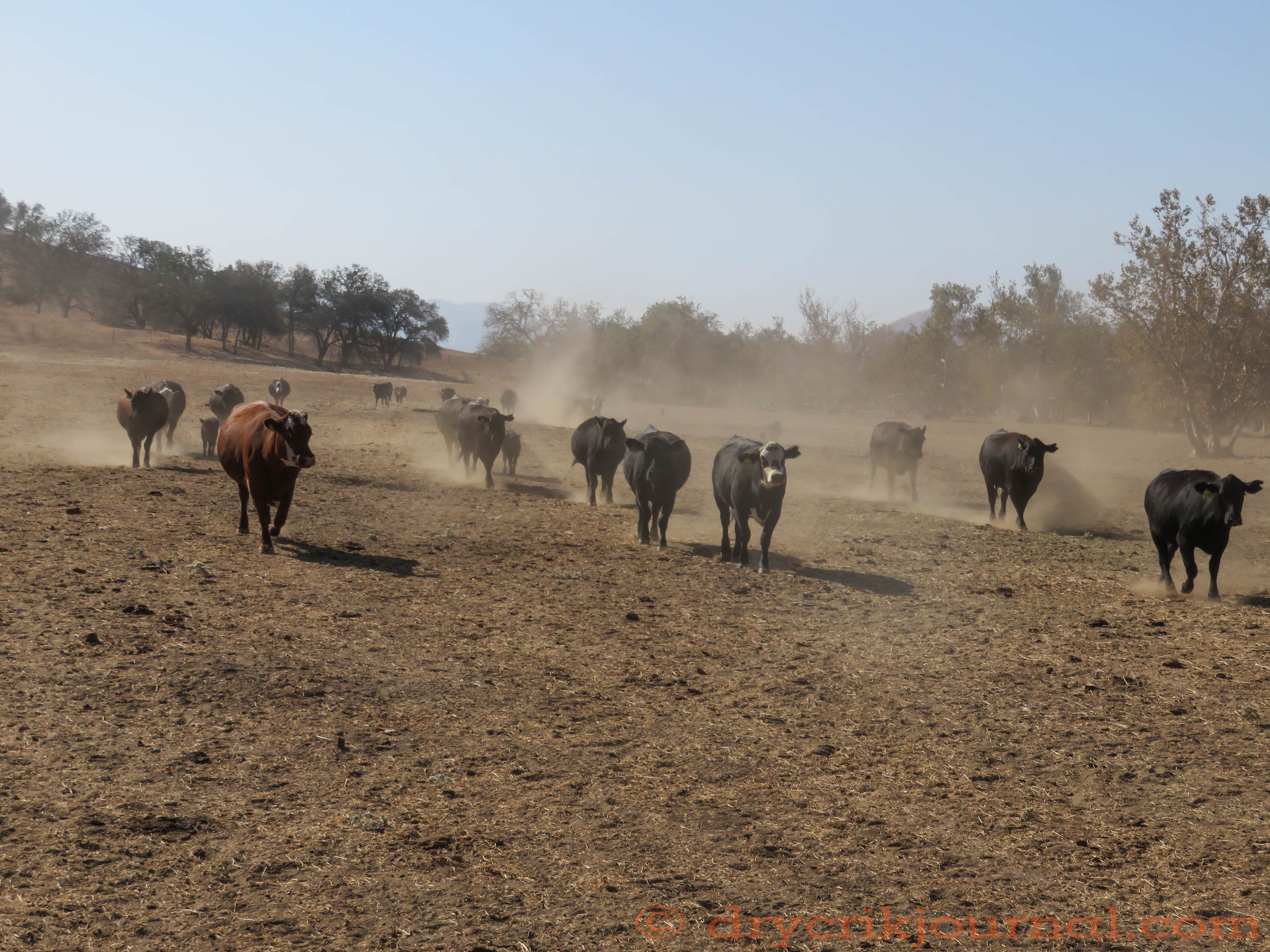
Robbin and I made the rounds with hay yesterday, photographically documenting feed and water conditions as we went—both in short supply from Dry Creek to Greasy Creek. Fed three times a week, the first calf heifers plodding through the dust above is a common sight.

Miraculously, the stock water pond at Spanish Flats is holding.
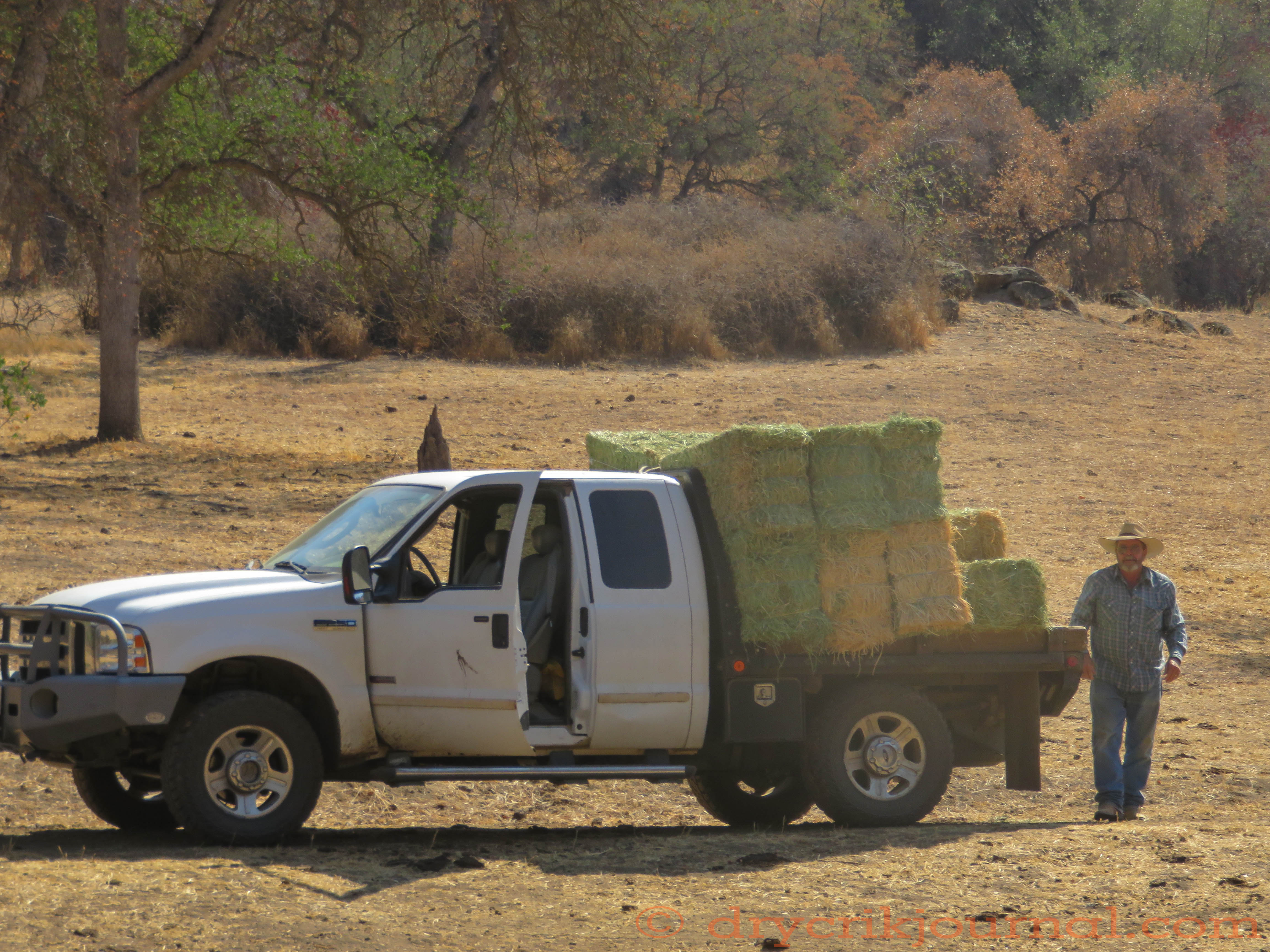
With reduced numbers in Greasy, we’ve been feeding about 20 lbs./cow once a week for past six weeks.

The cows have been calving for the past thirty days on bare ground everywhere.

In the past, I’ve critically referred to the pond at Railroad Spring as my one extravagance because of its size, but much smaller, it would be dry this year. Full, it looks like this.

The cows look good, calves healthy, but we could use a rain anytime.




 drycrikjournal
I worry for you, I pray for all of us.
LikeLike
Thanks, MK. We’ve become numb to the dust and drought here on the ranch, hoping for rain, as we approach our rainy season, described by early California historians as ‘that time when it might rain’. Fortunately, we’ve cut our numbers to fit our feed and water resources so that our cows are still in good flesh, but where we go from here depends on the next thirty days.
Honestly, the impact of two years of drought may be greater and longer on the rest of California than it has been on us, though most Californians don’t know it. Our ground is resilient, our demands small by comparison, mitigated by more alfalfa hay and decades of developing our stock water resources.
The economic impacts have yet to be tallied. 🙂
LikeLike
I actually thought I’m a bit too old to live to see climate change devastation planet-wide. Not so.
You’ve been responsive and proactive to the signs. You’ve proved yourself wiser than those who live by ‘economic impact’.
LikeLike
Time will certainly tell, MK.
LikeLike
If you could only change it from “Ranch” to “golf course” and water it all.
What is going to happen if the drought continues and more of the valley is left fallow and alfalfa is less planted?
LikeLike
As crops go, alfalfa consumes lots of water and because much of the alfalfa was not irrigated this year, the price has gone up substantially. Enough so, that it is now economically feasible to import it from Nevada and other states.
The long-term impacts of a continued drought will be devastating, many of which we haven’t even considered yet, as a third dry year will be unchartered ground for modern California, as wild and as plausible as anything you can imagine.
LikeLike
Very dry landscape. How often do you get rain? Is it rainy & dry season there?
LikeLike
After two years of drought, we can’t imagine green as we approach our rainy season for the next eight months. For more info, check out our Rainfall History in the Weather heading above. Thanks for the comment 🙂
LikeLike
The thought of importing alfalfa really drives home just how bad it is. Pray El Nino comes through
LikeLike