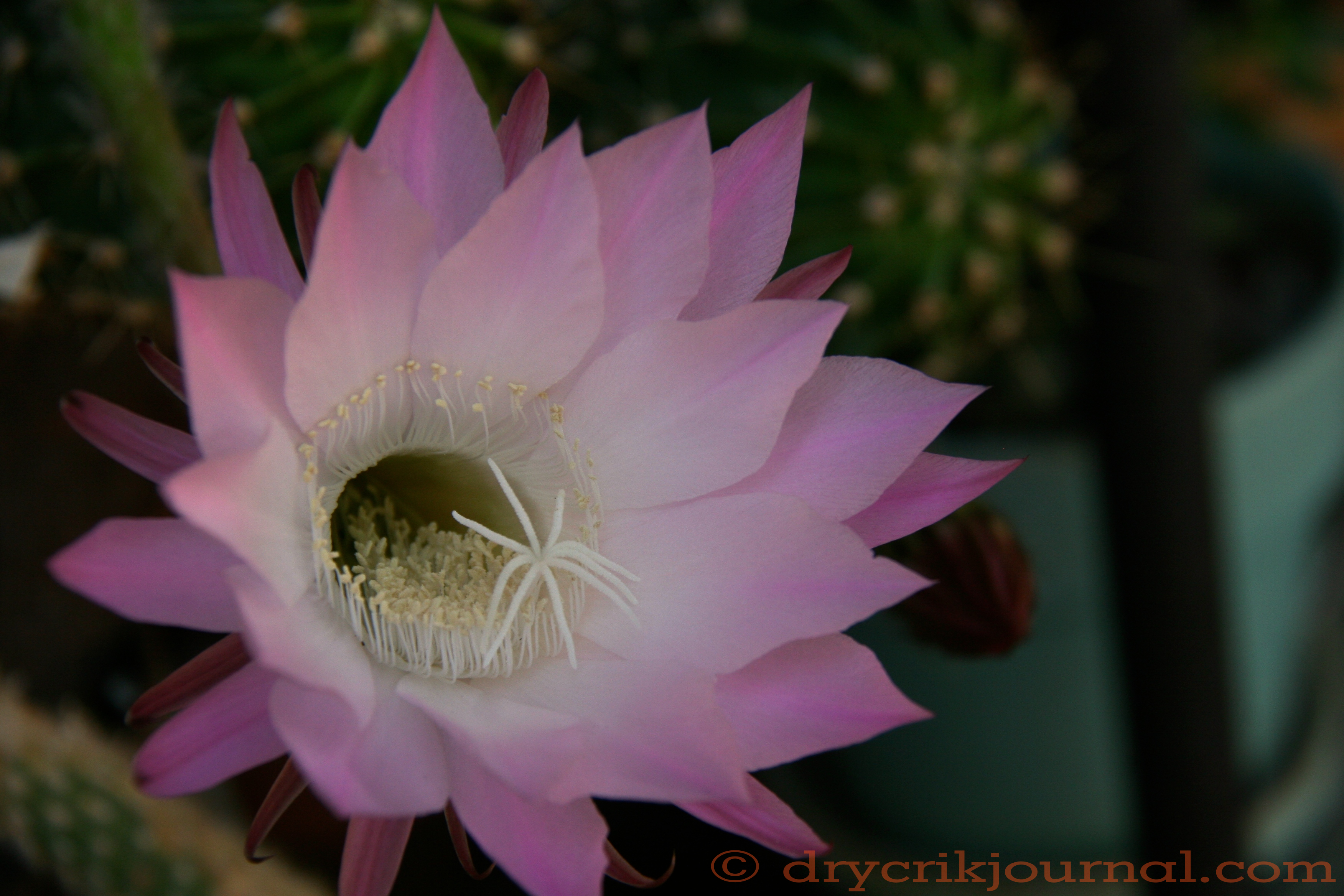
Bud and bloom, flower
for a day, then sigh—
a man needs many cacti.

Bud and bloom, flower
for a day, then sigh—
a man needs many cacti.
Posted in Photographs, Poems 2014
Tagged Easter Lily Cactus, Echinopsis oxygona, garden, haiku, Mother's Day, photographs, poetry
Gods and goddesses tempt us,
pull mind and flesh to choose
between commercials
hawking sloth and greed,
or the new and improved
comforts that never last
as long as we do. Raining
cold in my face, she suggests
the woodstove waits
for coffee and company, that
old men can catch their deaths
looking up canyons for silhouettes
of cows and calves that grazed
early morning’s ridgeline.
Her running mate reminds
that I won’t rest easily by the fire
not knowing—and vows to come along
to make the wet ride fun.
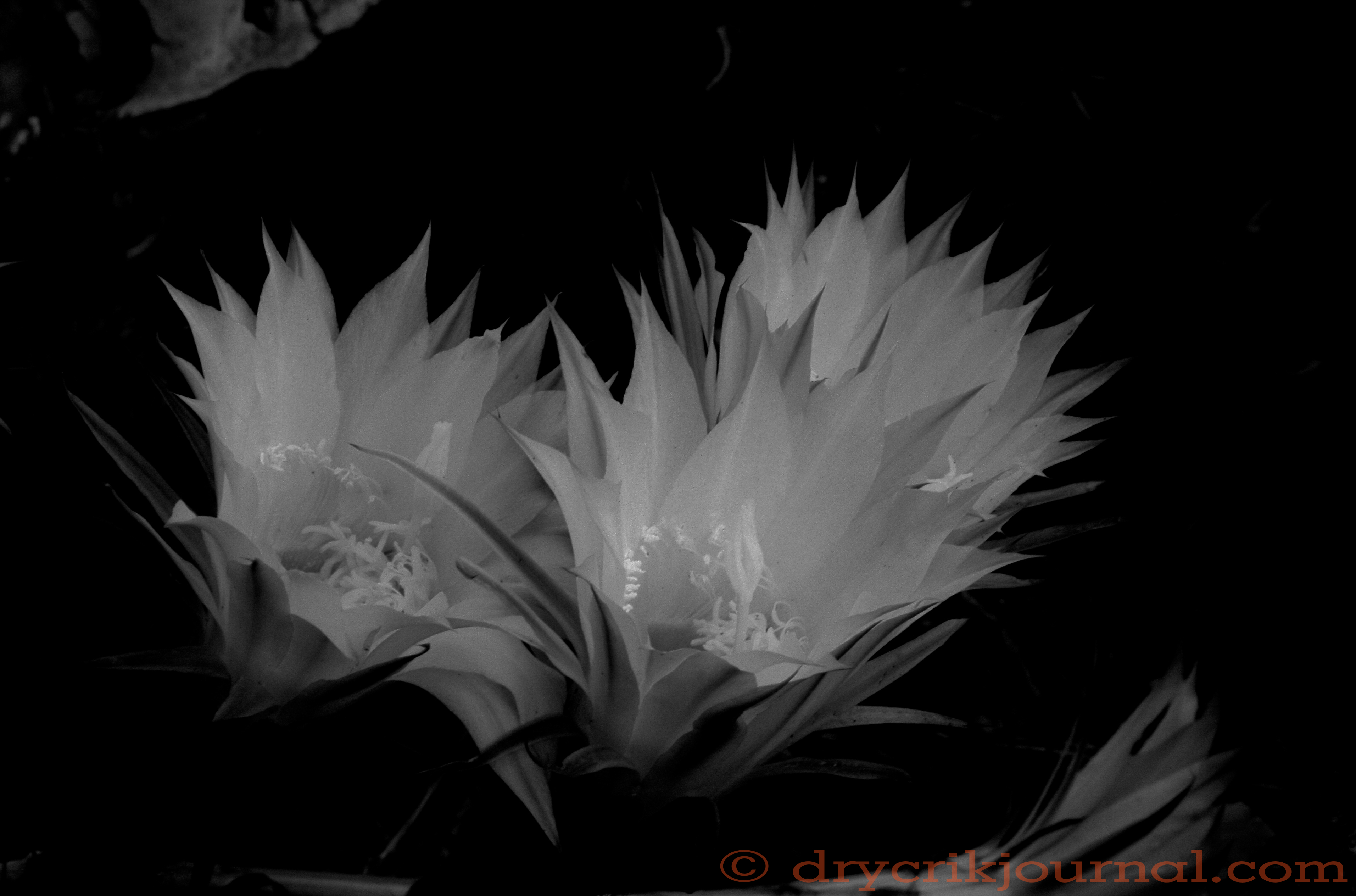
Cactus night bloom braves
the sun, but only one day—
for mothers in May.
Posted in Photographs, Poems 2014
Tagged Easter Lily Cactus, Echinopsis oxygona, flowers, garden, haiku, Mother's Day, photographs, poetry

Above the mountains, one
last brew rises to hold the day,
make night rain.
Posted in Photographs, Poems 2014
Tagged Drought, Great Western Divide, haiku, photographs, poetry, weather
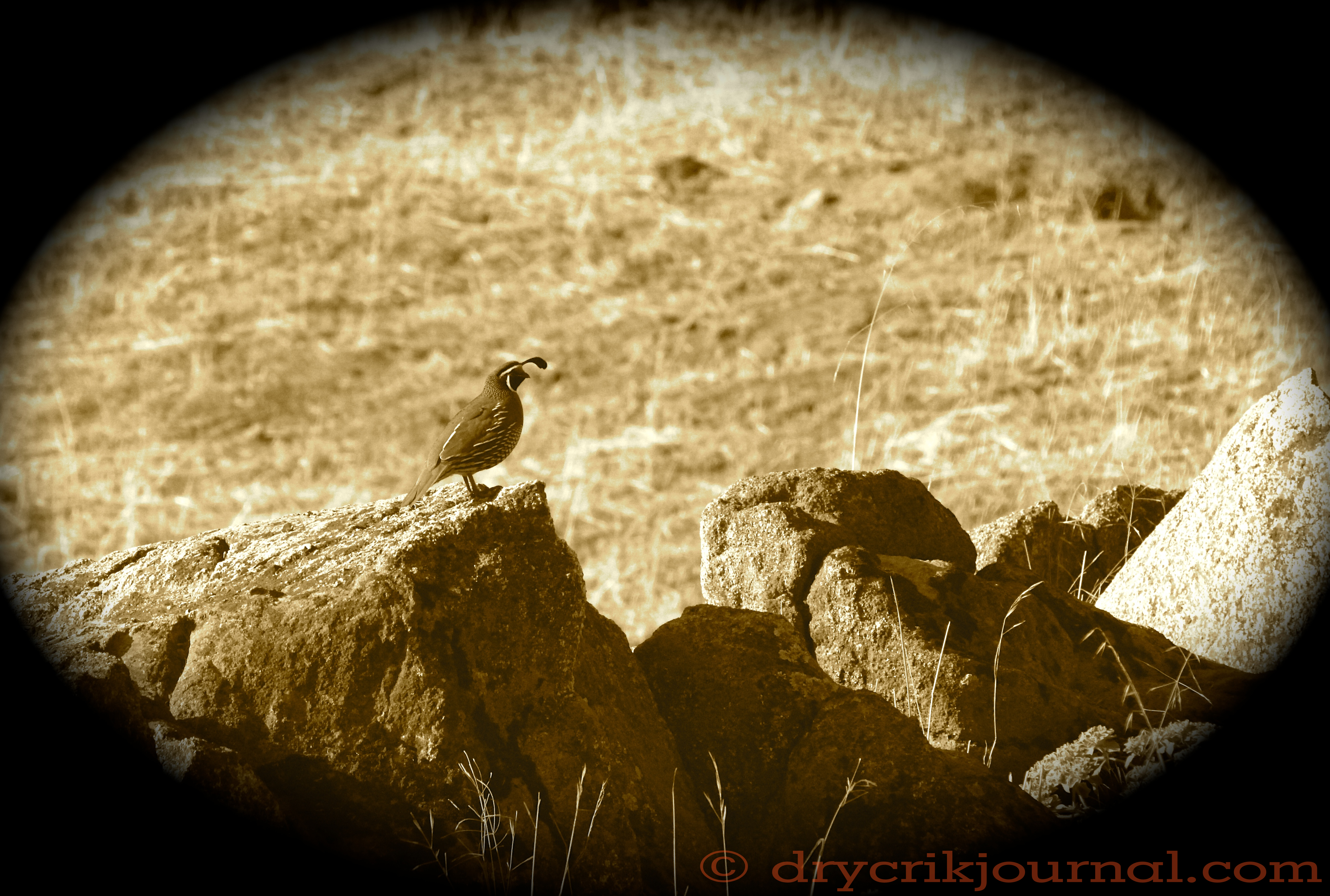
A pair in the shade
take a break—quail
on the rail of the gate—
we stop to inhale
with each prolonged
tick of time, knowing
it won’t last long enough
to photograph—to leave
for the house and good lens
to freeze gray detail
to store somewhere.
Instead, we stare
at a mirror
in our garden
we won’t forget.
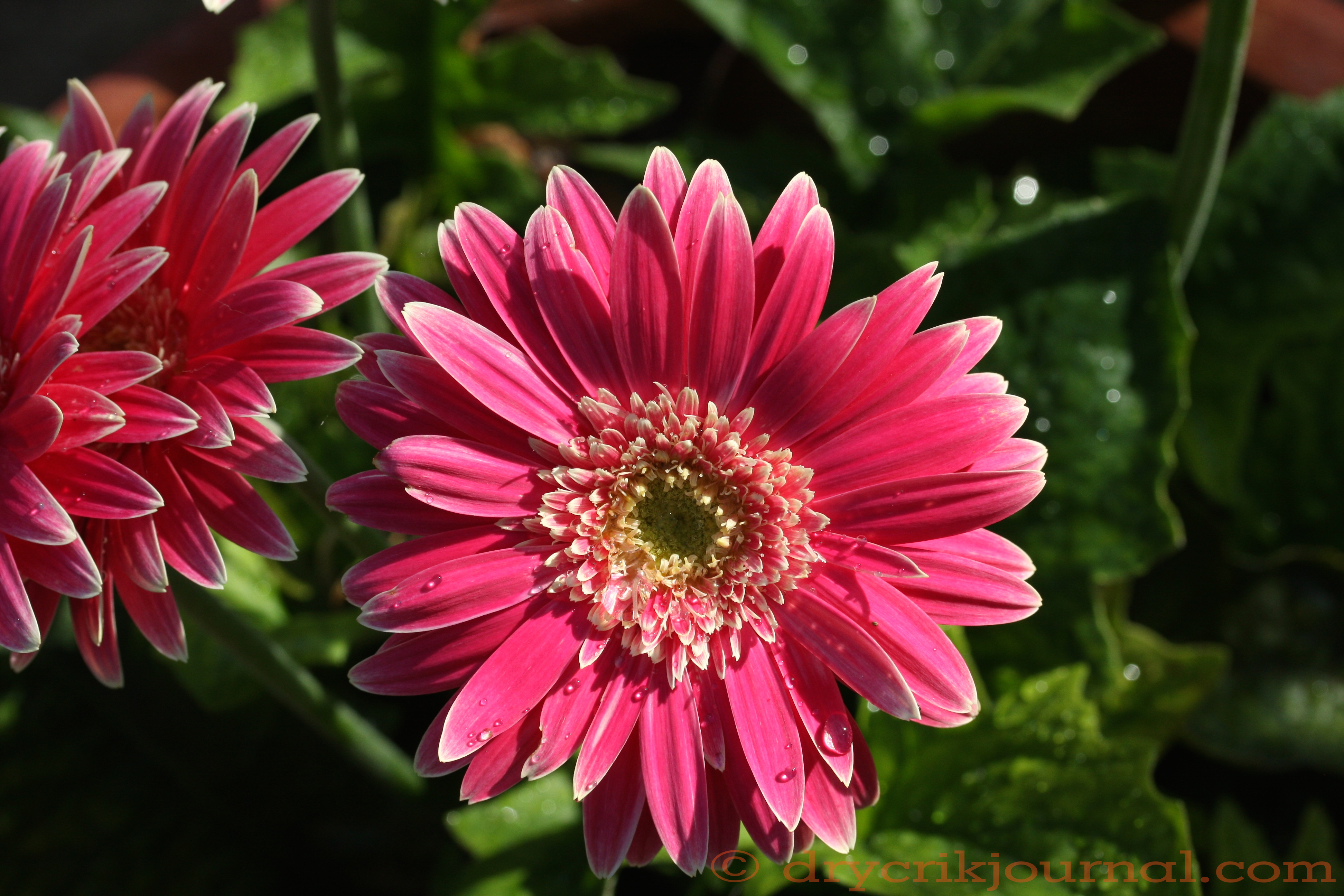
Surprise me with color
that prolongs spring,
just add water to the wild.
Posted in Photographs, Poems 2014
Tagged African Daisy, Drought, Gerber Daisy, Gerbera, haiku, photographs, poetry, weekly-photo-challenge
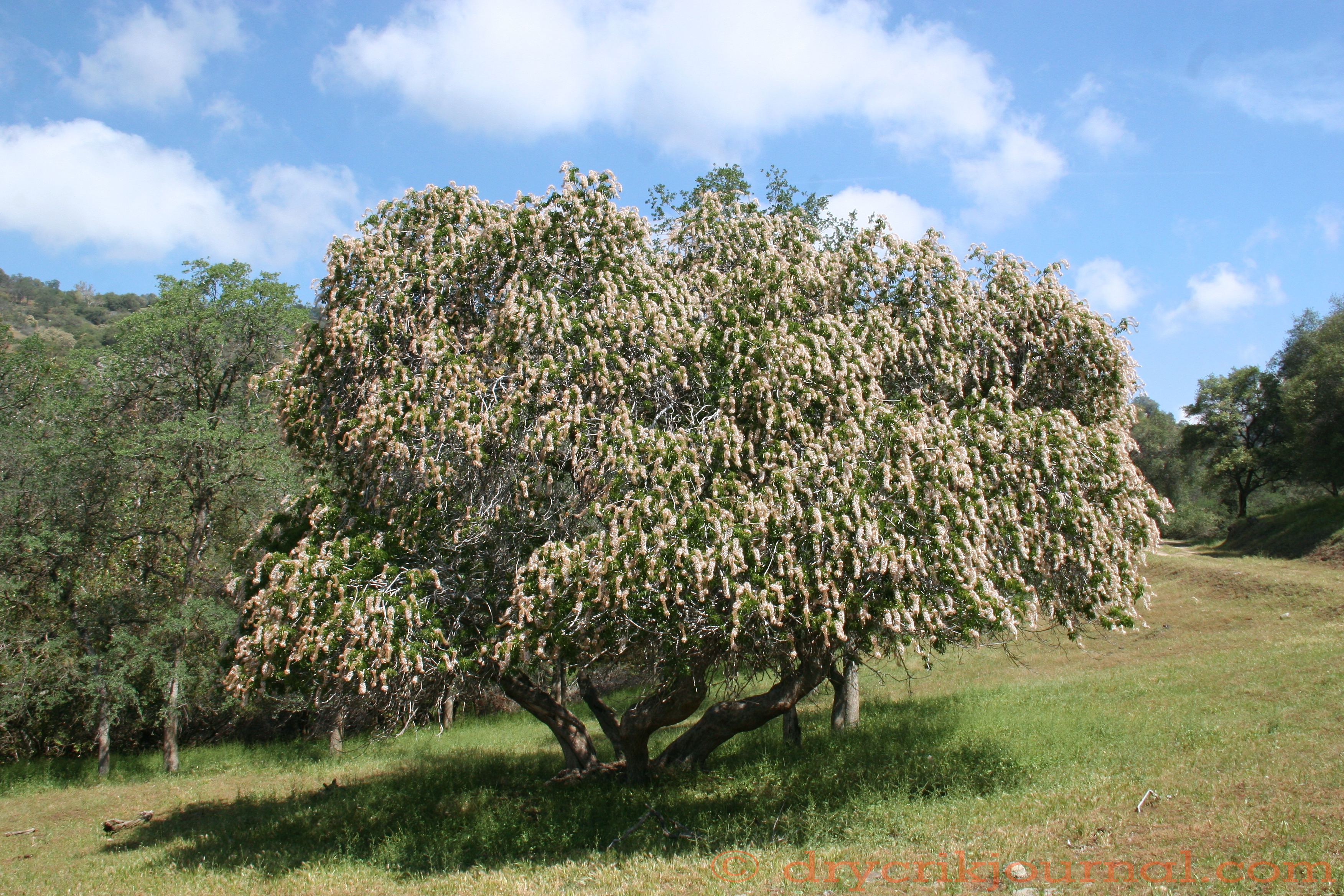
Posted in Photographs, Poems 2014
Tagged California Buckeye, Drought, haiku, photographs, poetry, weather, weekly-photo-challenge, wildflowers
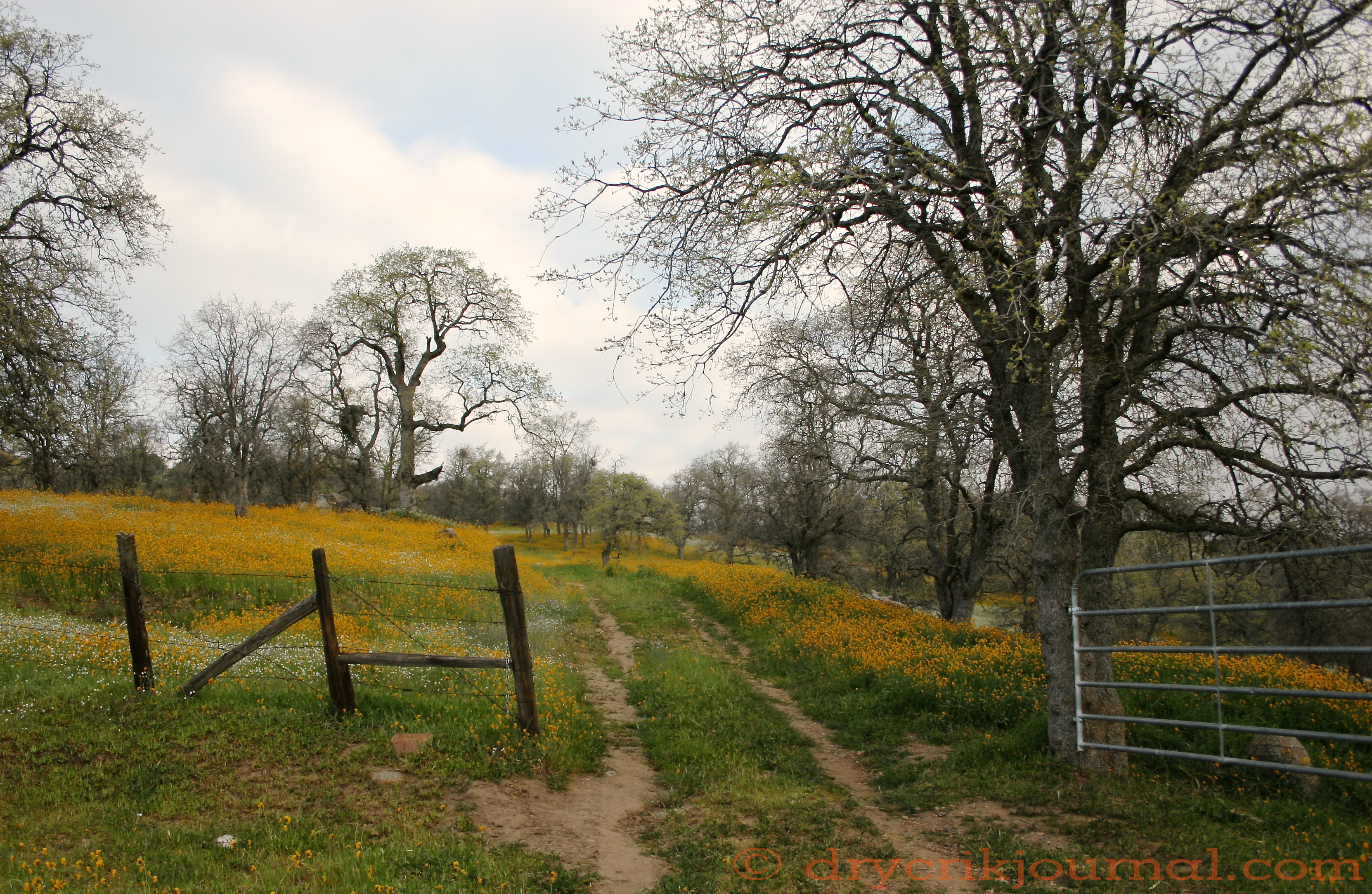
March 18, 2009 – Paregien Ranch
Gates left open
to trails we explore,
sometimes I forget where I am.
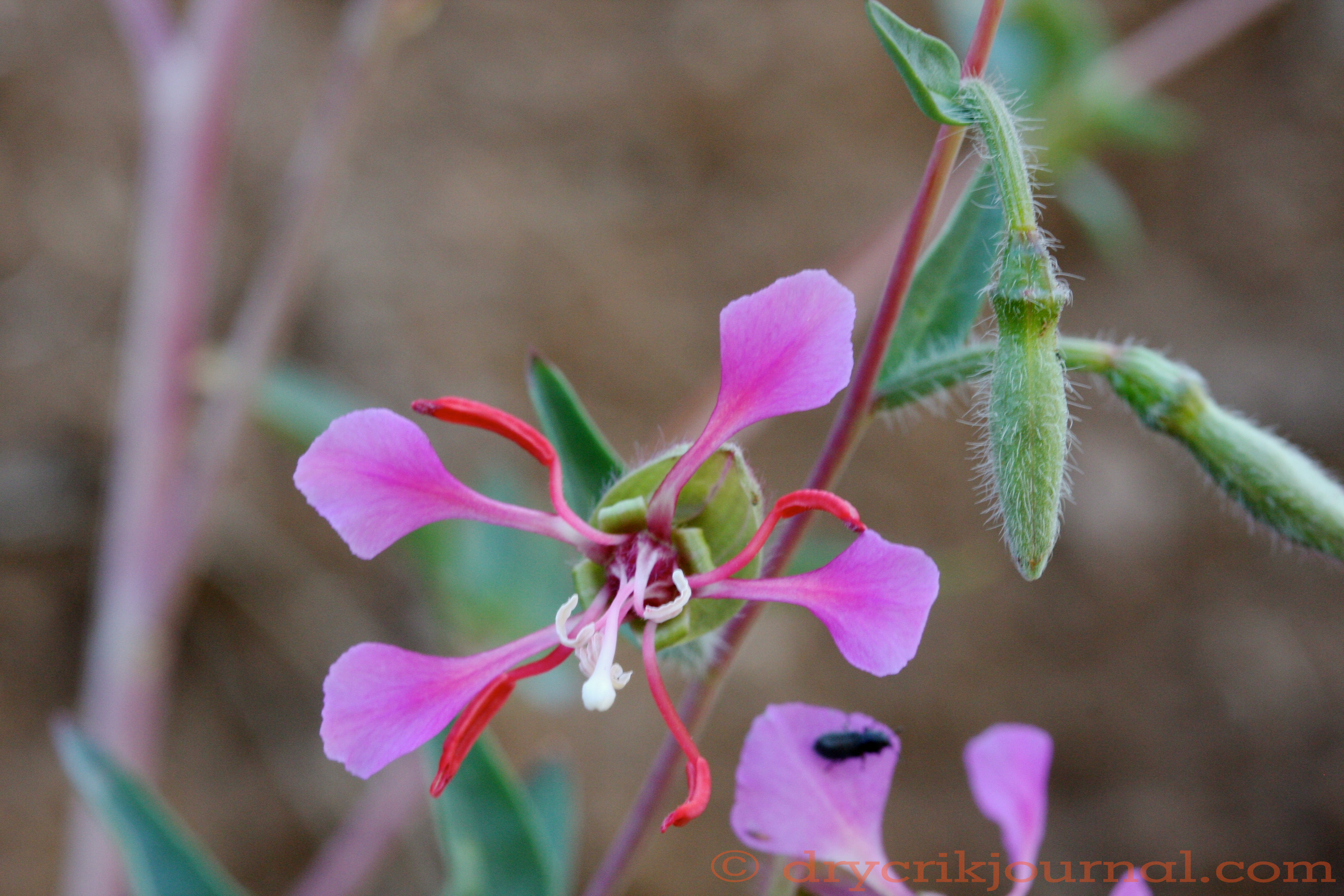
Also known as Mountain Garland, Clarkia unguiculata is endemic to California, and in tribute to William Clark of the Lewis & Clark Expedition, one of many species that bears his name. Judging by its widespread distribution on the ranch this spring where I’ve never seen it before, I am assuming that it enjoys these dry times. Usually found on partially shaded road cuts, in soil that was disturbed years ago, it blooms on long stems 3-4′ feet high, generally in groups or colonies of a dozen plants or more. On a year where the diversity of wildflowers and the size of their blooms has been severely impacted, it’s good to see them flourishing. A wildflower that is easily overlooked until closer inspection.
Posted in Photographs
Tagged Clarkia unguiculata, Drought, Elegant Clarkia, flower-friday, Mountain Garland, Paregien Ranch, photographs, wildflowers
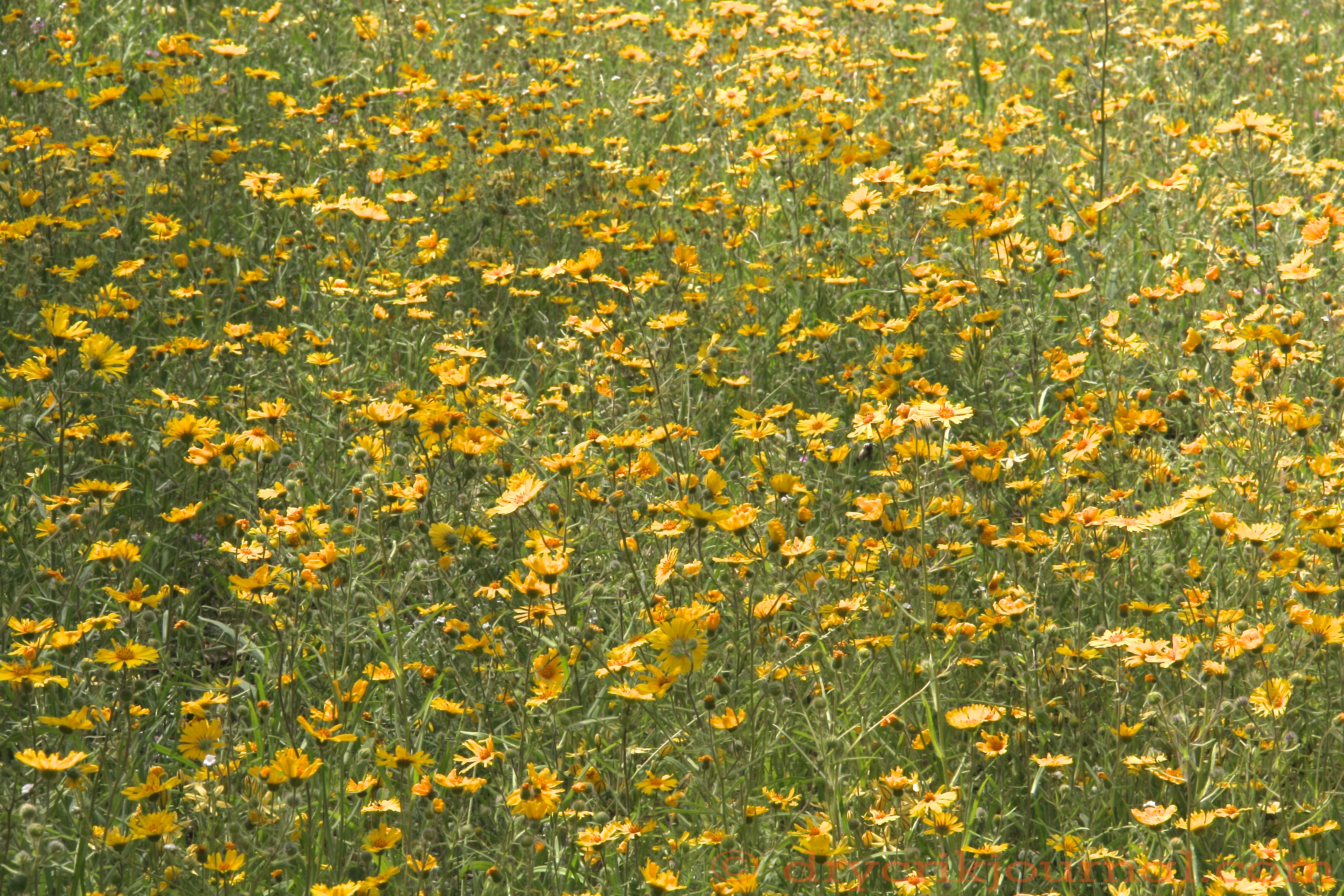
On the dark side,
colorful glimpses of spring
that we just can’t believe.
Posted in Photographs, Poems 2014
Tagged Drought, Greasy Creek, haiku, photographs, poetry, Pretty Face, Sierra Tidy Tips, Sulphur Peak, weather, wildflowers





 drycrikjournal