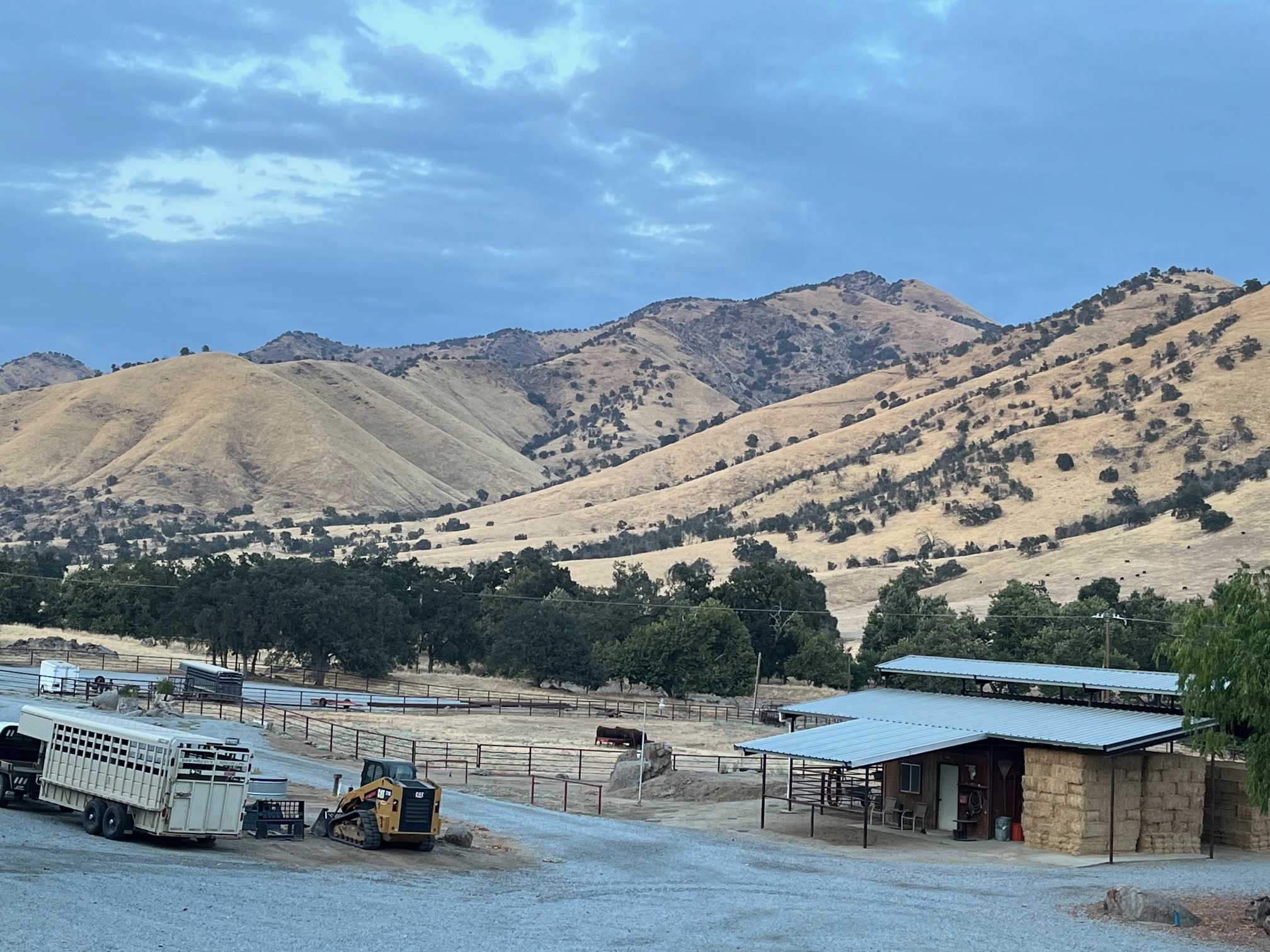
After a brutal summer, we are enjoying a major change in temperature: a high of 87 yesterday and 55 this morning as storms hit the northwest and Canada.
As I’ve posted before, my father’s model for predicting the weather was based on a 30-day cycle beginning with noticeable changes in the month of August. If these changes were confirmed in September, he would count on rain on those days in October and/or November. My brother and I still rely to some degree on his model, but with the volatility of the weather in recent years, it’s anyone’s guess.
We’ve begun feeding as we wait for our first calves to arrive. We’ve moved our calving date back two weeks, from the first to the fifteenth, in response to the trend of high temperatures in early September. Not only is the heat hard on calving cows, but often there’s always a couple of first-calf heifers that leave their newborns in a hundred degree sun.
September also brings the catalogs for bull sales in California that offer a wide array of Genomic Enhanced Expected Progeny Data as well as links to videos of the bulls. I still rely on my eye, but it’s a far cry from the old days when I was starting out.
As the days get shorter, we still expect the temperatures to return to the century mark, but for the moment it’s delightful.
Despite the advance of new scientific instruments utilized for weather modeling, this year’s Atmospheric River phenomenon for Central California hasn’t followed predictions. However, we have enjoyed beautiful weather and average rainfall standing currently at 10 inches with March and April yet to go. Last summer seemed cooler, fall and winter warmer with yesterday’s high reaching 71 degrees.
Robbin snapped this photo about the time the deluge was forecast to arrive yesterday evening, but it didn’t start raining until 3:00 this morning. I love the rainy days, almost always smug when the experts are wrong.
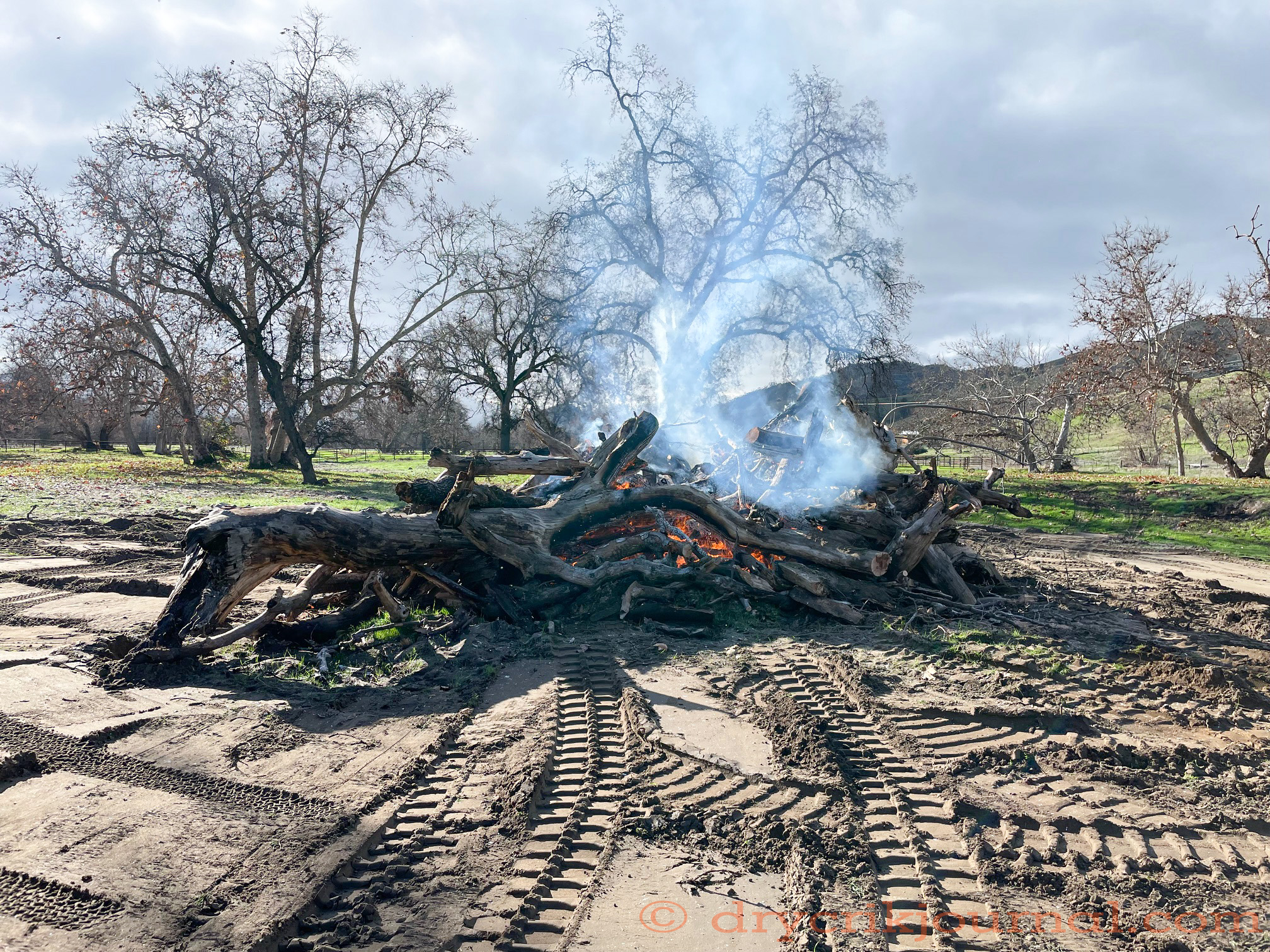
With a couple of “burn days” between rain showers this week, we’ve lit the piles of debris and deadfall that settled here where the canyon widens that were brought down with last spring’s atmospheric rivers. With air quality a concern in the San Joaquin Valley, burn days can be hard to come by. Not only are we reducing hazardous fuel in the event of a wildfire, but eliminating the limbs, mostly sycamore that burn quickly compared to oak, we saved our watergap fences between pastures and neighbors when Dry Creek rises again. Lastly, we’ve eliminated a potential logjam at McKay’s Point where part of the Kaweah River is diverted to the St. John’s fork that ultimately passes north of Visalia.
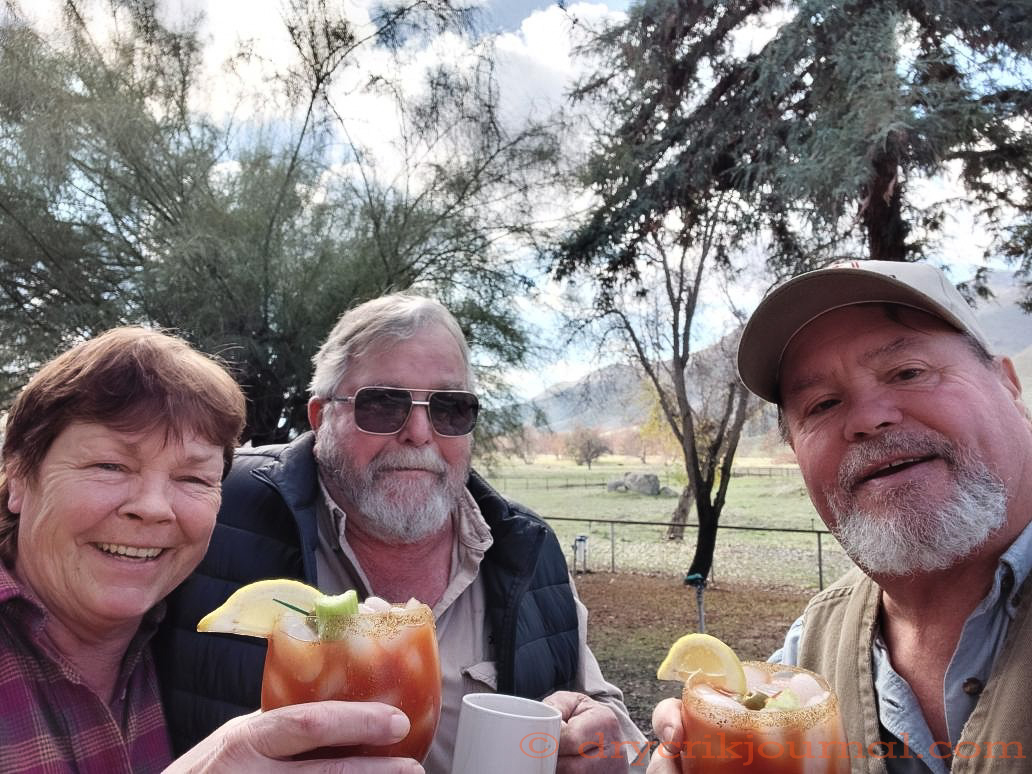
I’s been a great week between Christmas and New Years with Robbin’s brother Joe here to help out cutting wood, splitting oak, hanging gates, cleaning-up the Horehound, Turkey Mullein and tumbleweeds along the driveway, not to mention vehicle maintenance while getting 0.34″ slow rain that has revitalized our green. We’ve taken time-out around the BBQ fire pit with Bloody Mary’s and a Mexican Coffee to celebrate our accomplishments.
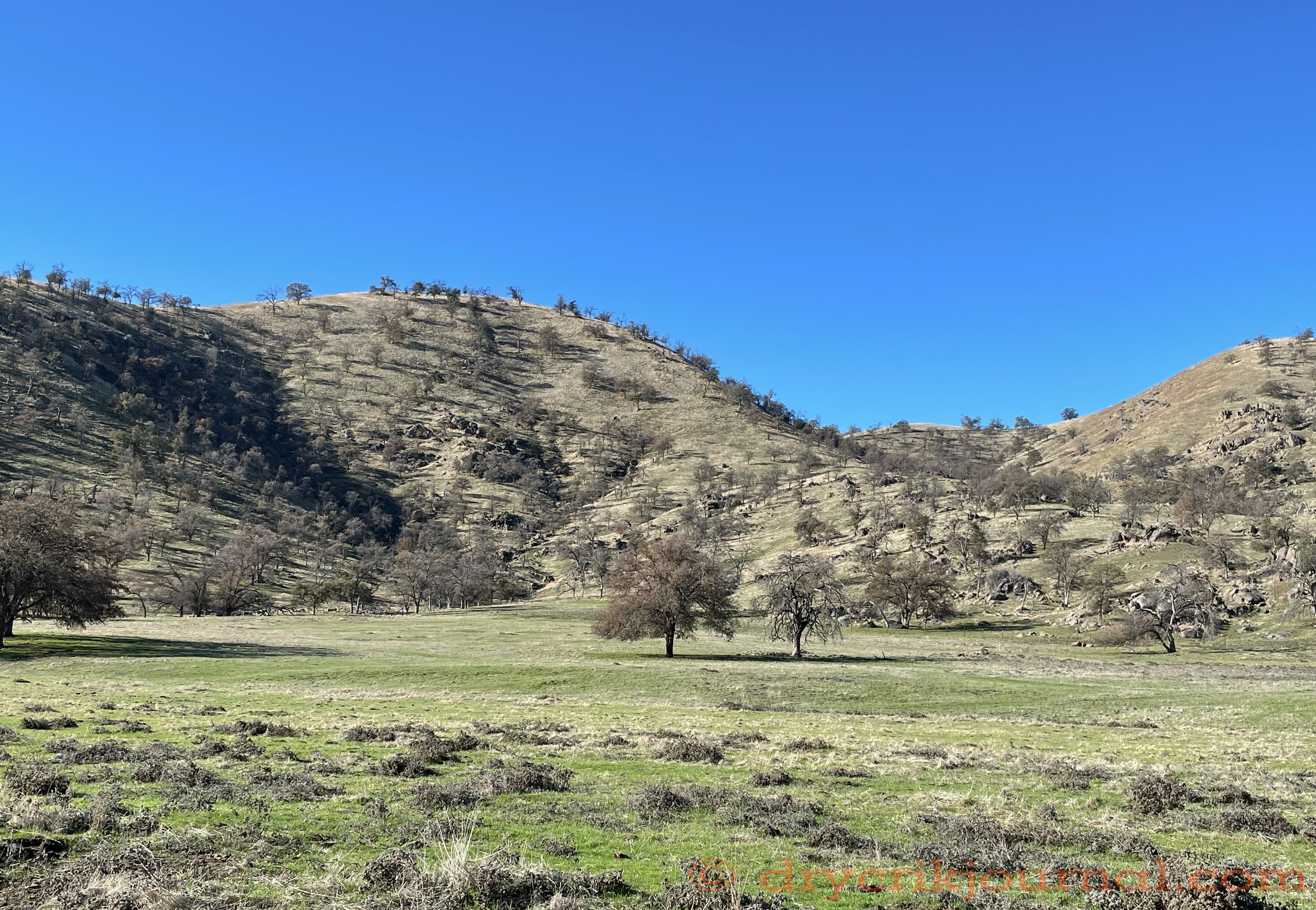
Though I would have liked the rain to come a month earlier, the weather’s been perfect, rain spaced well with warm temperatures as the canyon has turned from blond dry feed to green. The cows and calves have moved to the softened ground uphill to get a bite of both as we watch the virgin Red Angus bulls, close-by, fumbled their way to breeding postures. As Robbin quips, “It’s a wonder we get any calves at all.”
This is what we work for, an uncertain future, and wish you all a joyful 2024 !!








 drycrikjournal