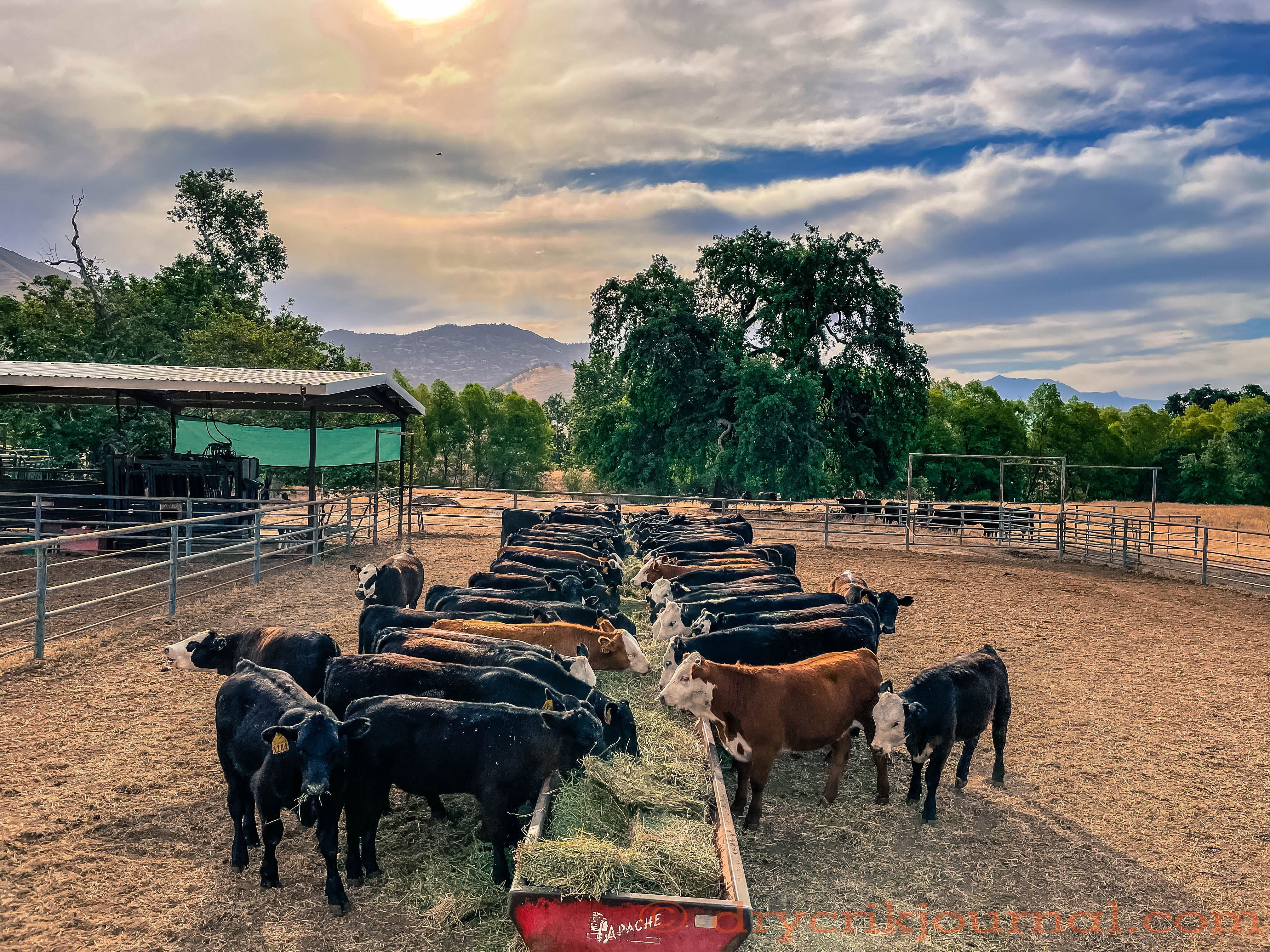
The calves will have spent a week here while getting over being separated from their mothers. This second bunch to be weaned will head to town on Wednesday, both steers and heifers, as we haven’t enough feed to hold on to any replacements. We’ve already begun cutting deeply into our cowherd, as the summer looks grim.
Even though I haven’t been in the mood to post anything, I would be remiss not to journal one of the worst drought years in my lifetime, less rainfall (6.19”) than we received in 2013-14 (7.78”) during our 4-year drought of 2012-2016. After feeding hay all summer long into the fall in 2013, we finally had to sell half of our cowherd in 2015.
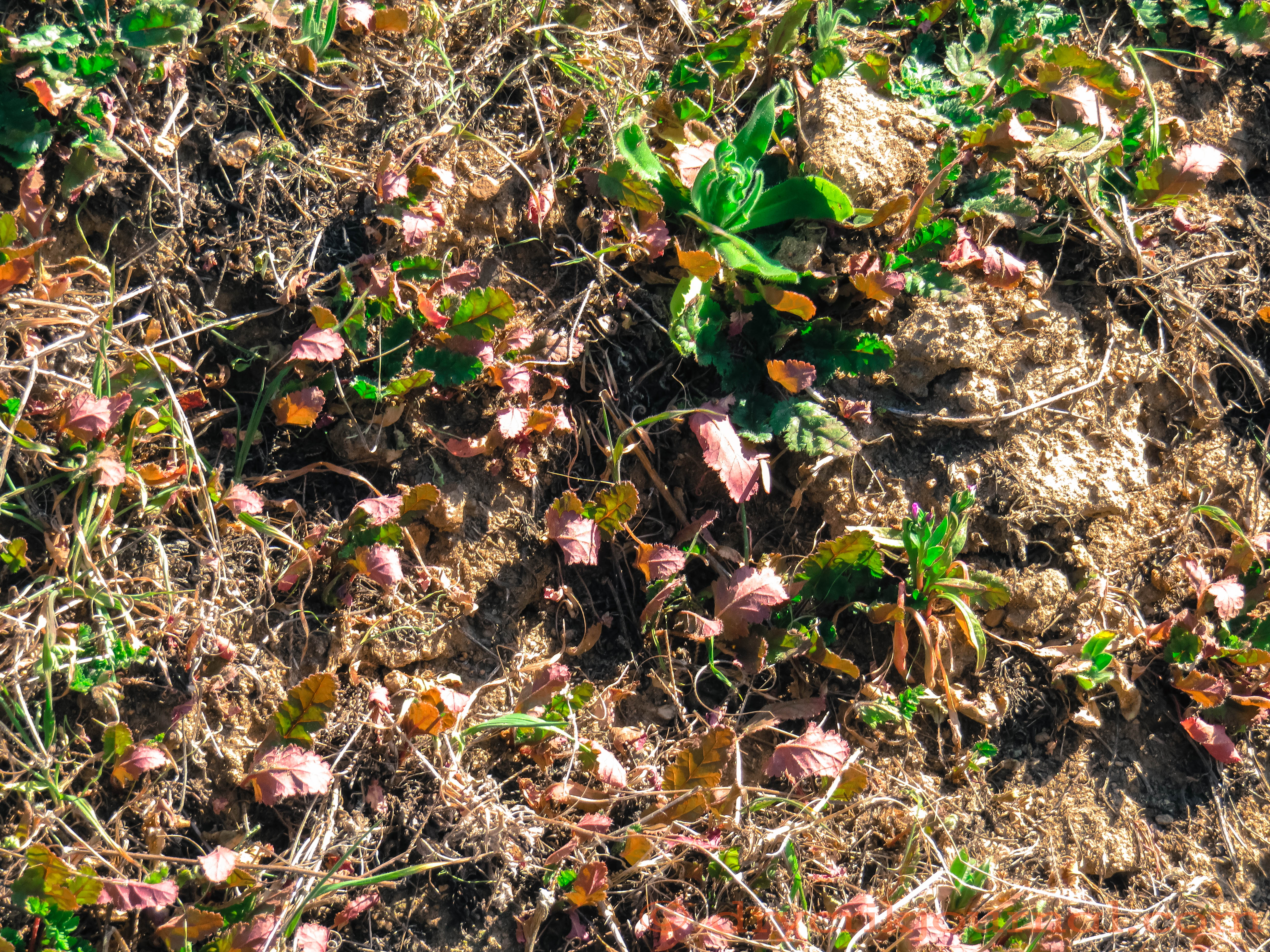
Currently, all that our steep hillsides have to offer is a short blond fuzz of dry grass that will soon be dust. I remember the drought of ’77 when the cows licked the grass seed to augment what hay we fed them. Knowing what’s ahead, we’ve begun gathering to wean early and have already sent a bunch of good cows to the kill plant, many of which had calves in their bellies. Due to the lack of snow in the Sierras, there’s little irrigation water to grow hay and the price is high, while cows aren’t bringing much money. Furthermore, stockwater from our natural springs in the upper country will be in short supply by fall——a perfect storm.
As we cull our cowherd, we’re focusing on a young nucleus as we realize that we’ll not get the money we’ll spend on hay this year with next year’s calf crop. Nevertheless, we’re plodding ahead: leaning forward as we take another step and praying for early rains this fall.
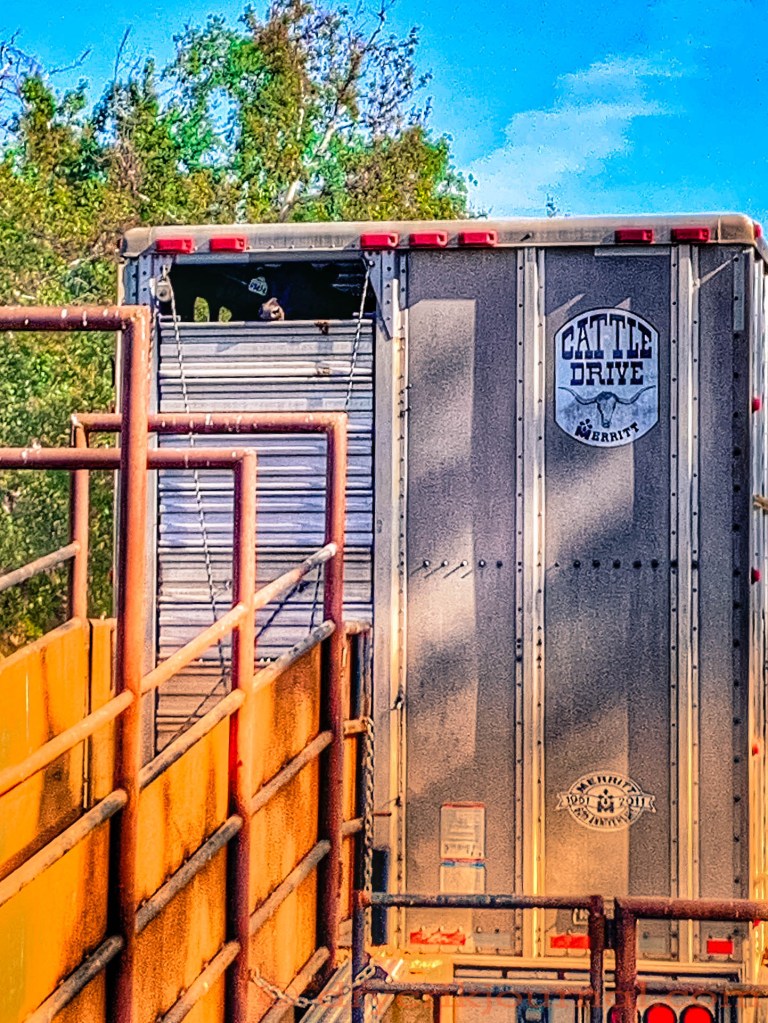
Great day for the crew as we shipped our first load of Wagyu X calves yesterday, but one month earlier and 100 lbs. lighter than usual due to current drought conditions. Drier than 2013 with only 6” of rainfall for the season, we’re trying to conserve what grass we have. Today we’re preg-checking their mothers as we begin to reduce the numbers of our cowherd.
This morning’s circle with salt and mineral for the first-calf heifers in the hills behind the house was not encouraging for the first of March. The south slopes are short and turning fast and the heifers want, and need, hay, though the calves look OK.
The forecasters have taken Saturday’s rain away, but next week still appears to be wet. We know that this ground is resilient, but with only March and April left as our only chance for real grass, this season’s future looks bleak and will probably require early weaning and a heavy culling of our cow herd, as there will be little old feed leftover to sustain these cows through summer and fall.
From an economic perspective, it costs around $500+ to keep our first and second calf heifers for a year, then add $400 for hay plus labor since August, an $850 calf won’t pencil out. Furthermore, with minimal snowpack and only four inches of rain this season, irrigation water will be expensive and the price for summer alfalfa high. Whether one believes in Climate Change or not, the trend for the last decade has been drought, (all across the West), the worst I’ve seen in my lifetime here, where losing money takes all the romance out of raising cattle. Nevertheless, we’re in it for the long haul and hope for the better days.
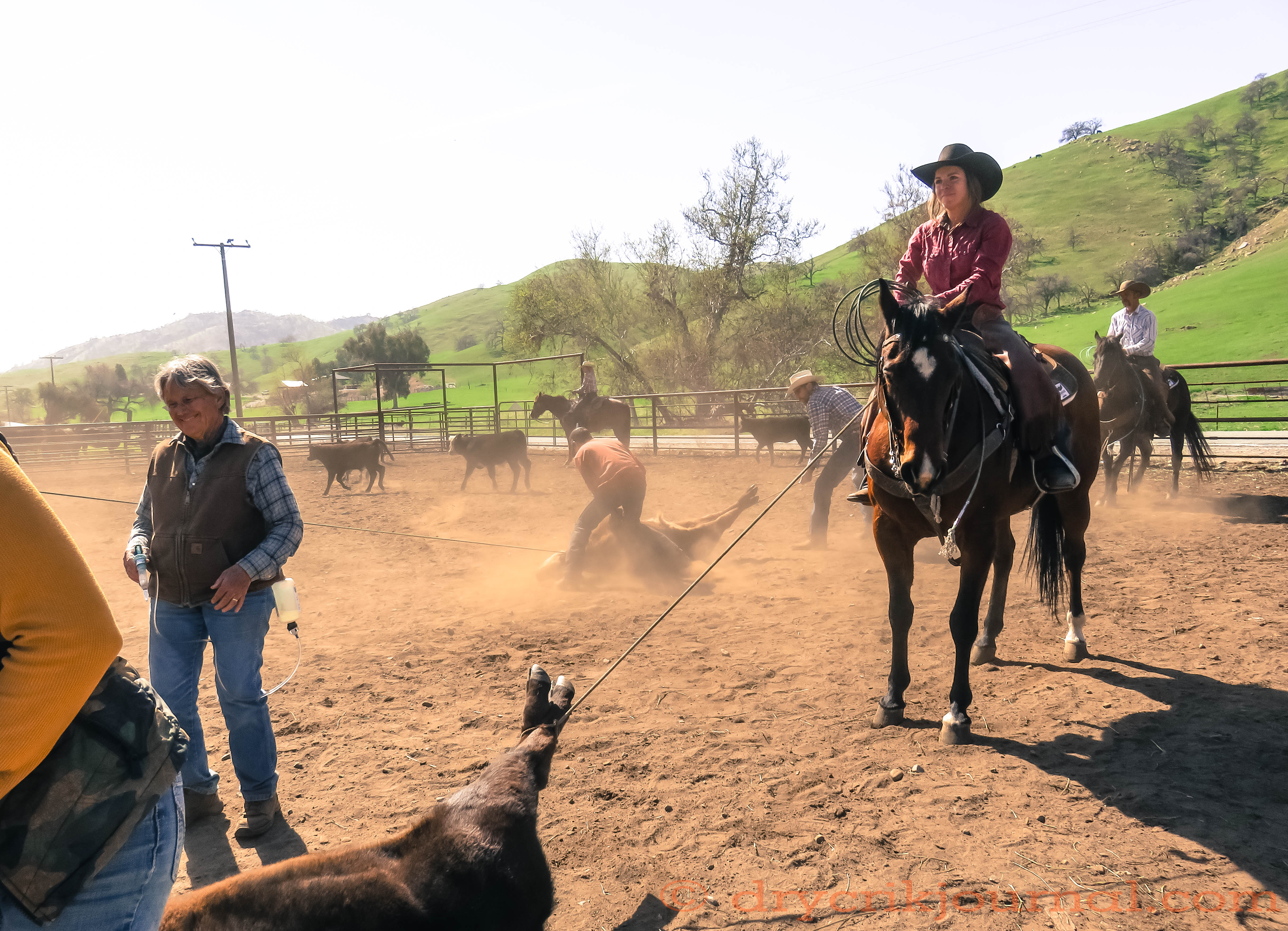
We are extremely fortunate to have an excellent crew of neighbors to help us mark our calves. Yesterday was a beautiful day to brand our second bunch of Wagyu X calves, though pretty dusty near the end of the work. Even though the hills are green, the grass is terribly short with only 4.31” of rain on Dry Creek thus far this year with only two months left of our rainy season. Furthermore, the spring forecast https://weatherwest.com/archives/8382 is quite disturbing.
Feeding hay since August, some neighbors have already begun to sell their cows into this down market. Ideally, the cull cows will attain their heaviest weights by mid-April, however most everyone’s cows are now stressed as short feed and growing calves have kept them thin. With little rain and a minimal snowpack, summer irrigation water will be in short supply, which translates to higher water prices in the San Joaquin Valley. Likewise, one can be assured that with fewer cuttings, the price of hay will also be high.
The south slopes have already dried up, offering only a month of green this year. Without any moisture in the next week, the west slopes will follow suit. Not necessarily the amount of rain, but the timing is always the crucial variable for native feed. We carry on as if by some miracle we can keep our cows together, but time is running out for the Southern Sierra foothills.
Dark rain in waves,
an oscillation of applause upon the roof
that soothes and insulates the senses

from the distant discord of mankind,
the lucid transparency of public figures
that saddens the soul—

this narrow canyon lit across in gold,
blind flashes of humility,
the roll of thunder close.

The short-cropped green hangs on
to naked clay hoping for heaven’s basket
of spilt miracles to soften hillsides

for roots—and cloven hooves
reaching for the ridgetops ripe
for more level grazing.

Dark rain in waves
punctuated by the light—
relief for what we know.
Thin starts lay limp
as green fades to gray
amid the brittle stalks
of short-cropped dry
the cows have missed

as I open the gate
ahead of several storms
to search for Live Oak—
stove wood heat
with little ash

prostrate since
the 4-year drought
branded in my mind—
decomposing now
before my eyes.

Limbs ache with years
bent to this ground
chasing seasons of grass,
but red skies at dawn
reawakens the flesh.










 drycrikjournal