Dragonfly


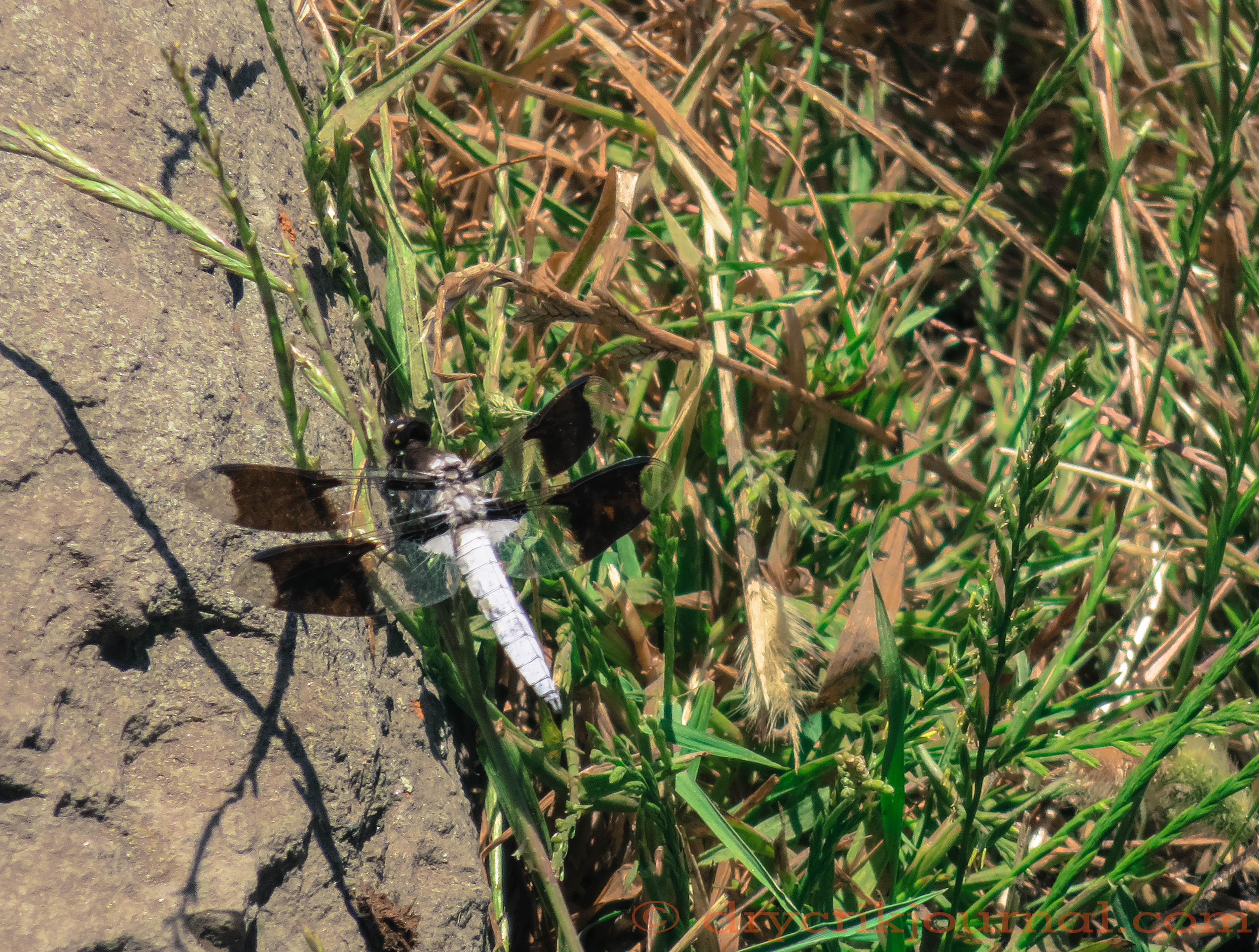
While making preparations to wean the calves on the Paregien Ranch, Bob and I spotted a dragonfly at the Windmill Spring neither of us had ever seen before. After a cursory quest to identify it on Google, the closest I got was the Male Broad-bodied Chaser (Libellula depressa), not a native of this continent, but specifically Europe and England. Photo through the telephoto of my Canon point-and-shoot.


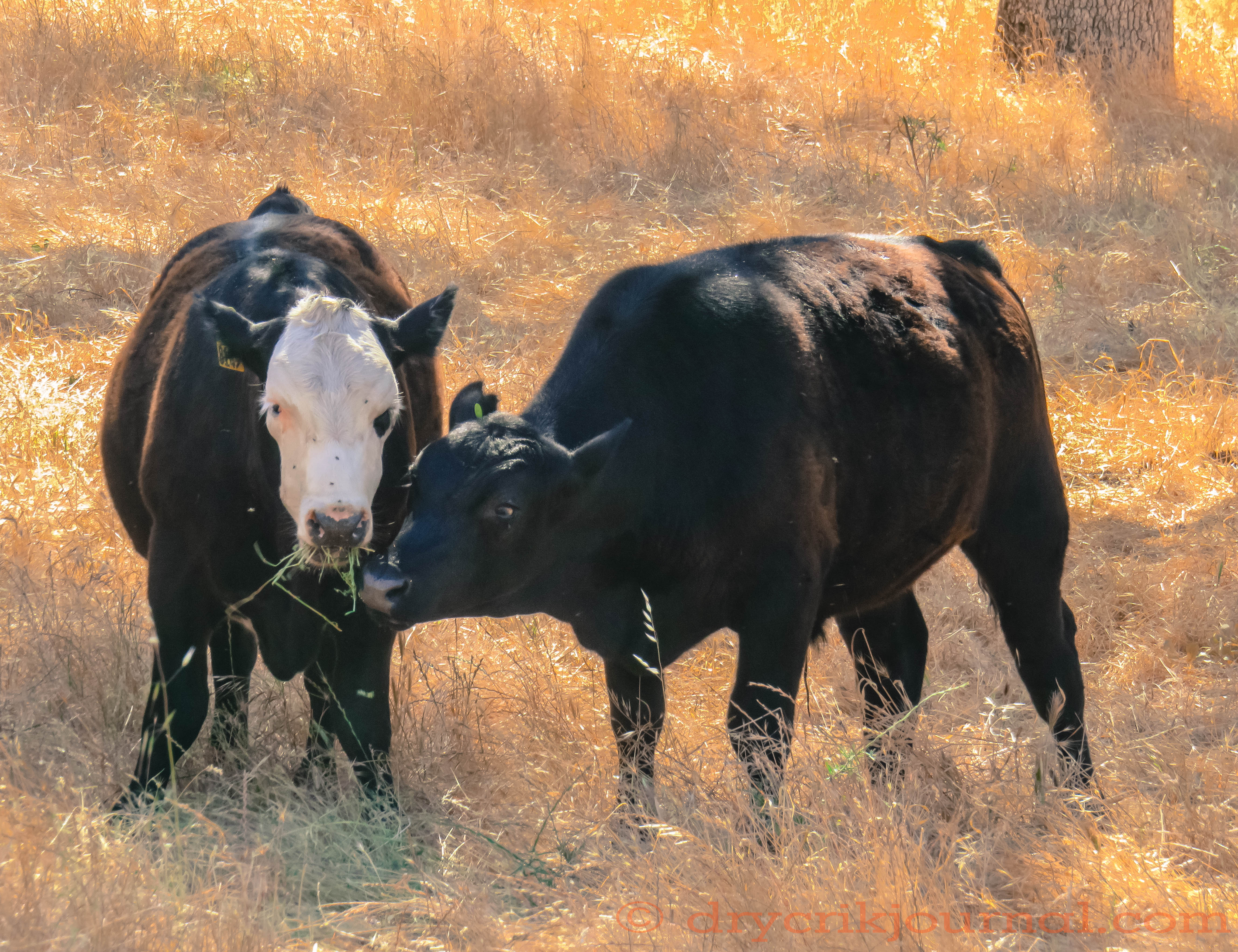
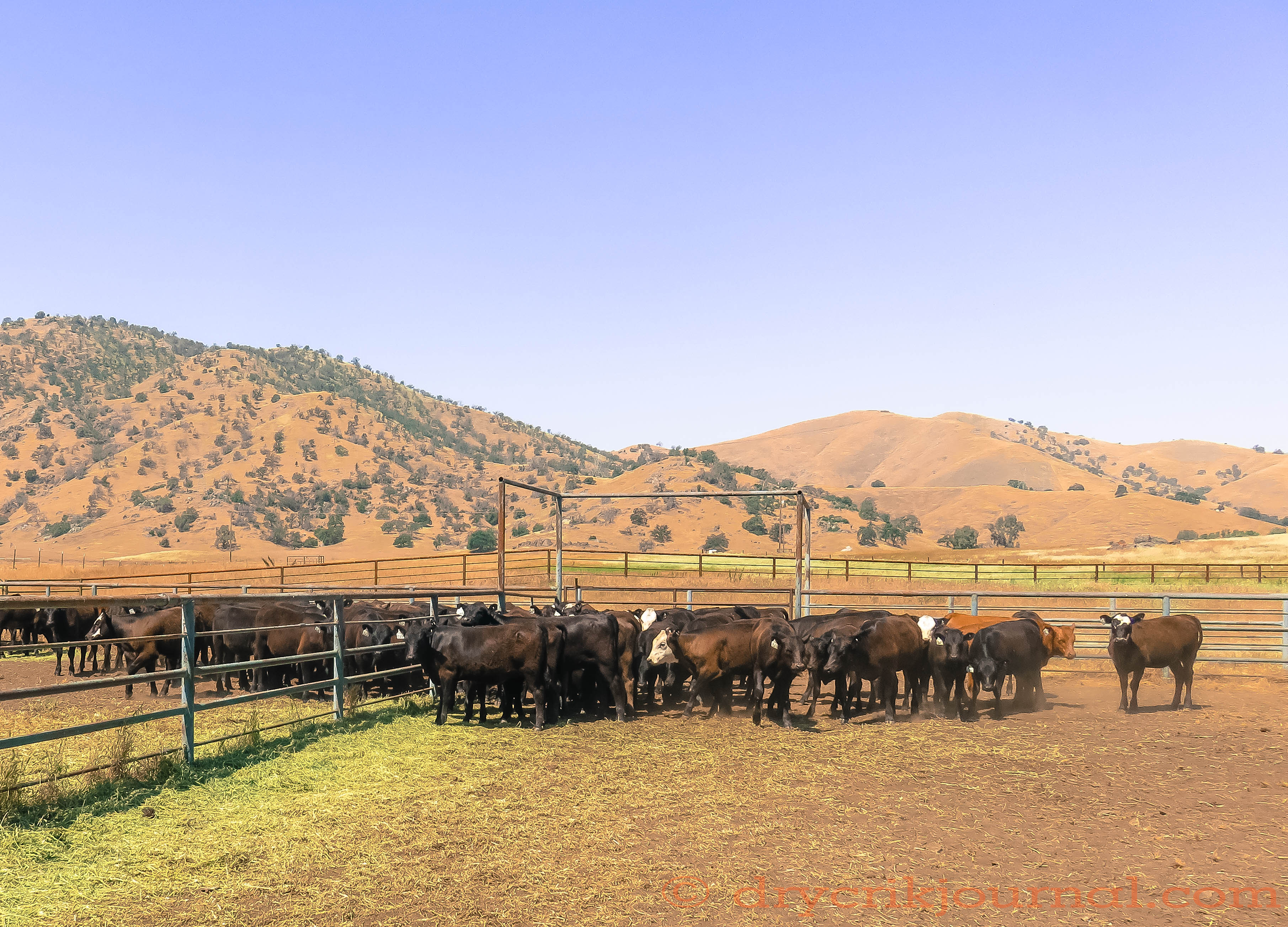
A couple of calves we’ll be gathering Sunday.


HERDS OF BIRDS


Perhaps it is the constant news,
each day a different page,
that I close the book

to watch the Killdeer herd
their brood of errant children—
one always lost. Hatched

on the run, they learn all
the words they will need,
corralled beneath spread wings,

in a few short minutes
until one or two escape
in different directions

to go exploring the forests
of dry and brittle grasses.
It takes two to keep four together:

she to hold the bunch
while he makes circles
leading the last stray home.


On Board


With exception of Tuesday’s 105 degrees, it’s been an extremely mild May when we gathered and shipped our Wagyu X calves with my son Bob’s help. As we begin to wean our English calves, having another set of eyes on the ranch and help with the heavy lifting, Robbin and I and the girls are glad to have him on board.


FOUR SPECKLED EGGS


Never enough roofs to shed the sun in the San Joaquin,
I’m leveling a pad for a barn with the skid steer
that’s become a hydraulic extension of my hands

between two huge Valley Oaks, four-foot across—
a roost for two Bald Eagles, long-dead witnesses
to father and son not learning to work cattle together.

In the ash pile of fallen limbs, a Killdeer sets and defends
her nest as I surround her with windrows of clay clods
to crumble and fill once the chicks are hatched.

Feathers fanned to fight for hours, her eyes bleed red
as her mate drags a wing nearby. Perhaps respect
lets four speckled eggs stop progress along the creek.


GARDEN CAVEAT


It’s not the cool coast of California
with cypress leaning leeward, but
the tomatoes and squash love

this year’s pleasant inland temperatures,
unaware of summer in the San Joaquin.
We, on the other hand, cringe

ahead of time, remembering so vividly
that it spoils our vacation. But nowadays,
we never know what’s coming, which

unwritten script awaits in ambush.
Escaping to the garden, hopefully I
bloom with our optimistic vegetables,

imagining tasty, blue ribbon fruit—
careful not to be so careless
as to step on a rattlesnake.


LOST FRIEND GONE


The canyon quiet by the fourth dawn, heads buried
beneath the waves of blond dry grasses, behind spears
of wild oats arching empty husks, first-time mothers

grazing like we expect our perfect world to be.
No plaintive calls, no searching draws, no panicked
pleading to canyon walls for their weaned calves

they have almost forgotten. We are relieved
of guilt, unburdened from their guttural mourning,
the harsh cacophony of maternity, of eighty

broken bonds rasping, wild wailing around us.
Aging skin grows thin imagining the magic
of companionship delivered from the womb,

of nursing, of mothering the first-born and losing it.
Emptiness and sorrow for a lost friend gone,
these cows giving voice to my unusual confusion.


NO RETREAT


Spring lingers into May, empty
blue clouds in a pink sea at dawn—
an ancient armada claiming sky,

this canyon that yesterday’s Navy jets
left thundering, practicing, maneuvering
for war. Here along the shrinking creek

Egrets and Killdeer wade, we measure
global tension, hear its roar, primitive
and deafening with no retreat.


HARVEST


Two sections of grass,
twenty-four tons on the hoof
leaving for your plate.


SHIPPING DAY


A season teeters
on the beam, calves condensing
strong grass on the hoof.


Wagyu X Calves


It doesn’t seem all that long ago (mid-September), when our first-calf heifers began calving with no real rain until mid-November, and only 3 inches through the end of February, one of the driest starts to our rainy season on record. We fed a lot of hay and fortunately we had some dry feed leftover from the year before, but a tough start for a two-year old, first-time mother and calf.

Thursday morning, these steer and heifer calves leave for Connell, Washington for Agri-Beef’s Snake River Farms’ program to be marketed as American Kobe Beef where they’ll be fed for 400-500 days. This is our second load of Wagyu X calves and typically we take the calves from their mothers, weigh and sort steers from heifers, then load them immediately onto the truck. However, since we’ve increased the number of cows that we breed to the Wagyu bulls, the first-calf heifers are pastured in two different fields two miles away from our loading corrals and scales that requires us to haul the calves. Half of the calves pictured above were weaned Monday, the balance yesterday as they wait for the truck.

Weaning is a stressful time in a calf’s life, and stress can be measured in pounds, and hence in dollars. It can also leave them susceptible to various respiratory problems. For these calves, this is not an ideal scenario, but temperatures are relatively cool and we’ve sprinkled the dust down, hoping for the best as we feed good alfalfa hay morning and night.

The rule of thumb for the time to wean an English calf is a week, but over the years we’ve noticed that after three or four days they’ve forgotten their mothers. Compared to our English calves weaned off mature cows, the Wagyu X calves generally weigh about 200 pounds less, but their mothers at two years old put on another 200-300 pounds while raising their Wagyu X calves. Quite remarkable, when 30 years ago we wouldn’t breed a replacement heifer until she was two to avoid calving problems or stunting her growth—all due to genetic improvements.

Assuming weight is a measure of stress, I don’t believe the calves will lose that much weight. What may be a pricy experiment, we weighed the calves off the trailers to compare to the shipping weights Thursday morning to prove or disprove our hypothesis. We’ll see.