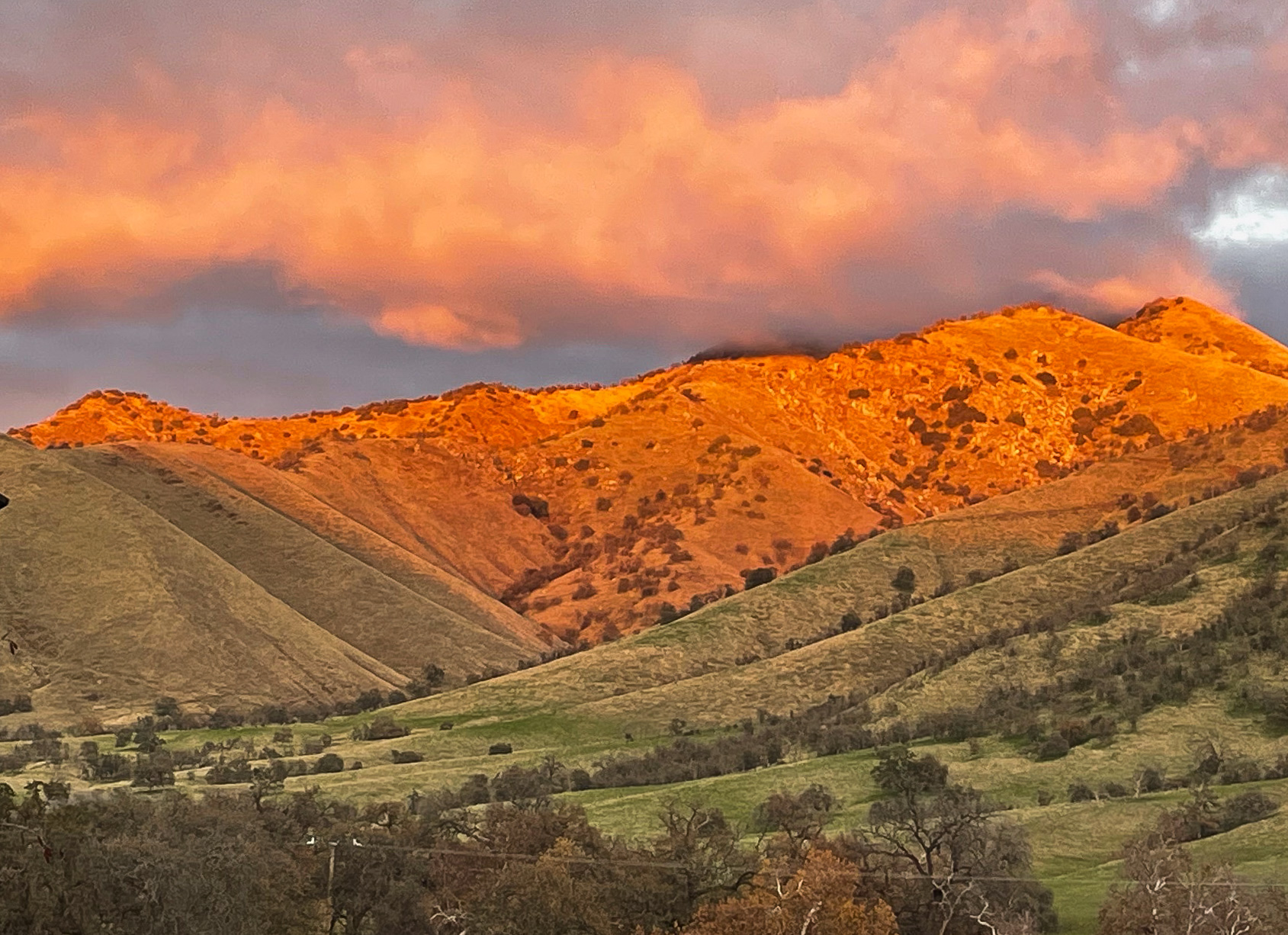
Night showers, cold damp dawn, intense coyote octaves shrill—an eerie screaming claims the canyon
as I search for forgotten details for the morning’s branding, worried for baby calves
before the crew arrives for coffee and last minute plans. What rarity has triggered
this assault on silence, what wild imperative, what joy requires such passionate agreement?
What have I missed not learning the language after fifty-five years?
I really dislike word press. I have wasted too much time today simply trying to pass along a comment on your blog entry today about coyotes. Before I moved to la la land north, at the ranch I used to enjoy this vocal minority calling to each other from valley floor (even if at times it sounded as if it was coming from just outside our bedroom window) to the upper hills and then beyond into the canyons and back again. Lonely. Eerie. Beautiful. Keep on writing, my friend. You weave beautiful poetry beyond telling city folks about life (mostly work) on the ranch up Dry Creek Road.
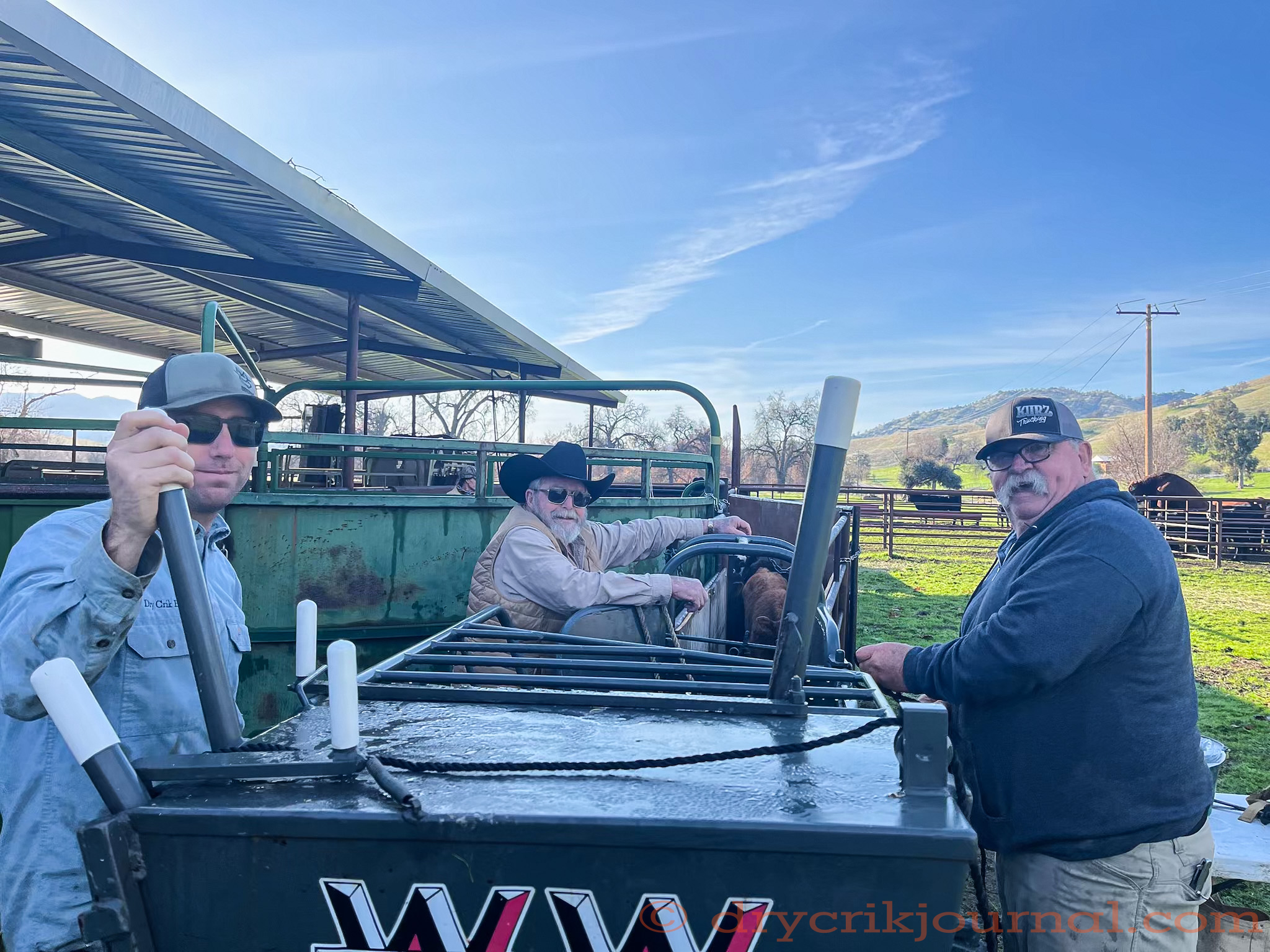
Robbin’s iPhoto. Pictured with me: Shawn Fox & Chuck Fry
I was weaned on a copy of the Teco calf table and my job at six or seven was to push the calves up a narrow chute through the sliding gate to the table. My dad was on one side and Clarence Holdbrooks on the other. Clarence would catch the head and squeeze the body of the calf, and then tip the table into a horizontal position. My dad would put a rope around the back feet of the calf and stretch them tight to make it immobile so the bull calves could be castrated and all the calves branded, vaccinated and ear marked. Once done, the table would be tipped to a vertical position and the calf released. The three of us, two men and a boy, would brand 50 head in about 2 hours.
The calves were small, but I learned a lot from the back side of those calves. Of course my denim jeans would be covered with shit. Naturally the calves would often kick me, but I learned that the closer I got to the calf the less the kick would hurt as opposed to standing back and getting the full force of the kick.
Branding on the calf table wasn’t much fun compared to roping the calves a horseback, so by the time I got my own cows, we headed, heeled and stretched them out for the process. And so it went for fifty years here, a crew of the neighbors branding one another’s calves—trading labor.
I remember branding calves for Forrest Homer in a 20’ x 20’ board pen where you needed to know how to throw a trap with your heel rope. But since then the corrals have gotten larger and the action quicker to where today’s brandings have become more like team ropings that are harder on the calves, so much so that Robbin and I have gone back to using the calf table.
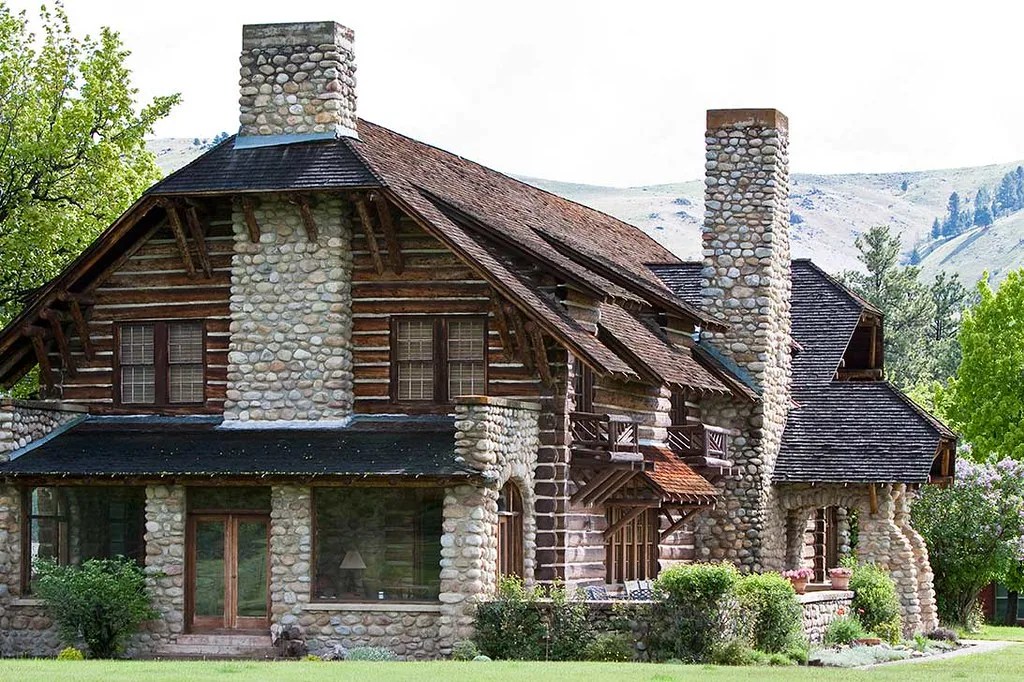
I live within minutes of the Dutton Ranch. It was/is a cartoon of itself long before Hollywood “found” it . As it was “built” on the same mythology before “Yellowstone” it is NO surprise Hollywood found it perfect for the perpetuation of the myths. That it is in the Bitteroot Valley, portrayed as Paradise Valley actually on the Yellowstone River , not the Bitterroot River is the least egregious offense of artistic license.
Yes, the perfect set and backdrop to advance the mythology and to pump in enough cash for a few years to “jazz up” a very poor local economy, enriching a few while leaving them detritus of unaffordable housing and other long term burdens that go with ALL boom and bust cycles.
That the “series” collided with a pandemic driven, house bound, binging viewership was an unfortunate coincidence. That, along with the ridiculous home prices in some places fueled a mass migration to seemingly cheap relocation opportunities. The migrants arrived with mountains of cash and the beatific notions of their new “home” grounded in the mythologies absorbed from a screen that they continue to be glued to as the beauty of the real Montana is paying the exorbitant price for simply being beautiful; as if there are NO other considerations.