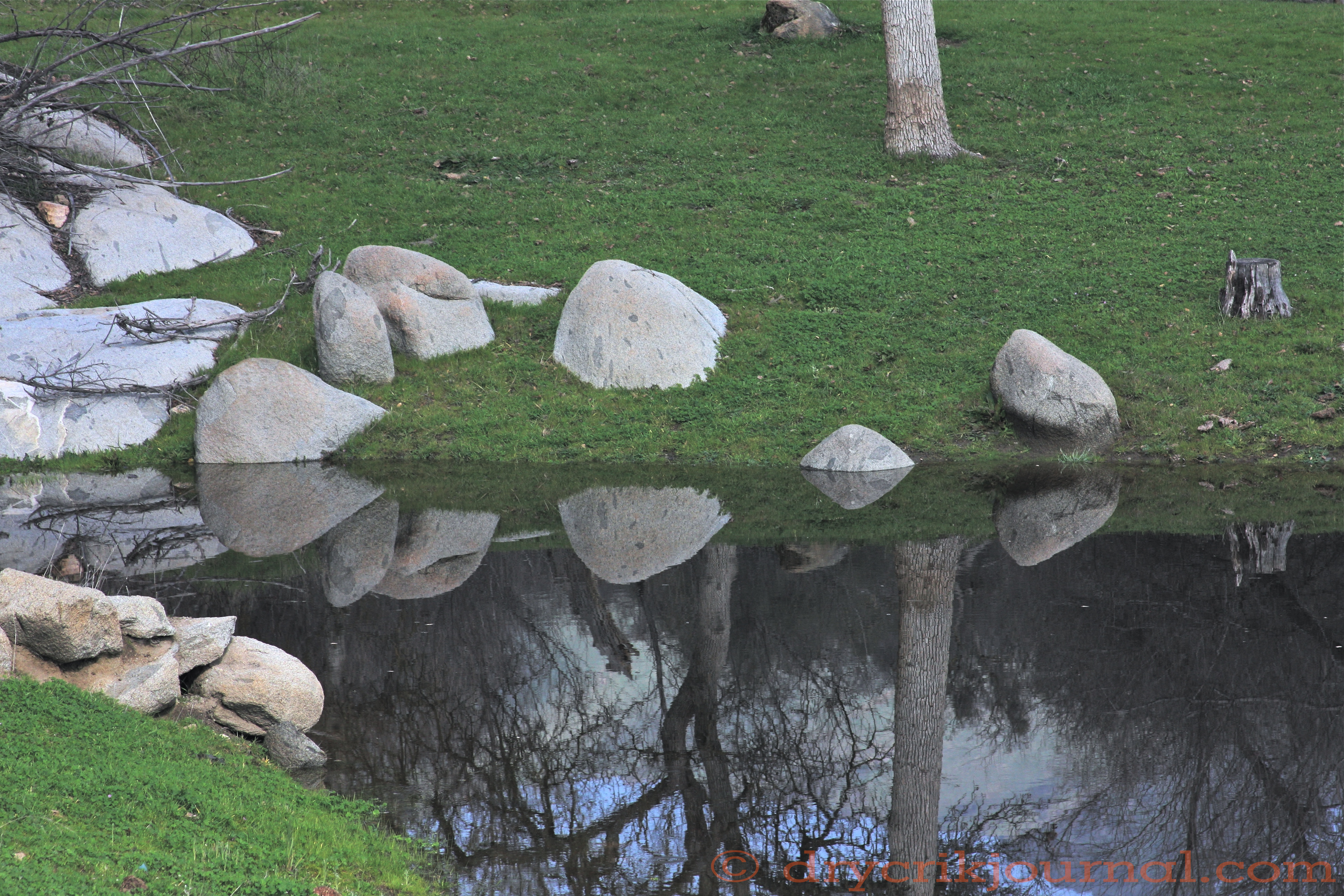
Rocks and trees remember
days between rains rising
to see how they looked
to an upside-down world,
watch hawks in the heavens
gliding beneath them.

Rocks and trees remember
days between rains rising
to see how they looked
to an upside-down world,
watch hawks in the heavens
gliding beneath them.
Posted in Photographs, Poems 2014
Tagged February 2010, photography, poetry, weekly-photo-challenge
Wherever we looked the land would hold us up.
– William Stafford (“One Home”)
We have come back to rest upon the rock
we couldn’t move out of our heads—
you riding barefoot on a Kentucky
mule to town before I was born
to land here, young. He raised us both
after the war that forever changed him,
and us—all of us close, and those close to us.
I tie those times to the underwater look
in old Mort’s eyes understanding more
than his bib-overalls could handle. Doc
Sweeney was no doctor, but said it best—
“He didn’t come back the same.”
Slow to move now, we never weakened—
grateful for the gravity that holds us up
to gather tough country in our sleep.
Posted in Poems 2014
Tagged "One Home", poetry, PTSD, war, William Stafford, World War II
Thin grass fades
like awakening from a dream
to truckloads of hay
like any other day
of no rain—like nothing
I have ever seen.

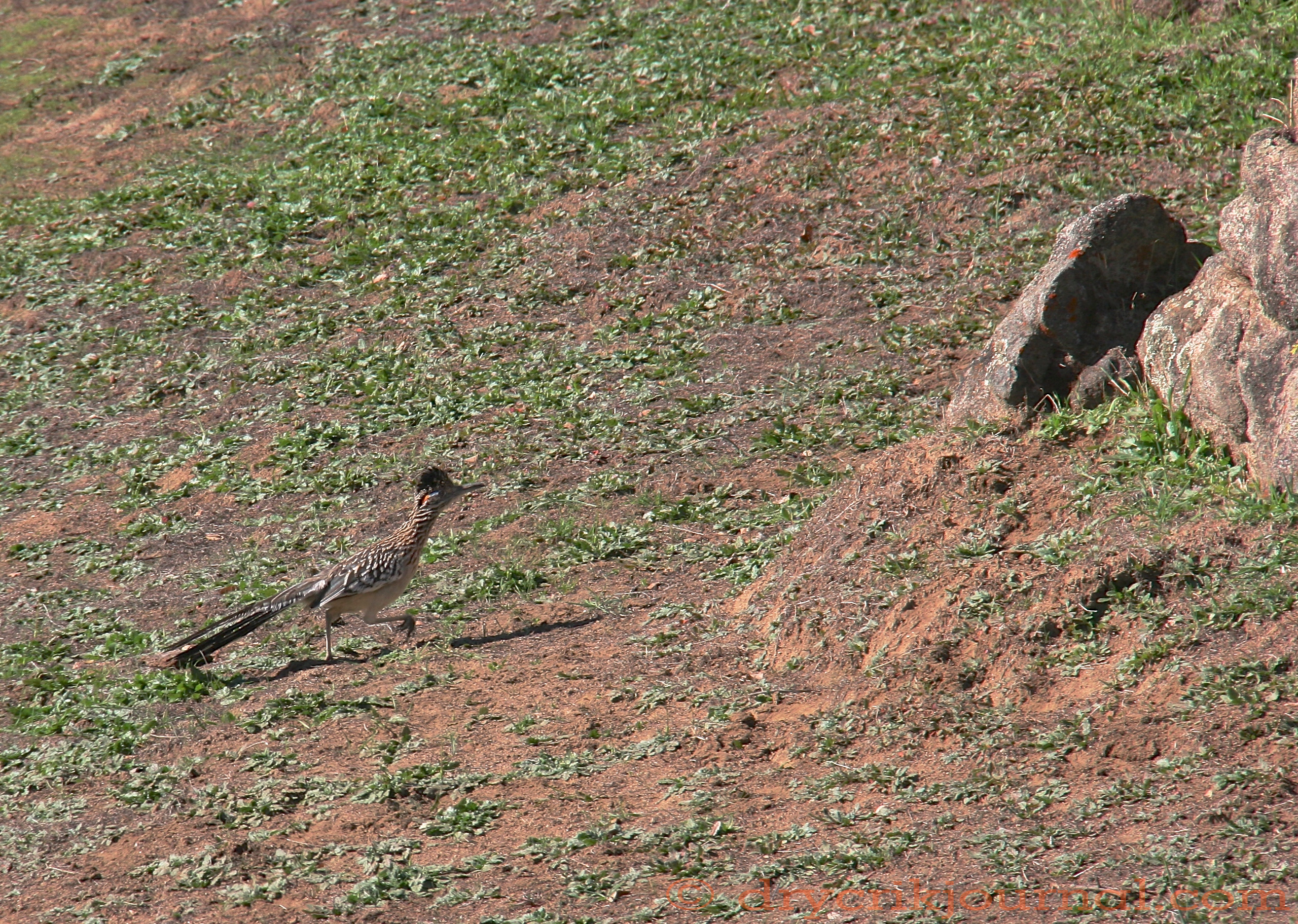
819 & twins
We realize the practical importance of documenting our drought, its impact on the ranch and cattle, on us. Even in dry times, our life is rich with details, most all symbolically tied to moments of truth, some of which last for a long time.
Denial can be a dangerous thing with so many lives at stake, so many cattle waiting for rain. But now I doubt a rain could help the south and west slopes of brown native clay.
As we branded the calves this winter, we culled the cows for those that had turned old and thin since we culled them last summer, most without calves, bringing them off the mountain to allow more feed for the remainder that is holding better in our granite upper-country. By the end of branding field-by-field, we had collected a truckload where we fed them hay on the irrigated pasture of only dormant summer grasses.
Clarence and Robbin trailed behind the bunch slowly following the Kubota with its single bale of hay, each cow eagerly filing past me as we got closer to the feed grounds and corrals as I assessed them, judging fullness and fitness—how they’d look in the auction ring. Moving closer, they began to buck, kick and run with excitement, with just the thought of hay.
In the corral, Robbin assured me that she didn’t see anyone she was sorry to see go. We brought the cameras that we forgot about while crowding the cows up the foreign loading chute, reserved primarily for our annual crop of calves. Now old replacement heifers, they’d never seen a truck. “You can tell,” said Van Beek, the driver, after the first two drafts, “they are ranch raised.”
Posted in Photographs, Poems 2014
Tagged 819, Big Valley Cattle Co., blog, culling, Drought, haiku, photography, poetry, Rick Van Beek, twins
She survived Europe and World War II,
a Catholic spinster who spoke seven languages
and left my broken French a Polish accent
and a black notion of Purgatory, that limbo
all intelligent children should avoid.
Again, I’m horseback with a string of mules
somewhere between the chiseled granite trails
and mountain asphalt, that middle ground
with no names, high on a ridge, not quite
lost on the other side of a distant river,
looking for a trail. I must love it here
to come so often in my dreams.
for Helen Cecilia Terry
December 28, 1897 – December 9, 1985

Visalia Cemetery Photo: Phil & Beth Hutson
Growing into ourselves
like the shadows of trees
leafless at dusk,
we become exaggerated
and unique with burls
for eyes and limbs
to reach beyond
our genetic root zones
as abstract art—
flat silhouettes
on a short green canvas
fading into seed
while the young oaks
all look the same
without character.
No plumber to call
to break the lines loose
to free a year of rain
backed-up, flooding
the UK and Montana,
freezing East.
Helpless as town dogs,
we don’t know
how to fix anything
anymore. No time
to sit and pray,
to meditate the dry
away, or cry.
No other home
but red dirt hills
that never greened.
They don’t know
tomorrow’s zip code
nor do we—exactly
when, or how many
trucks to order.
My eyes run the ridges,
leap watersheds
searching for sign,
clues to long-gone friends
roaming free
of the weight of flesh.
I run awhile with them
busting brush behind cattle,
then we sit and smoke
together. When I return
to the moment, I can tell
the stories I remember.
Always beyond, there is no last step
into time, no hurry to the finish line, yet
we race, stampede in a flight of hooves
bound blindly to the herd by dust,
by flashing lights at crossroads charged
with chomping bits of machinery
at the heart of it pulsing, swelling every
artery, every capillary and vein fleshed
with quick credit and convenience,
begging for business with easy access.
Visitor to another world, this
pickup won’t fit any place to park.
We learn to live without passion.
To be reasonable. We go hungry
amid the giant granaries
this world is.
– Jack Gilbert (“The Danger of Wisdom”)
Stark and efficient waiting room,
two plastic stick horses to occupy
children—one pink, one blue.
No ears, no eyes, no manes or tails,
seven smooth and hollow cylinders
molded to stand for a rider
or to wrestle out of the corner
back to the young hen
pecking on her cell phone.
No one seems to notice: not
the thin, distinguished gentleman,
not the gray goatee next to me,
not the woman in a shower cap,
nor the tight biceps in a T-shirt,
all pecking in fields beyond
the clatter and commotion
they ignore. Still fasting
and willing to pay in blood
to get along this far from home—
I want my coffee ready to ride
whatever goes right or wrong.




 drycrikjournal