Kaweah Brodiaea

Kaweah Brodiaea (Brodiaea insignis), Dry Creek, 5.8.2011

Prior to the mid-1980s, the Kaweah Brodiaea was thought to have been extinct. Larry Norris, who was conducting a Biological Assessment for the USACE surrounding the Lake Kaweah Enlargement Project, rediscovered it on the ranch. Thinking he was on USACE lands as first mapped during the initial construction phases of Terminus Dam in 1959, he contacted me to get easier access to the location so that he might assess the population of this rare wildflower, that he later determined to be 300,000 – 500,000 plants on ground we graze. Kaweah Brodiaea is now an Endangered Species, and since has been identified in the Kaweah River drainage upstream from Lake Kaweah in the vicinity of Three Rivers. The wildflower has been cussed and discussed profusely as an obstacle to any kind of development in the area.

The wildflower blooms around May 10th, a few days before the more common Elegant Brodiaea and Harvest Brodiaea, and is a paler purple, smaller than the elegans, with petals unlike a wine glass, but of helicopter blades instead. Though I’ve tried for years to photograph the Kaweah Brodiaea, this is my first sighting.*

Elegant Brodiaea (Brodiaea elegans), Dry Creek, 5.8.2011

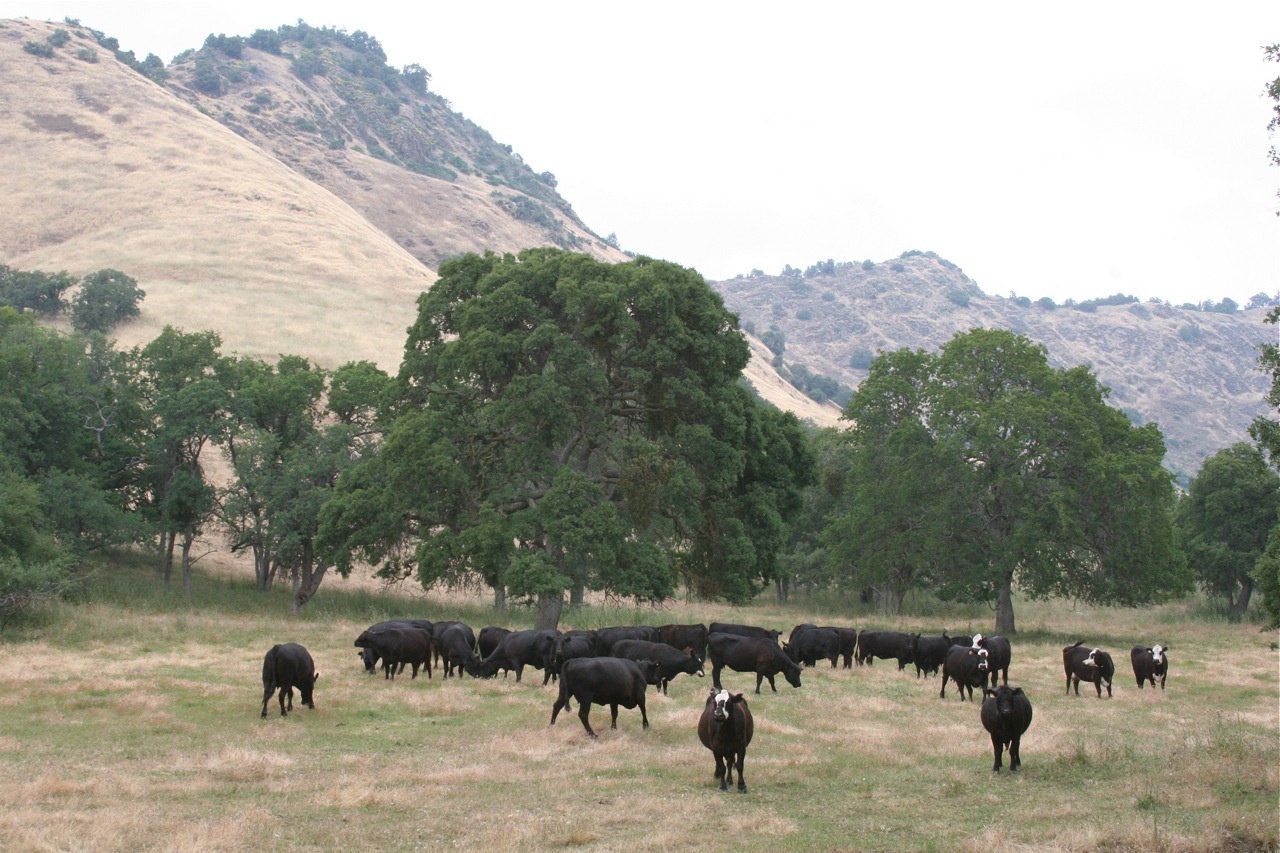
The Brodiaeas are tough. The largest population of Kaweah Brodiaea in the world is thought to exist within our 300-acre flat that has been grazed for 150 years – and from where the imagery for one of my first cowboy poems was drawn.

DROUGHT OF SEVENTY-SEVEN

It was dry in the fall of seventy-six
and the cows were calvin’ in the dust,
nothin’ to see but acres of chips,
a drought year when cowmen went bust.

Their hides were rough ‘n’ just cover’d bone
‘n’ ribs caught most of your eye,
spindly calves seemed to wander alone
as if lookin’ for a place to die.

Cows were bringin’ two-bits a pound,
a hundred bucks less than the spring,
and all you could do, was throw hay on the ground,
and pray to God it would rain.

Their toes would clack like castanets
in the cloud that’d boil ’round your truck,
the bawlin’ skeletons and weak silhouettes
would bring tears to the drought of good luck.

Reckon Ma Nature’s showed me who’s boss,
as she’ll do some time and again,
but she’s never caused me half of the loss
that politicians create with a pen.

*        *        *        *        *        *

* May 16, 2011 – I revisited the Kaweah Brodiaea to discover that they are no longer in bloom. The Elegans are just getting started. With less than 10 days of bloom, no wonder I had so much difficulty finding them.

GUILTY

We play a game we don’t like,
switch hats to become feedlot boys –
get afoot in the corral once the cows
are parted. Clang! Bang! steel
upon steel crowding flesh, fat calves
channeled head to tail as the chute
ratchets another neck for vaccine
guns, ID tags, fly control and
anything else – we see ourselves
as children, the first days jammed
in school, every muscle hard,
eyes wild – some hurt themselves
and we hate it, hate authority
and all the economic rules that say
we must to stay a horseback.

I look into the big pen, pause
to meet anxious faces of mothers
waiting for their first born
to leave the clatter of confinement,
gathered in the early cool before
breakfast, paired sides already pressed,
nurse warm milk. They are forgiving
and some forget quicker than others –
some more sensitive than we. But
we have acquiesced, become a cog
in a corporate machine, guilty
in our own eyes, in the eyes of all
the old cowboys who never packed
fencing pliers or a pipe wrench,
guilty in the eyes of those we feed.

…as if they knew something

OUT OF DOORS

                        Forgive the hymn, friend. Out of doors
                        it doesn’t count as praying.

                                     – Quinton Duval (“One Bright Morning”)

It may be hours before a word escapes
my mouth across the creek, through
half-a-dozen gates latched behind me

like pairs of quail disturbed for a moment –
over snake tracks and caravans of ants
beneath the inquisitive wing of a Red Tail.

Suddenly, I hear my voice come from
the outside in, a gravelly phrase added
to conclude the conversation in my head.

I have to laugh at my reply in the same voice
before one of us cuts it short – like making
ugly faces, it could be habit forming,

so addictive that I might forever stay
praying like crazy in the wilderness,
talking to cattle and animals, to twisted

trees, perfect springs, ever-seeping – all
who say lots of things these days, as if they
knew something – and someone’s got to listen.

THIS OLD FLESH

Canyons cut like wrinkles on outdoor hands,
each hiding worlds that overflow with life
adapting, feeding, breeding, pollinating seed

and egg in spring, like elongated cities
steaming where water ran. On the shady
cutbank, Purple Chinese Houses civilize

loose, steep soil left by the D-6 Cat, a dozen
years ago to grade a way up a north slope. Deluxe
accommodations, white and purple crowns shade

one another, competing for the business of bugs.
Pink petals of Mustang Clover stop and draw me
with varied accents towards dark centers, sentries

posted, five yellow pedestals puffed-full
of pollen – the open face of each goddess sprung
from a medusa head. The Brodiaea twines back

upon itself in space, defies the gravity of its mistakes –
this old, well-worn flesh breathes with originality,
wild with creativity, with no end of days in sight.

Farewell to Spring

Farewell to Spring, (Winecups, Evening Primrose)

IT

We can call it anything we want,
anytime, anywhere in whispers –
chins tucked under our breaths.

We can pray to oak trees and rocks,
bless spring seeps and marvel
with maroon skies before the flood

of deadfall measures the creek bank.
We can set free whatever words we want,
quietly – and it should be enough.

OUR CITY LIMITS

I believe there is a day we might see
beyond ourselves, and those inadequacies
willows understand once swept-up

in boiling turmoils of blinding sand
and grit, the underwater churning, gasping
for either breath or grip with nothing

else on their minds. I believe, perhaps
have even seen, looked ‘round the roster
of characters and wondered who the hell

was pulling strings, and why? But I
believe we will prevail, what humans left
to sail our ship to a better place. The ground

is gone, no virgin wool waiting for Leather
Stocking British impudence, the good
soil has been farmed for centuries, and

the best of it planted with short dreams
of long rides into black and white sunsets.
But we lose heart when it counts most,

trying to forget from where we’ve come,
already shaking hands and hosting social
occasions, as if the last election meant

something. I believe that we will see our
neighbor’s bounty as our own, that the sweet
fruit comes from well-beyond our city limits.

POHOT PLACE

Looking for strays, it had been years,
the gate replaced, an unknown combination lock
and chain, but light panel wired beside it, I go
decades back to weathered boards that drug
and the rattlesnake dispatched with the elliptical
edge of a Boy Scout canteen – my April birthday
overnight and hike with pals from town –
red dirt canyon shaped the same, filled
with purple Grass Nut spilling over clover
and green rip gut. Mary Pohot’s daughters had
to hear high-pitched bravado ring well-before
we got there to be lectured about killing things.

Cold spring water offered at their house
and the dilapidated barn the Woodlake kids
were taking down to look for tomahawks
and knives before Mary died in 1960, before
they moved to town to live on little chunks
of ground they sold Granddad, until the last
landlocked forty-acres of hilltop steep was bought
by a speculator in L.A., sight unseen, then
swapped for a commission along the way –
at fifty bucks an acre in those days.

House and barn long leveled now, slicked off clean
with the border of white narcissus that lingered
years without attention, the spring flows into pond,
and the rock pile I hid within, same as when
the town kids playing cowboys emptied their .22s
to ricochet around me. I crawled downcanyon low
the long way home when I was twelve. The other
long battle remembered, begun when the unfenced
forty finally sold to a cousin, after a realtor’s widow,
at Dad’s suggestion, came to see what she had to sell,
was stopped at the gate by another rattlesnake –
parlayed into precedent for California Partition Law
that was spitefully spawned at the Pohot Place.

I doubt wild pigeons gather by the hundreds
anymore for acorns in the fall, clouds of wings
circling the bowl of Blue Oaks around this
secluded ground. I shot one once, then couldn’t
waste it – picked, gutted and cooked it on a fire
built from guilt near the cemetery gate
to rows of headstones, mounds under weeds,
the wood and marble crosses broken-off
that bore names and dates – a place to let
the mind go, feel the eyes of generations still.

HEIFERS

It is their faces, I remember,
heavy with calf, deep and careful
looks from questioning dark eyes
circled around me as I counted
walking, standing among them,
still – making our twice-a-day
ritual easy, visiting to inspect
loose progress without the hay.

Their tag numbers are familiar
rhymes from clipboard paper,
disconnected dates and notes
that may be useful someday –
but now it is their faces
I remember in this pasture
lazing before us, their first
fat calves soon to be weaned.

Drawn with evening close
to the house, to my loud
conversation tossed at gods
who understand, to you moving
in the garden, changing water,
picking strawberries, we are
comforted like family
brought back together again.

Generations out of poison oak
and fractured granite come
to us now. There are other worlds
with good fortune, other ways
to feel important, but none come
so willingly out of the wild
with such trust, just to say hello
or follow wherever we go.