
Errant gods return
to paint earth and sky, bring
dark light after dry.

Errant gods return
to paint earth and sky, bring
dark light after dry.

The birds sleep later now,
new guests in boughs without nests,
overwintering—coyotes and bobcats
hunt late in the morning chill
as we wait for sun
to break the ridge line,
eager and easy into the day
now that it’s rained
enough to start the grass,
settle four years’ dust—
cotyledons claim puddle mud,
arms open to new light.

Behaving much like ladybugs exiting the ground around the post that holds our rain gauge at the corrals in Greasy last Saturday, I am assuming they are one of 5,000 species of Ladybird Beetles I wasn’t able to identify. No macro, using the point and shoot, click to enlarge the unusual patterns.

On Horehound, October 17, 2015
Feedback from Facebook identifies these as Box Elder bugs.
Posted in Photographs, Ranch Journal
Tagged Box Elder Bugs, entomology, ladybird beetles, Ladybugs
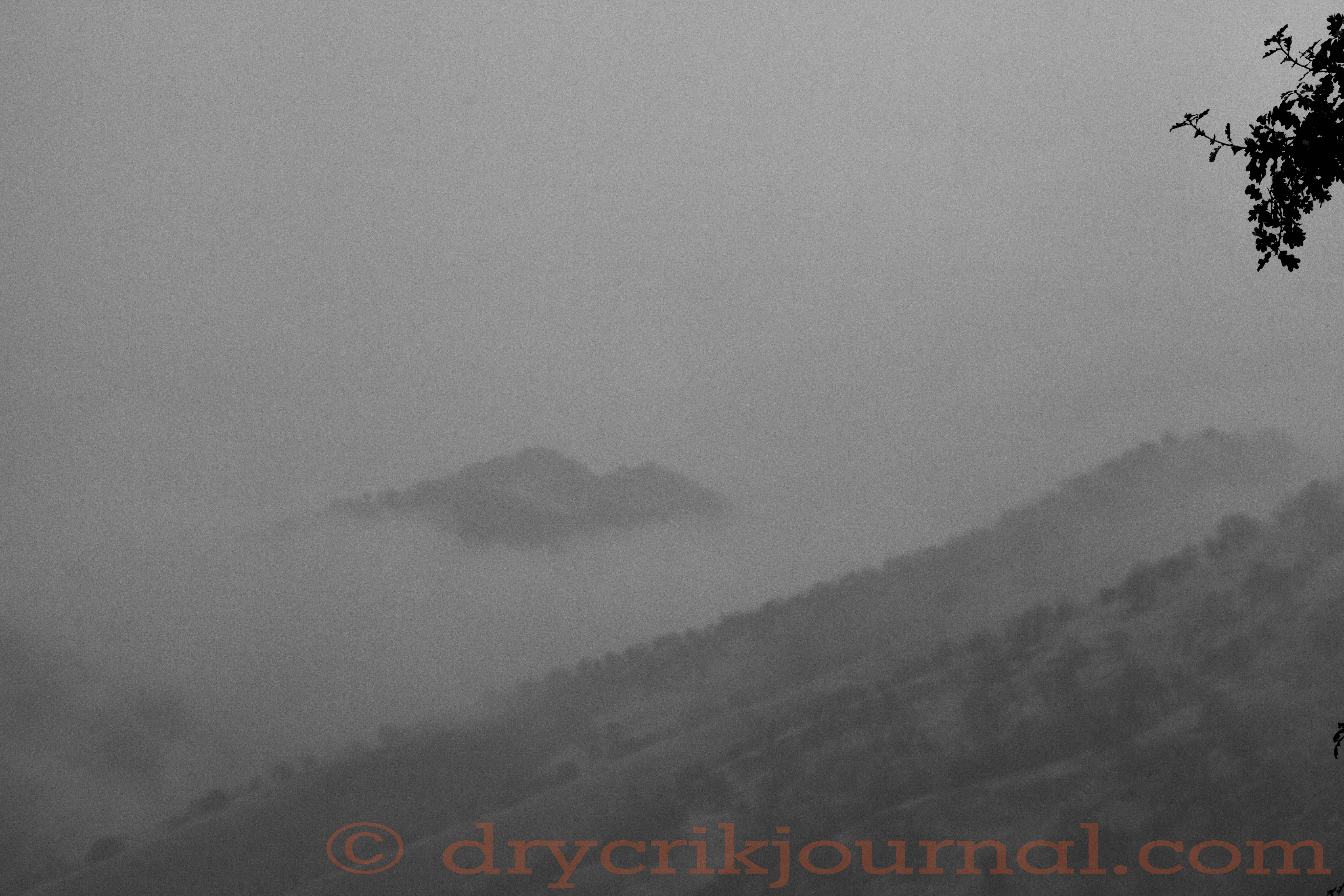
Metal roof
machine gun fire,
strobe lightening
and rolling thunder:
cracks rip black
with jagged light,
redbud silhouettes
dance with the dark
like the Fillmore,
like the Shrine—
endless bass
rocks the canyon,
canons bark with flame
and the war goes on and on.
Moist breath,
eager heart electrified
not to be contained
within old skin.
On stage:
the Doors
Janis Joplin wild with
Jimi Hendrix crescendos.
Last flashes break with dawn.
Inch-seventeen all in the ground—
she hasn’t lost her touch
with how to make it rain.
Posted in Photographs, Poems 2015, Ranch Journal
Tagged Fillmore, lightening, rain, Shrine Hall, storm, thunder

October slips away from the sun
sliding south down the ridgeline
after a quick rain clears
the air,
settles summer’s dust,
erases tracks
for a day:
another beginning
to another adventure—
nearly 25,000 now.
No calls from beyond
Sulphur Peak:
old friend
to generations waking
from dreams and restless sleep.
On top in the brush
a 2” x 2” surveyor’s pole,
a Challenge Butter buck
not quite in rut.
Spring poppy overlay of gold
winter cap of snow—
never naked,
always changing clothes.
~
Weekly Photo Challenge: “(Extra)ordinary”
Posted in Photographs, Poems 2015, Ranch Journal
Tagged dawn, October, Sulphur Peak, weekly-photo-challenge
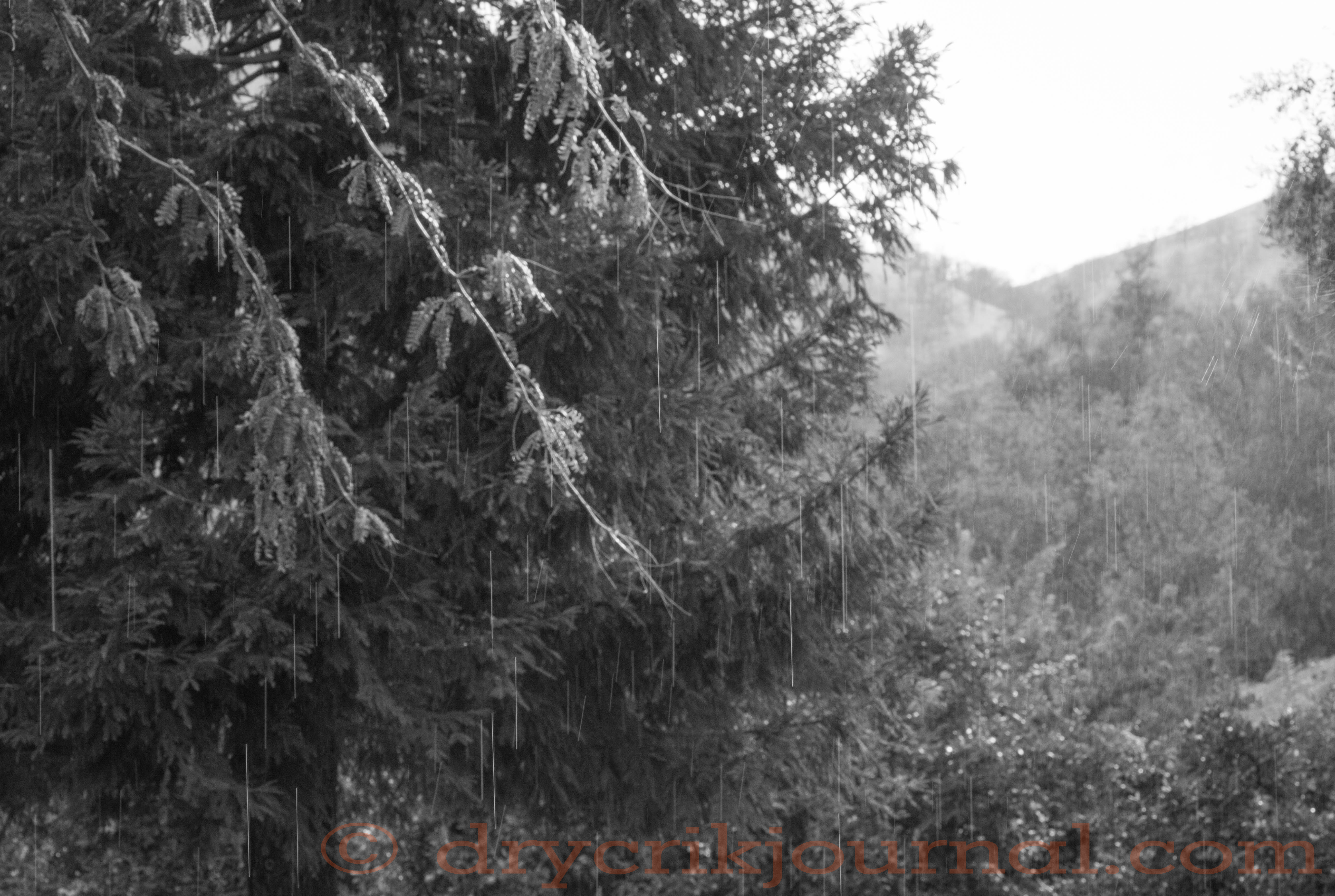
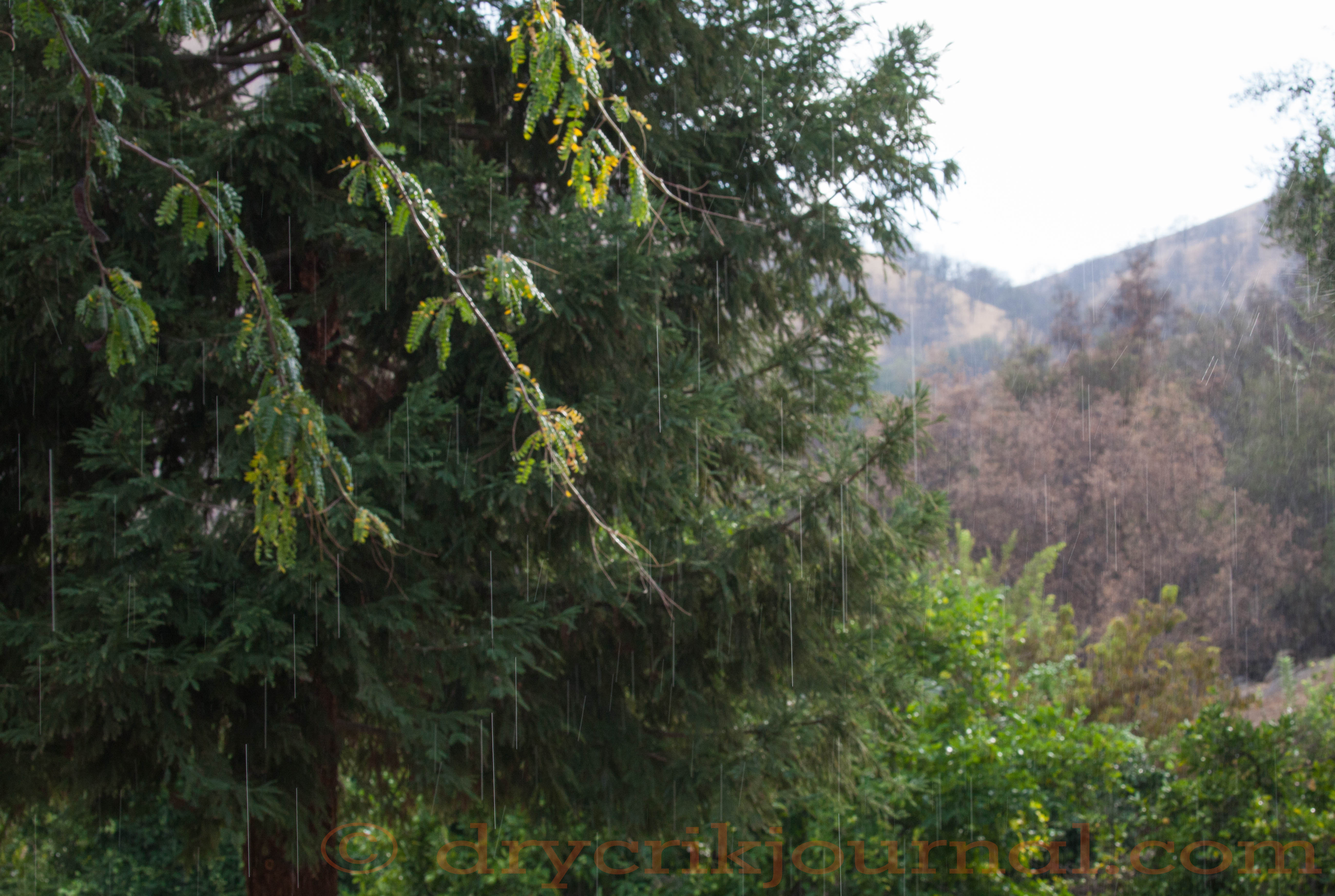
Glass in-hand,
we toast the dark morning’s
thunder and lightning
to the afternoon rumble
of another trace
from gray skies.
We have grown older
waiting—wishing, hoping,
praying to any god to hear—
for this time of year
when it might rain.
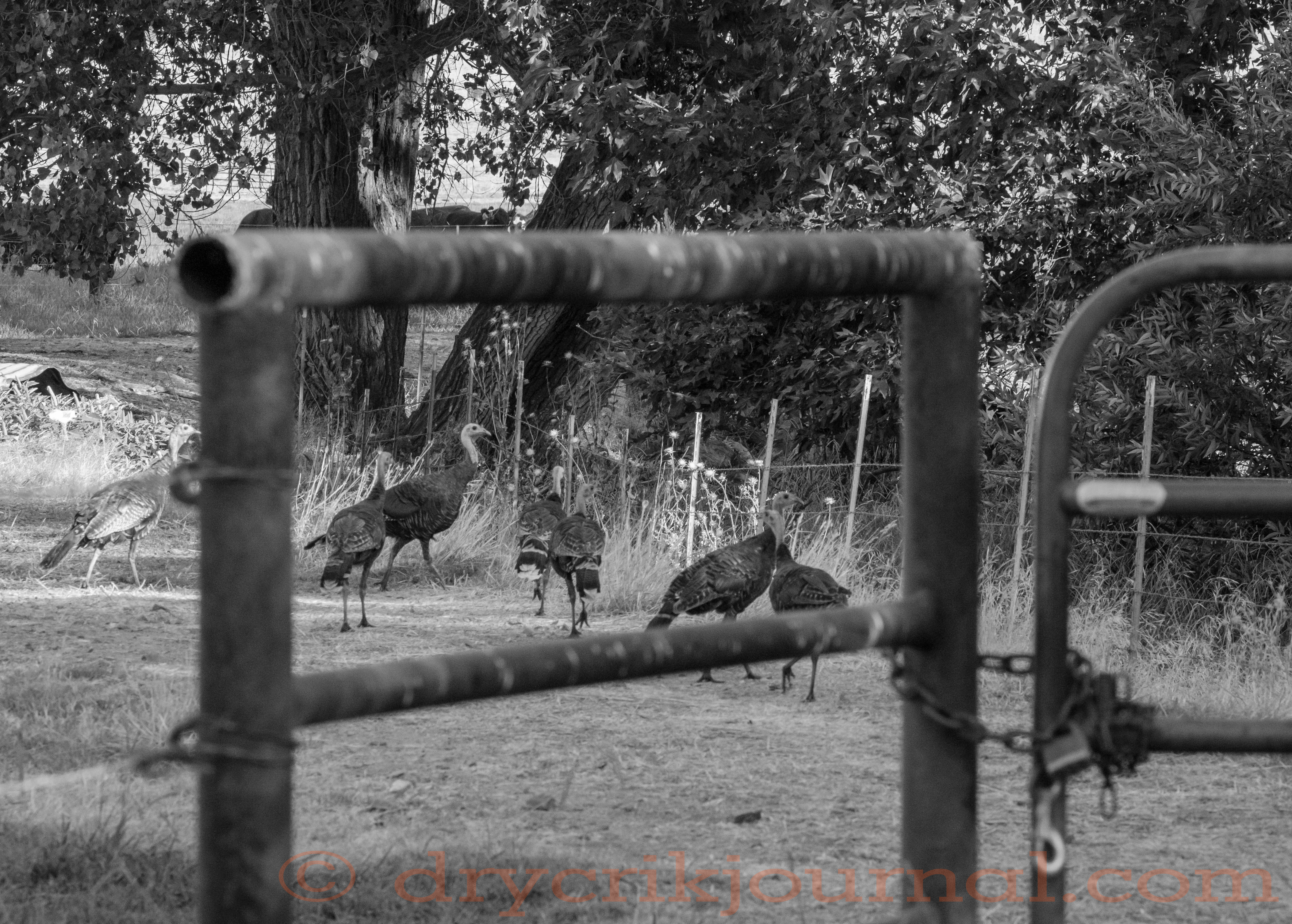
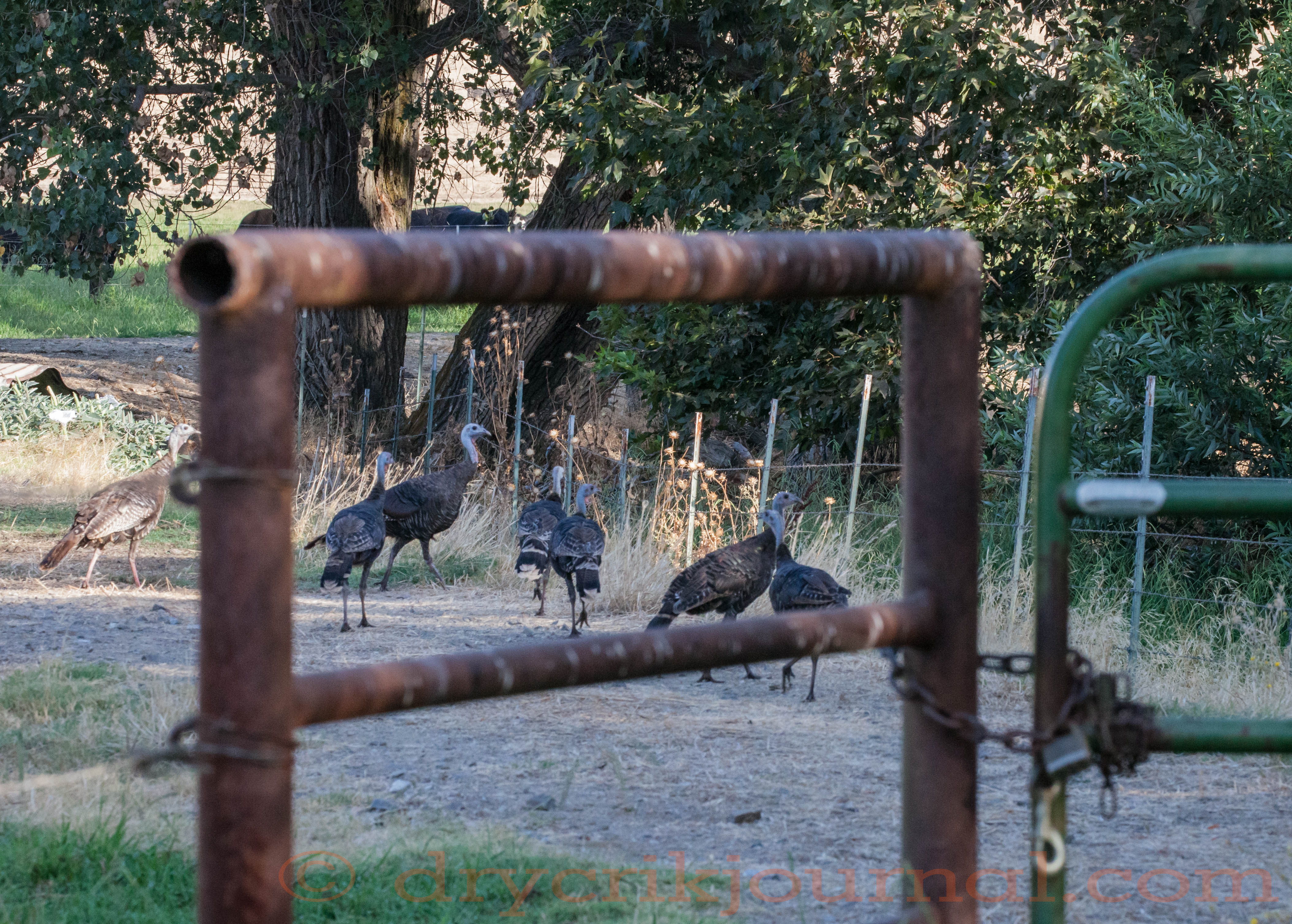
Fence posts and barbed wire:
obstacles for honest people,
may their tribe increase.
December 2014
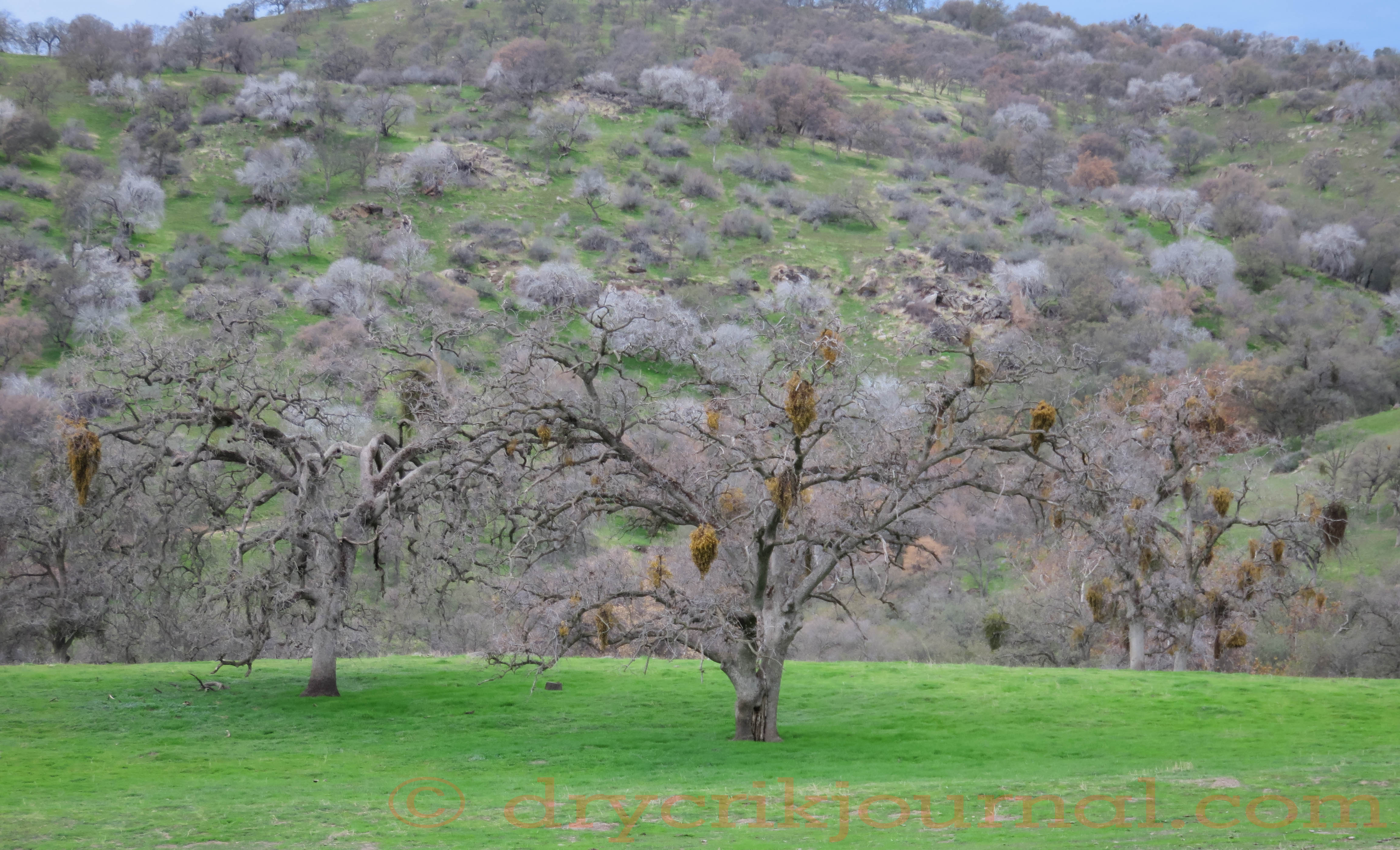
Skeletons and broken limbs, old friends
of two or three centuries passing seasons
in one another’s shade, listening
to fathers telling sons how to survive.
Clumps of brown and yellow mistletoe
hang from arms like grapes becoming raisins,
all giving-in and giving-up their ghosts,
their loosening bark in lieu of acorns
to this bear invasion as the canyons
and draws crawl with shaggy scavengers
after the war is over—as the slowly fading
wounded watch, brittle roots without water.
This old girl will never be the same,
not reclaim her lush good looks
for generations that will never know
the difference nor her endless bounty.
Nothing stays the same beyond the void
of emptiness—everlasting, ever changing.

October 14, 2015 – Greasy, Horse Lot
Posted in Photographs, Poems 2015, Ranch Journal

Blurs that stir the heart
banked in brush without a shot
for another day.
Posted in Haiku 2015, Photographs, Ranch Journal
Tagged age, Blacktail deer, bucks, hunting

The War Prayer
by Mark Twain
It was a time of great and exalting excitement. The country was up in arms, the war was on, in every breast burned the holy fire of patriotism; the drums were beating, the bands playing, the toy pistols popping, the bunched firecrackers hissing and spluttering; on every hand and far down the receding and fading spread of roofs and balconies a fluttering wilderness of flags flashed in the sun; daily the young volunteers marched down the wide avenue gay and fine in their new uniforms, the proud fathers and mothers and sisters and sweethearts cheering them with voices choked with happy emotion as they swung by; nightly the packed mass meetings listened, panting, to patriot oratory which stirred the deepest deeps of their hearts, and which they interrupted at briefest intervals with cyclones of applause, the tears running down their cheeks the while; in the churches the pastors preached devotion to flag and country, and invoked the God of Battles, beseeching His aid in our good cause in outpouring of fervid eloquence which moved every listener. It was indeed a glad and gracious time, and the half dozen rash spirits that ventured to disapprove of the war and cast a doubt upon its righteousness straightway got such a stern and angry warning that for their personal safety’s sake they quickly shrank out of sight and offended no more in that way.
Sunday morning came — next day the battalions would leave for the front; the church was filled; the volunteers were there, their young faces alight with martial dreams — visions of the stern advance, the gathering momentum, the rushing charge, the flashing sabers, the flight of the foe, the tumult, the enveloping smoke, the fierce pursuit, the surrender — them home from the war, bronzed heroes, welcomed, adored, submerged in golden seas of glory! With the volunteers sat their dear ones, proud, happy, and envied by the neighbors and friends who had no sons and brothers to send forth to the field of honor, there to win for the flag, or, failing, die the noblest of noble deaths. The service proceeded; a war chapter from the Old Testament was read; the first prayer was said; it was followed by an organ burst that shook the building, and with one impulse the house rose, with glowing eyes and beating hearts, and poured out that tremendous invocation —
“God the all-terrible! Thou who ordainest!
Thunder thy clarion and lightning thy sword!”
Then came the “long” prayer. None could remember the like of it for passionate pleading and moving and beautiful language. The burden of its supplication was, that an ever-merciful and benignant Father of us all would watch over our noble young soldiers, and aid, comfort, and encourage them in their patriotic work; bless them, shield them in the day of battle and the hour of peril, bear them in His mighty hand, make them strong and confident, invincible in the bloody onset; help them to crush the foe, grant to them and to their flag and country imperishable honor and glory —
An aged stranger entered and moved with slow and noiseless step up the main aisle, his eyes fixed upon the minister, his long body clothed in a robe that reached to his feet, his head bare, his white hair descending in a frothy cataract to his shoulders, his seamy face unnaturally pale, pale even to ghastliness. With all eyes following him and wondering, he made his silent way; without pausing, he ascended to the preacher’s side and stood there waiting. With shut lids the preacher, unconscious of his presence, continued with his moving prayer, and at last finished it with the words, uttered in fervent appeal, “Bless our arms, grant us the victory, O Lord our God, Father and Protector of our land and flag!”
The stranger touched his arm, motioned him to step aside — which the startled minister did — and took his place. During some moments he surveyed the spellbound audience with solemn eyes, in which burned an uncanny light; then in a deep voice he said:
“I come from the Throne — bearing a message from Almighty God!” The words smote the house with a shock; if the stranger perceived it he gave no attention. “He has heard the prayer of His servant your shepherd, and will grant it if such shall be your desire after I, His messenger, shall have explained to you its import — that is to say, its full import. For it is like unto many of the prayers of men, in that it asks for more than he who utters it is aware of — except he pause and think.
“God’s servant and yours has prayed his prayer. Has he paused and taken thought? Is it one prayer? No, it is two — one uttered, the other not. Both have reached the ear of Him Who heareth all supplications, the spoken and the unspoken. Ponder this — keep it in mind. If you would beseech a blessing upon yourself, beware! lest without intent you invoke a curse upon a neighbor at the same time. If you pray for the blessing of rain upon your crop which needs it, by that act you are possibly praying for a curse upon some neighbor’s crop which may not need rain and can be injured by it.
“You have heard your servant’s prayer — the uttered part of it. I am commissioned of God to put into words the other part of it — that part which the pastor — and also you in your hearts — fervently prayed silently. And ignorantly and unthinkingly? God grant that it was so! You heard these words: ‘Grant us the victory, O Lord our God!’ That is sufficient. The whole of the uttered prayer is compact into those pregnant words. Elaborations were not necessary. When you have prayed for victory you have prayed for many unmentioned results which follow victory — must follow it, cannot help but follow it. Upon the listening spirit of God the Father fell also the unspoken part of the prayer. He commandeth me to put it into words. Listen!
“O Lord our Father, our young patriots, idols of our hearts, go forth to battle — be Thou near them! With them — in spirit — we also go forth from the sweet peace of our beloved firesides to smite the foe. O Lord our God, help us to tear their soldiers to bloody shreds with our shells; help us to cover their smiling fields with the pale forms of their patriot dead; help us to drown the thunder of the guns with the shrieks of their wounded, writhing in pain; help us to lay waste their humble homes with a hurricane of fire; help us to wring the hearts of their unoffending widows with unavailing grief; help us to turn them out roofless with their little children to wander unfriended the wastes of their desolated land in rags and hunger and thirst, sports of the sun flames of summer and the icy winds of winter, broken in spirit, worn with travail, imploring Thee for the refuge of the grave and denied it — for our sakes who adore Thee, Lord, blast their hopes, blight their lives, protract their bitter pilgrimage, make heavy their steps, water their way with their tears, stain the white snow with the blood of their wounded feet! We ask it, in the spirit of love, of Him Who is the Source of Love, and Who is the ever-faithful refuge and friend of all that are sore beset and seek His aid with humble and contrite hearts. Amen.”
(After a pause.) “Ye have prayed it; if ye still desire it, speak! The messenger of the Most High waits!”
It was believed afterward that the man was a lunatic, because there was no sense in what he said.
About the Text: According to Albert Bigelow Paine, whom Twain named as his literary executor not long before he died, Twain dictated “The War Prayer” in 1904-05 and intended it to be published then. However, it was rejected by his publisher. Paine found it among Twain’s unpublished manuscripts after the writer’s death in 1910. Paine published the essay for the first time in 1923 in his collection, Europe and Elsewhere. The text I present here follows Paine’s 1923 text.
The preceding was shared with me by my good friend David Wilke.
Posted in Photographs, Ranch Journal




 drycrikjournal