Category Archives: Photographs

Image

WPC: Family

IMG_2681

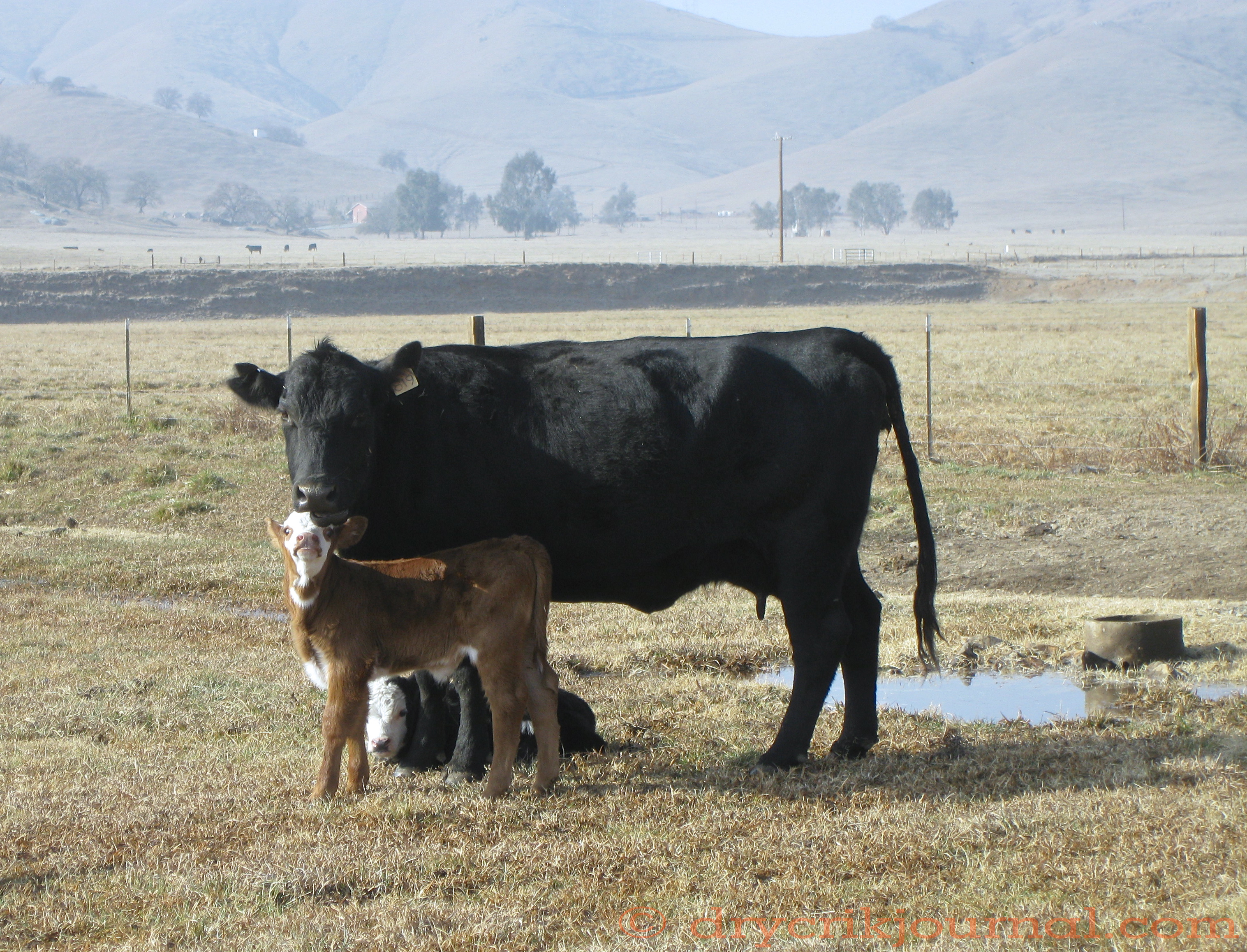
The twins, now over a week old, are doing well as it appears that “819” will raise them both. Currently relegated to babysitting duties (outside the frame) while the other mothers are eating hay, she’s doing quite well keeping track of her own two calves.

I am reminded of my poem “IO” published in Poems from Dry Creek reprinted below:


IO

On the horns of an infant moon,
the creek shrinks and pools
between sycamores and live oaks

as babies come to first-time mothers
bringing the bear tracks downcanyon
on the scent of spent placentas.

Black progeny of the river nymph –
white heifer driven madly by Hera’s
gadfly Oestrus to cross continents

and populate Asia – find maternity
perplexing at first. Yet, lick and nuzzle
the stumbling wet struggle to stand,

suckle and rest that enflames instinct
in all flesh. Worthy timeless worship,
no better mother ever than a cow.

Paregien Branding Addendum: Photos by Earl McKee

2014-01-10 03.14.48

2014-01-10 03.25.46-1

2014-01-10 03.29.42-2

2014-01-10 03.19.47

2014-01-10 03.22.17

2014-01-10 03.22.59-1

2014-01-10 05.03.13

2014-01-10 05.04.00

2014-01-10 05.14.25

2014-01-10 05.19.04

2014-01-10 05.23.27

2014-01-10 05.24.59

2014-01-10 05.32.41

2014-01-10 03.07.36-2

Use with permission only, copyright Earl McKee.

Dust in the Canyons

IMG_2672

The cows across the road have heard us feeding, the rattle of the diesel idling in gear as we flake hay to the first-calf heifers. It’s a good sign that they’ve worked their way up the mountain, hustling a little dry fuzz to sustain them instead of waiting by the gate for us to feed them next. Since the middle of August, they know the routine.

Another good sign is the appearance of Bald Eagles, mostly immature, in the past couple of weeks. Slim pickin’s, we came upon four of them feeding on a coyote—and almost no one eats coyote. As there’s not much water pooled anywhere, one assumes the Bald Eagles may be preceding a storm, but now harassing our native ducks, the survivors forced to retreat to the cattails every morning until northern ducks begin migrating south.

We’re looking for change and almost any sign will do.

Beautiful Dry Days

December 28, 2013

December 28, 2013

Forecast: more of the same, no rain next 10 days.

Image

WPC: Family—Rooted Tenacity

IMG_2588

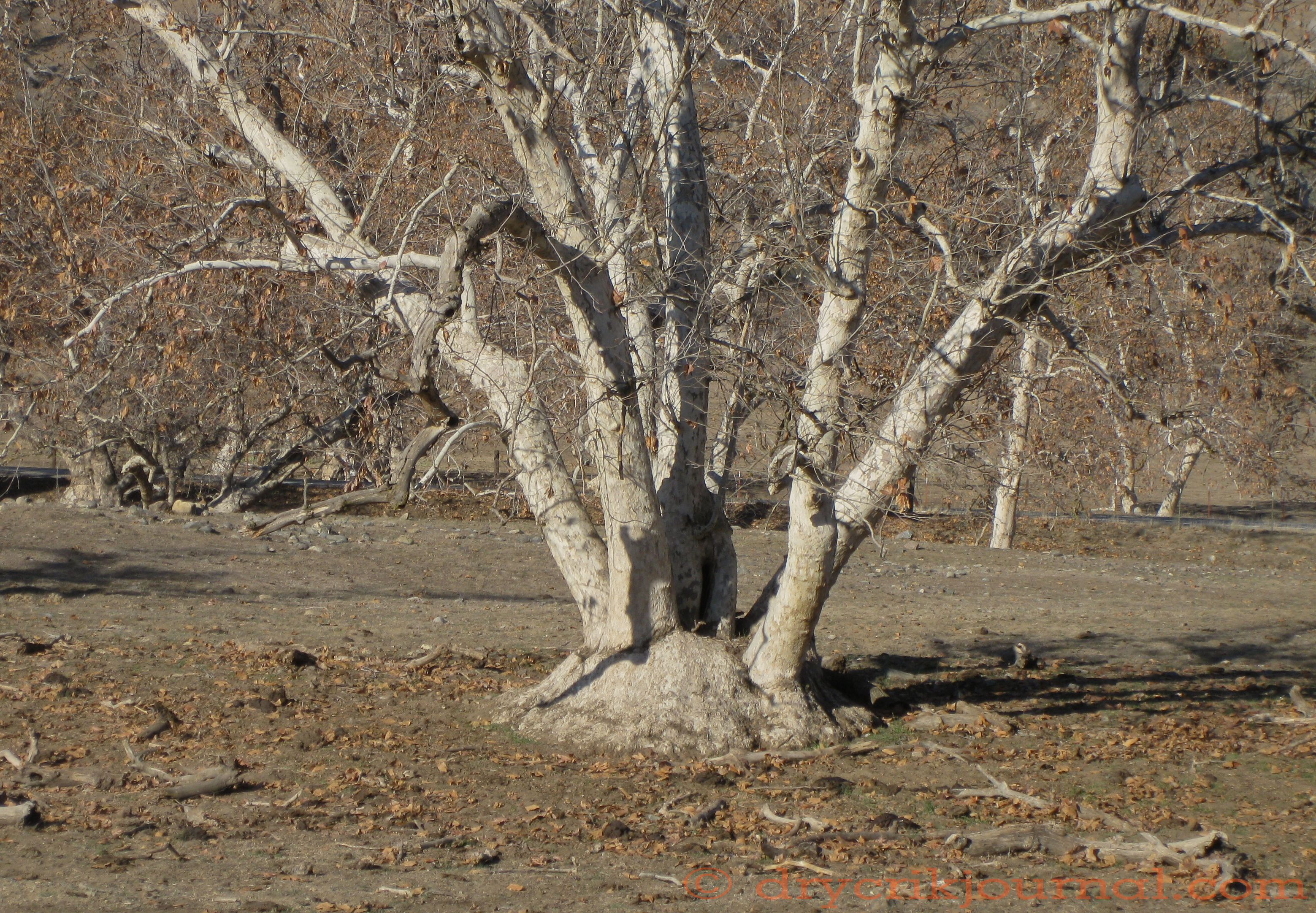
This family of sycamores (Platanus racemosa) is among the largest Sycamore Alluvial Woodlands in the Sierra Nevada ecoregion and one of 17 stands over 10 acres remaining on the planet. Located on Dry Creek (Tulare County, California), it is connected by a common root ball. Rarely exposed, some root balls measure 15 feet in diameter and have been pushing new stems for centuries. Some stems here are three to four hundred years old—alive, perhaps when Sir Francis Drake claimed California for Spain. Imagine how old the root balls must be!

No Snow in the Sierras

December 31, 2013

December 31, 2013

With no improvement in the Sierra snowpack in the month of January, and virtually no storms in sight, prospects for California agriculture take an ugly shape. Best case scenario: past the time of year when the snowpack normally freezes for a slow runoff, a prolonged surface water run to Valley farmers is unlikely even if it does rain and snow in amounts to offset the dry, first half of our rainy season. Now one must entertain the real possibility of more stormless skies and more warm weather. With record-breaking high temperatures for January, San Joaquin Valley orchards are confused and trying to bloom. With each day it does not rain, the richest agricultural region in the world comes closer to becoming the new Dust Bowl, adversely impacting everyone.

                        Overview: “Artists of the Great Western Divide” (2010)

MV5BMTMwOTcyMzgyNF5BMl5BanBnXkFtZTcwMzIxNzk4Mw@@._V1_SY176_CR0,0,122,176_

She’s Got Twins

IMG_2663

Brought down from the Paregien Ranch before the branding as we reduced numbers in our upper country, we knew she was close. I noticed the fresh black white-faced calf off by itself most of Wednesday, worried that it was abandoned. Yesterday when we fed, she surprised us with twins, having collected them both. I’m guessing a Hereford father.

IMG_2669

Plenty of milk, now we’ll see if she can raise them.

Out in California

Sulphur & 17, 2014

Sulphur & 17, 2014

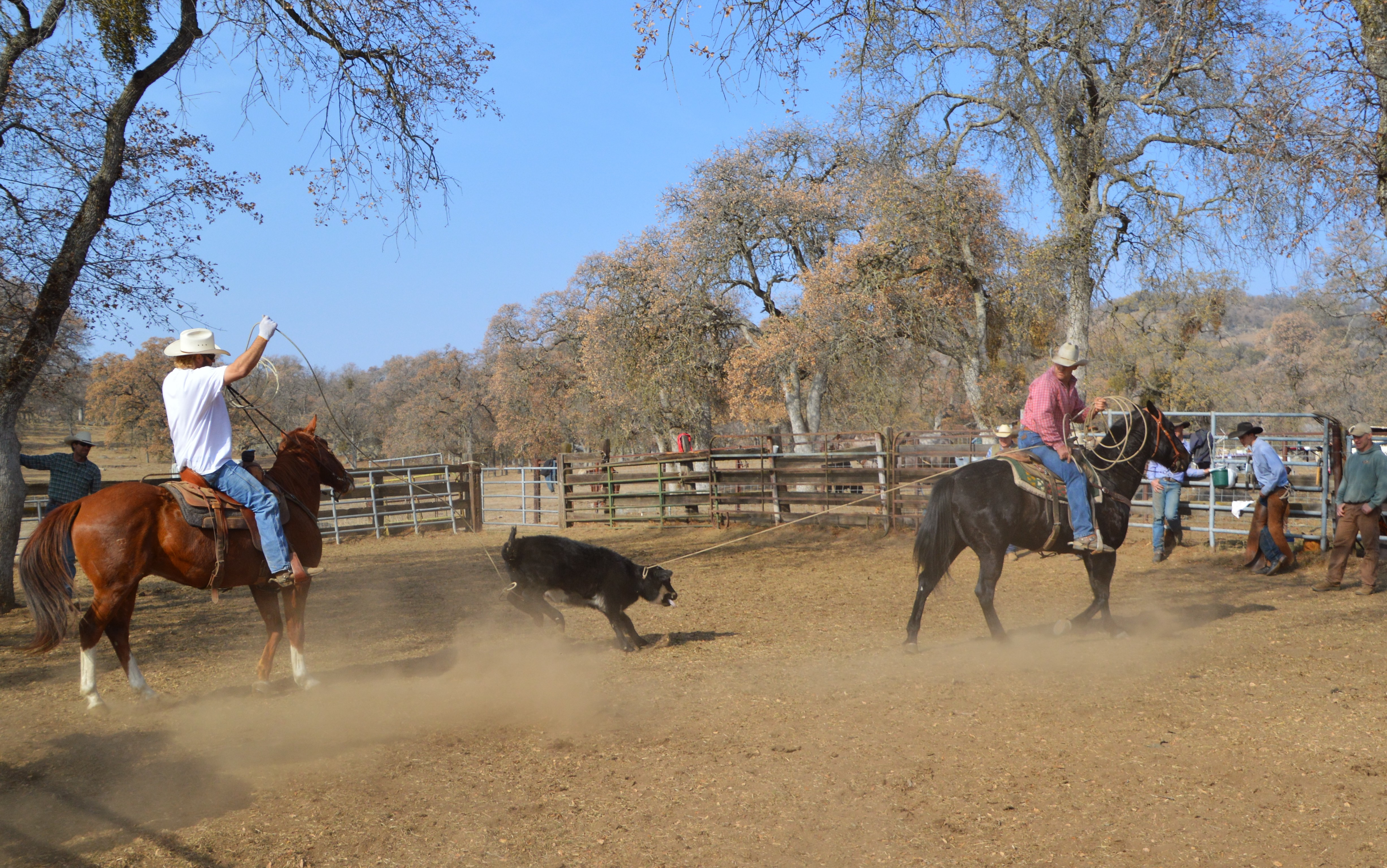
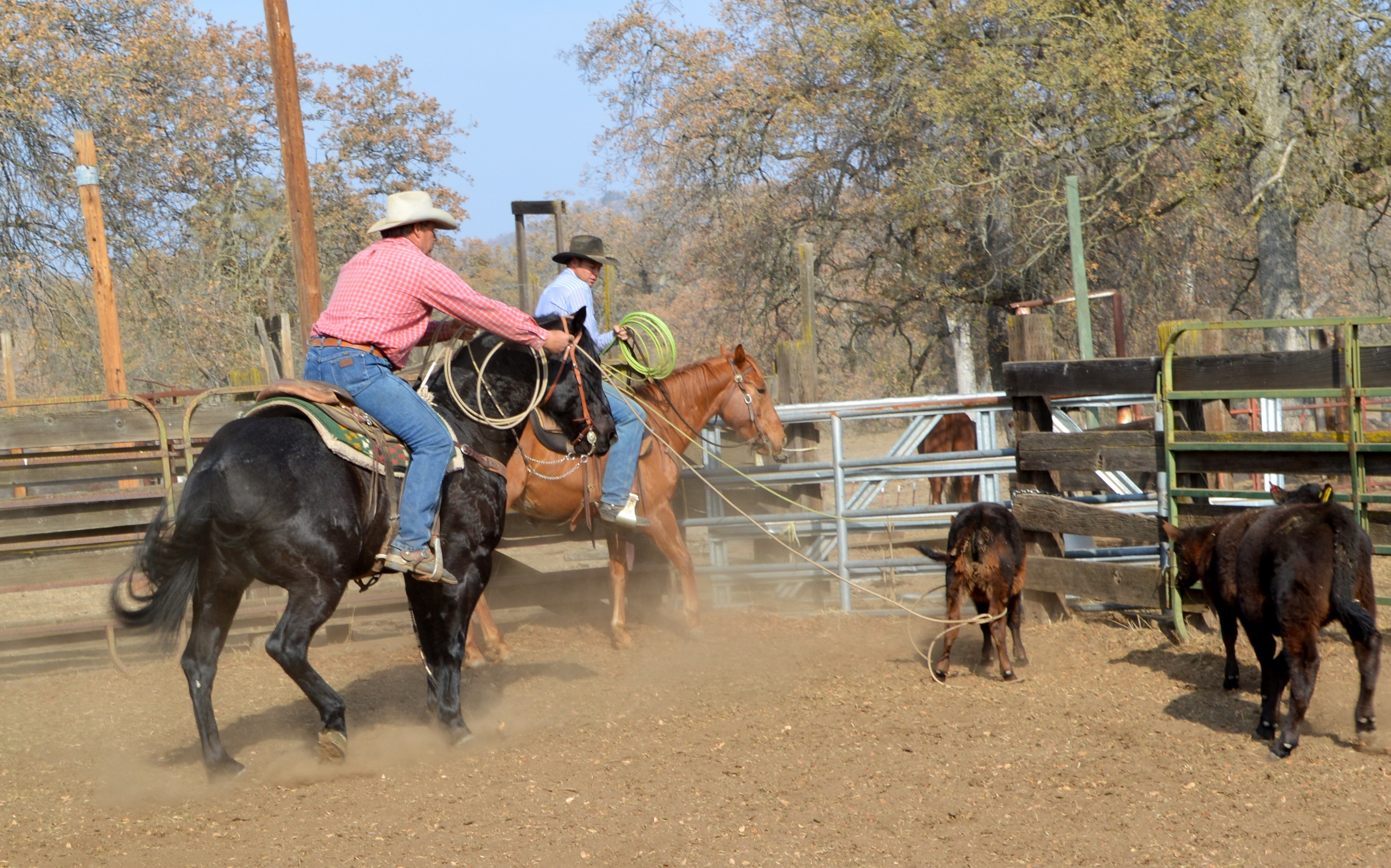
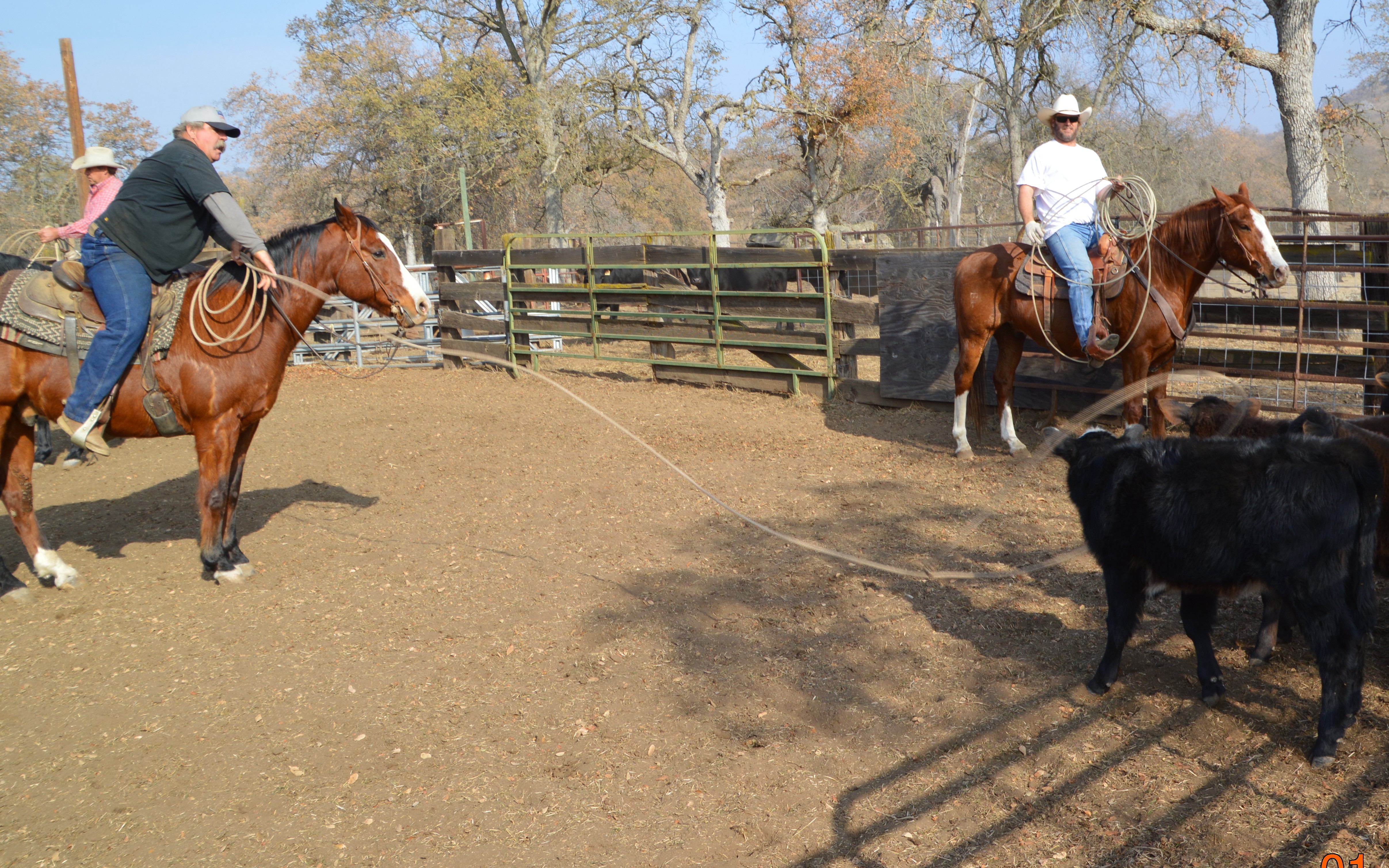
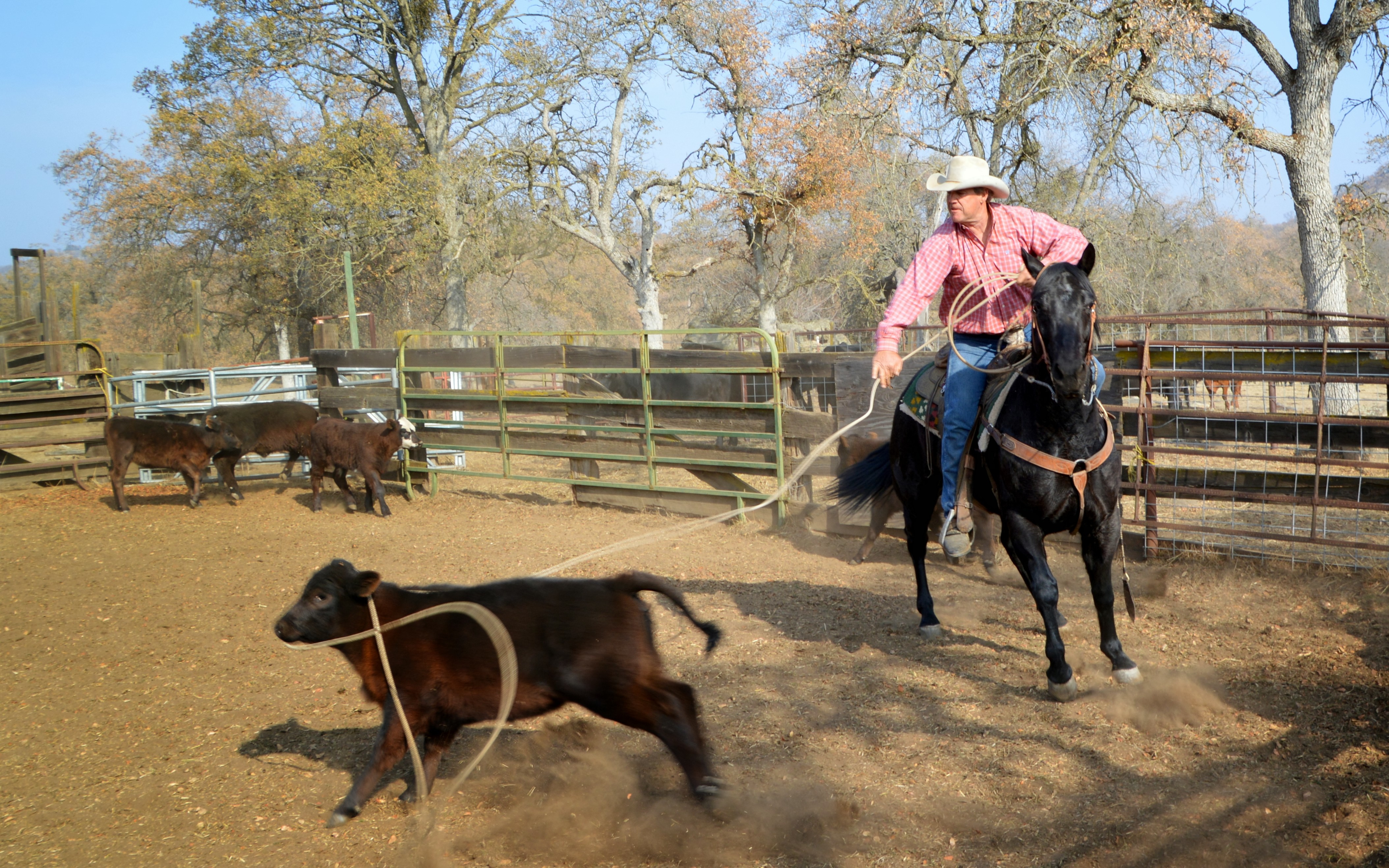
It’s all new ground, this branding in the dry—even though Robbin rigged and ran a sprinkler from a spring-filled tank the day before to keep the dust down. Conditions were delightful. Still feeding everyday, but wearing down as we and our neighbors try to get a few calves marked as we go. It’s time, a month later than normal. Naturally, the calves are lighter, not the big and bloomy kind that draw compliments or test the ground crew.

IMG_2653

IMG_2646

Age and youth, the cowboy dream alive and realized in the same pen, at the same moment, under perhaps the worst circumstances of weather to date in California. Surviving the Drought of 1977 early in my career gave me confidence during the many dry years since, but these historical dry times will impact the future for man and beast for years to come. Busy with the basics, we have yet to imagine some of these far-reaching impacts.

IMG_2613

But it’s reassuring to be in the company of neighbors, all of us in the same boat with the same decisions to make: whether to buy more hay or sell more cows—usually both that can’t last forever. Most our brandings roll ‘old-people slow’, just right for us and a few throwback kids that might want this kind of life. What they don’t know, of course, is that they invigorate and inspire us, help keep us going, make it all the more worthwhile.

IMG_2604

Calves Need Hay Too

IMG_2586

Calculating how much alfalfa to leave in a pasture, we have to include the growing appetites of calves. Though the Wagyu X calves above may not know the taste of green grass, they know the sound of the hay truck, as do the calves everywhere. Branding a little bunch in Greasy this morning, culling cows as we go.

TO THESE HILLS

IMG_6984


In the end, it will not matter
to these bare hills—the dust
we rose, the hay we fed

to cows, thin calves trailing
never knowing green. Or
the cacophony of pleas

to separate gods prolonged
in empty canyons echoing
hoarse and raspy songs.

A sick and starving coyote came
to the house, hairless as the hills,
to lie down in a damp spot,

too weak to leave without help.
In the end, it will not matter
to these bare hills, slowly

decomposing once again, if
we stay or go. It is the cows
we cared about, trusting souls

we owed, obliged to living
on next to nothing—even still
it will not matter to these hills.