Monthly Archives: January 2014

The Good Signs

Great White Pelican

American White Pelican

This morning, while feeding, we ran across a pair of American White Pelicans in our irrigation pond. I don’t remember ever seeing pelicans around here, but I don’t remember everything. But we’ll take it as a good sign.

On my daughter’s blog for the archives she could hear 40-50′ waves crashing on the north shore of Kauai. On the midday news, the ticker tape mentioned waves of the same dimensions on the north shore of Oahu, ahead of hurricane force winds. High surf warnings are in effect from Ventura to San Diego Counties until Sunday afternoon. We’ll take all that as a good sign.

Today real clouds came in on a little wind to feel like rain, yet not exactly sure what rain feels like anymore, it felt good to us.

We’ll keep our fingers crossed for a change.
HOW COULD IT BE

Without cloud, without wind,
just dust rising in an opaque haze,
months of yesterdays the same—

a canyon the gods have forgotten,
overlooked while taking their business
elsewhere. This is no lovers’ quarrel,

no slow strip tease, no small spat
to make up with passion,
it will take a while to ever trust

these gods again. Perhaps we never
received notice that they’ve been laid off,
sacked, canned in the reorganization

of the planet, their replacements: bumbling
neophytes in seductive, hard-bellied struts
without wear, without compassion.

Perhaps they have retired, given-in
to changing times to watch the show unfold
without water—you never know.

Image

WPC: Family

IMG_2681

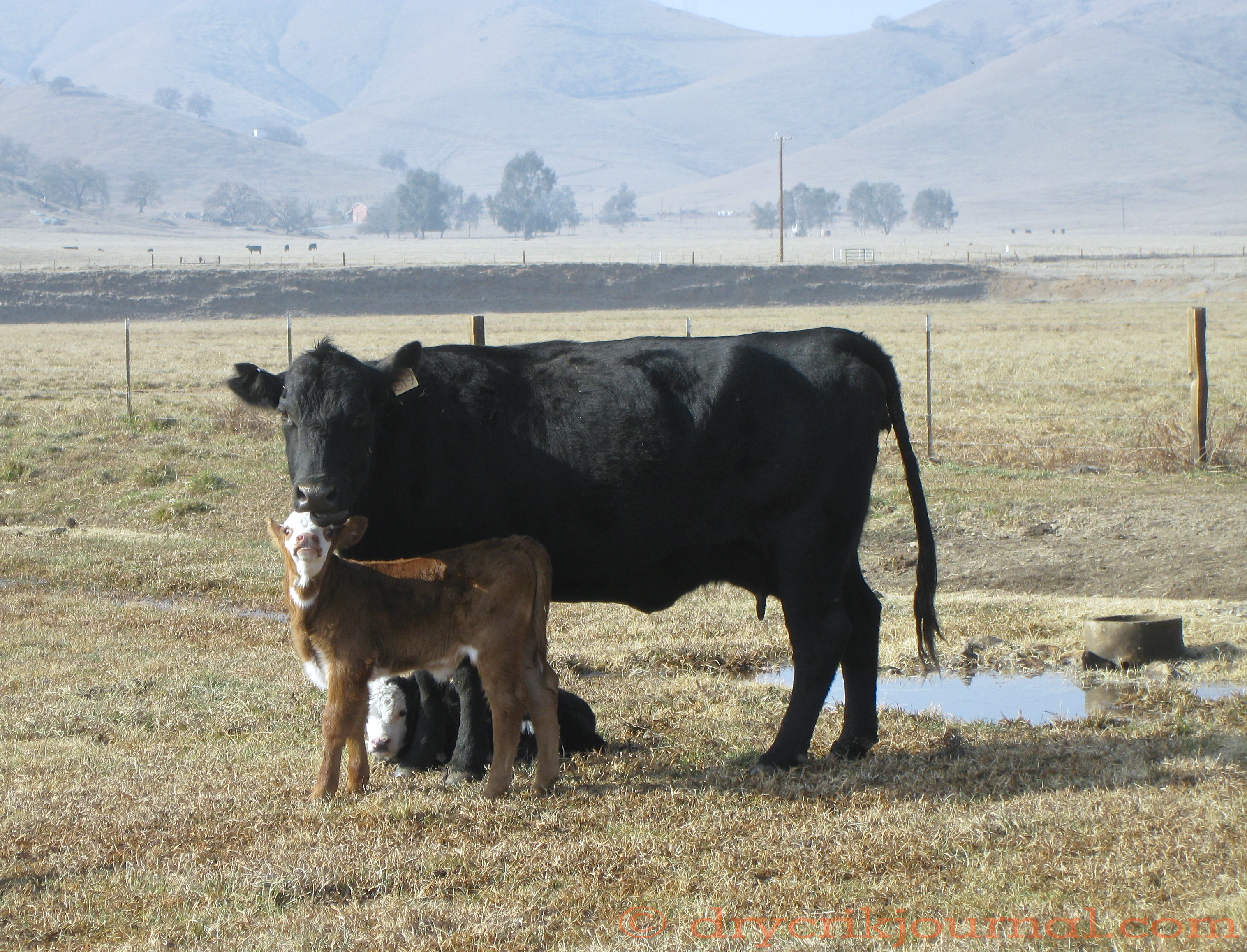
The twins, now over a week old, are doing well as it appears that “819” will raise them both. Currently relegated to babysitting duties (outside the frame) while the other mothers are eating hay, she’s doing quite well keeping track of her own two calves.

I am reminded of my poem “IO” published in Poems from Dry Creek reprinted below:


IO

On the horns of an infant moon,
the creek shrinks and pools
between sycamores and live oaks

as babies come to first-time mothers
bringing the bear tracks downcanyon
on the scent of spent placentas.

Black progeny of the river nymph –
white heifer driven madly by Hera’s
gadfly Oestrus to cross continents

and populate Asia – find maternity
perplexing at first. Yet, lick and nuzzle
the stumbling wet struggle to stand,

suckle and rest that enflames instinct
in all flesh. Worthy timeless worship,
no better mother ever than a cow.

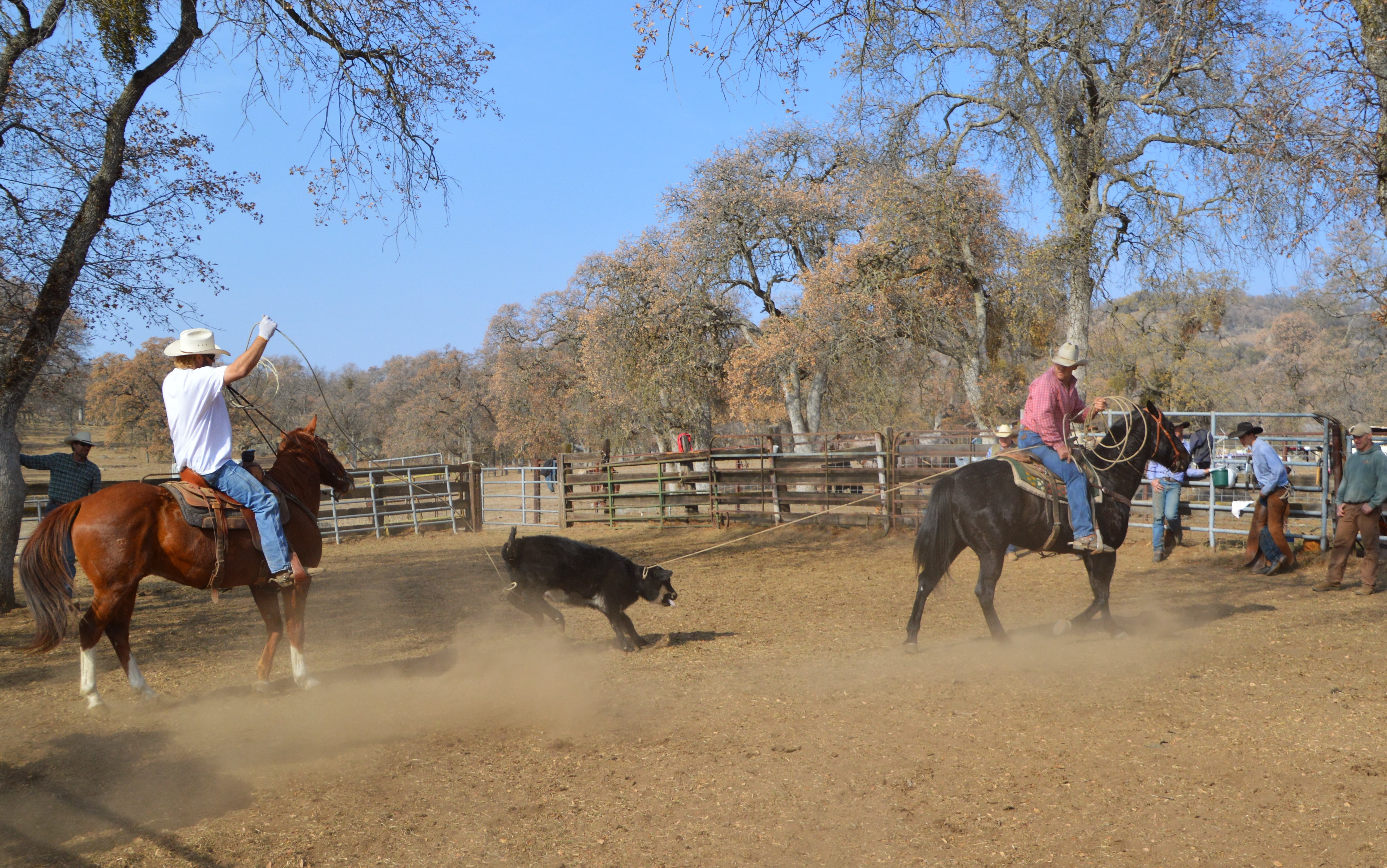
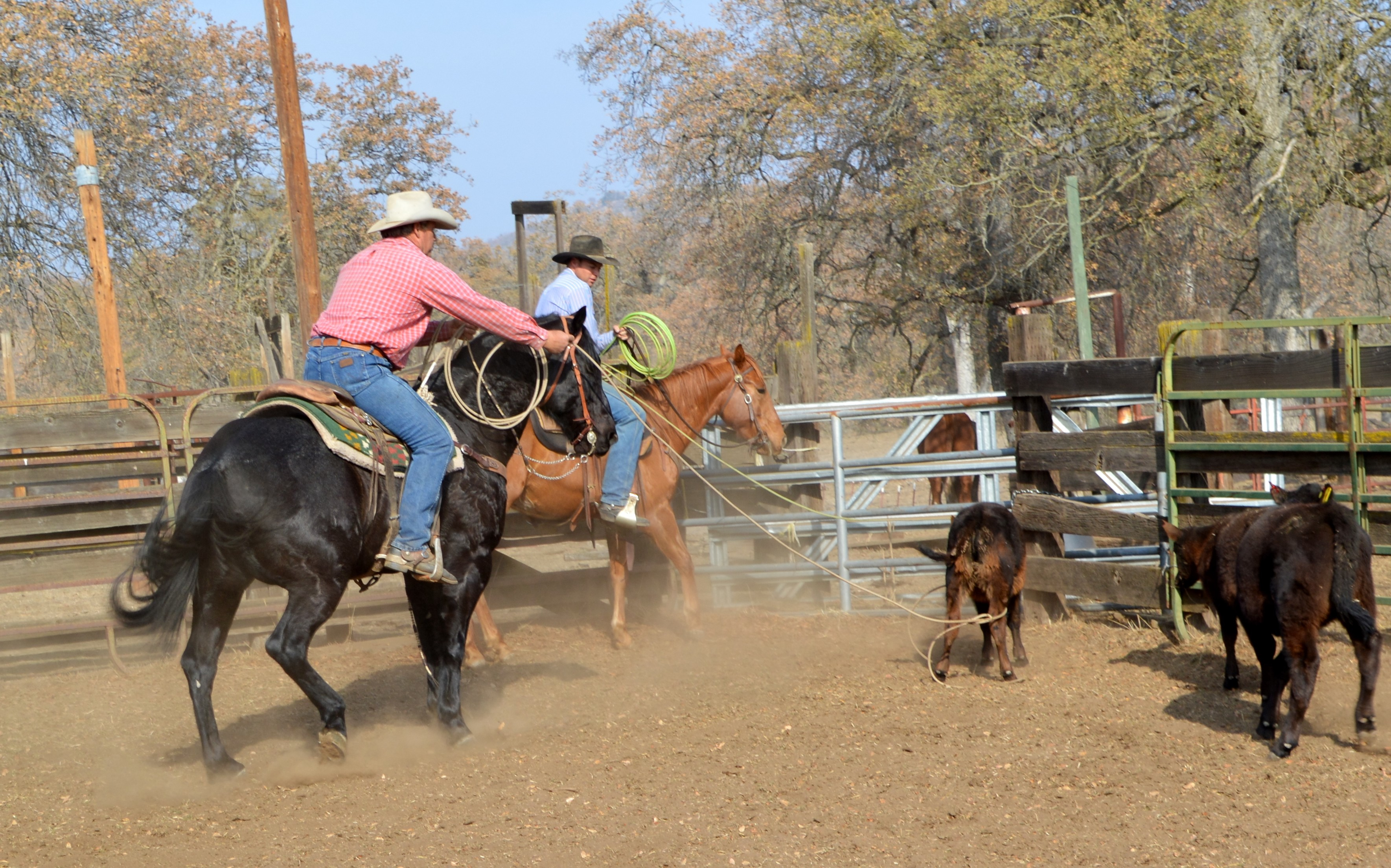
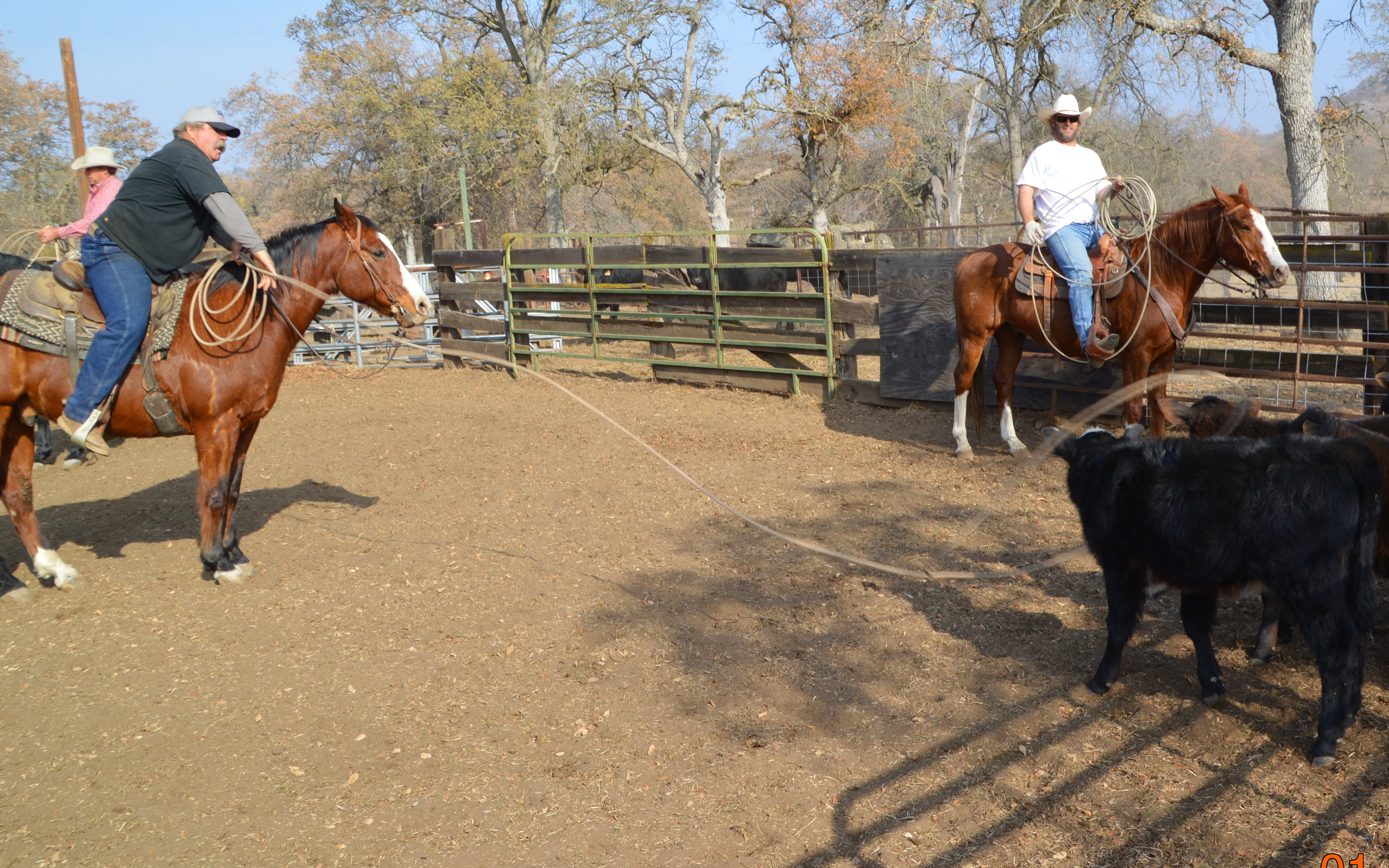
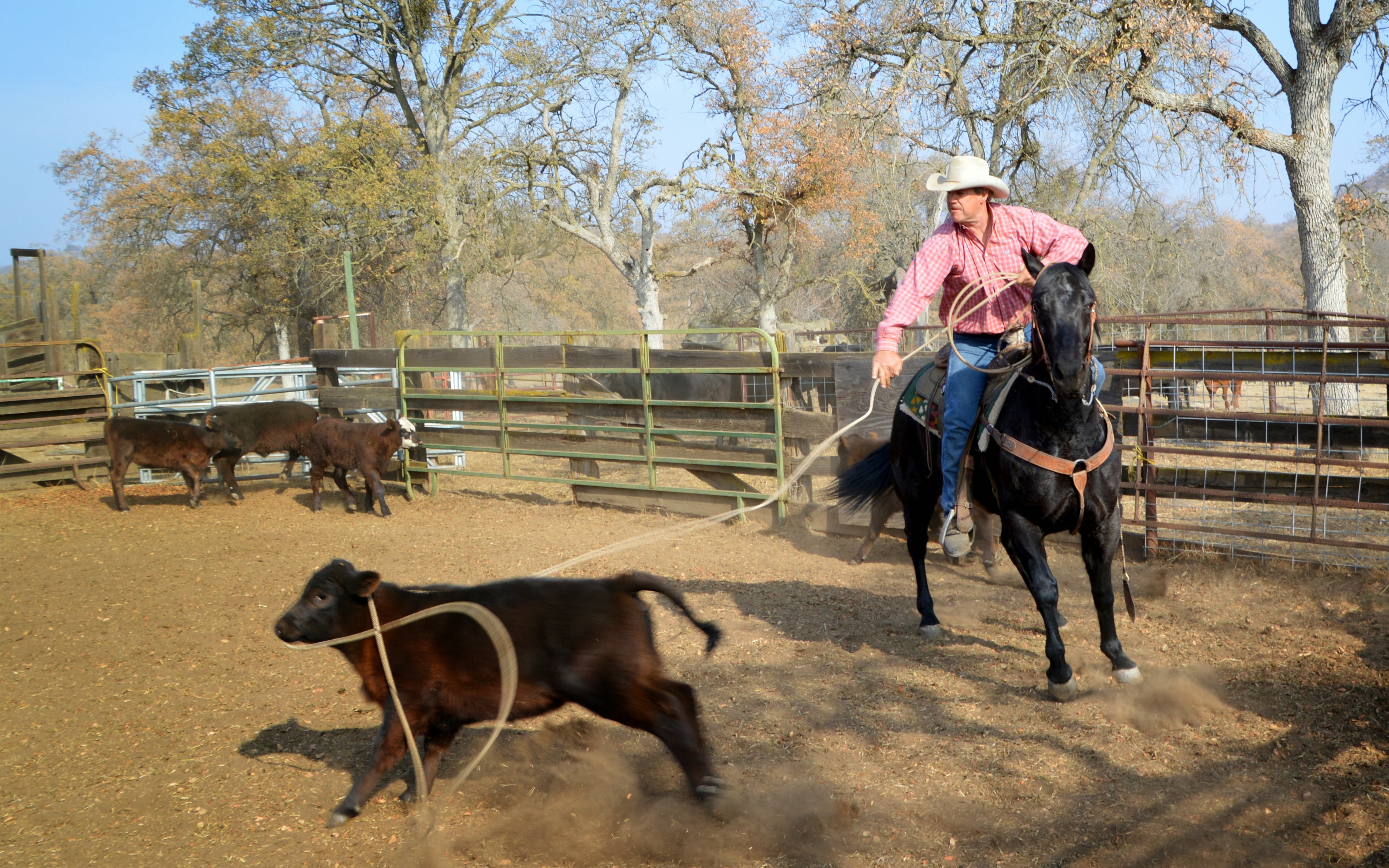
Paregien Branding Addendum: Photos by Earl McKee

2014-01-10 03.14.48

2014-01-10 03.25.46-1

2014-01-10 03.29.42-2

2014-01-10 03.19.47

2014-01-10 03.22.17

2014-01-10 03.22.59-1

2014-01-10 05.03.13

2014-01-10 05.04.00

2014-01-10 05.14.25

2014-01-10 05.19.04

2014-01-10 05.23.27

2014-01-10 05.24.59

2014-01-10 05.32.41

2014-01-10 03.07.36-2

Use with permission only, copyright Earl McKee.

DRY HAIKU: SIGNS

In January dirt,
a rattlesnake awake
warming in the road.

No grass, hawks wait on rocks,
falcons on cow chips,
close to the ground squirrels.

Winter haze, Great Blue statues
watch mounds at their feet
across bare landscapes

designed with black lines
following flakes of alfalfa,
no two the same—

while coyotes come
to the house for help—
but we cannot bring the rain.

Dust in the Canyons

IMG_2672

The cows across the road have heard us feeding, the rattle of the diesel idling in gear as we flake hay to the first-calf heifers. It’s a good sign that they’ve worked their way up the mountain, hustling a little dry fuzz to sustain them instead of waiting by the gate for us to feed them next. Since the middle of August, they know the routine.

Another good sign is the appearance of Bald Eagles, mostly immature, in the past couple of weeks. Slim pickin’s, we came upon four of them feeding on a coyote—and almost no one eats coyote. As there’s not much water pooled anywhere, one assumes the Bald Eagles may be preceding a storm, but now harassing our native ducks, the survivors forced to retreat to the cattails every morning until northern ducks begin migrating south.

We’re looking for change and almost any sign will do.

THE HERMIT

                              It is certain the world cannot be stopped nor saved.
                                        – Robinson Jeffers (“Going to Horse Flats”)

We may not have met the hermit at Horse Flats,
begging for news, hoping for more, a turn
towards the good, unaware that our senses are

bombarded now with addictive sensations.
He is outside of our tightening vortex, free
of its forces, yet his lonely choice starves

to share years of one prolonged epiphany,
an overlapping and timeless state of self-sufficiency,
his world free from a certain course.

Beautiful Dry Days

December 28, 2013

December 28, 2013

Forecast: more of the same, no rain next 10 days.

MOST OF THE TIME

She has her own way
of pruning trees, not the gentle touch
nor the vision of an arborist,

instead she snaps and breaks,
thins the weak wood that will not bear
the weight of fruit, clears the forest

just to start over—she does not care
if we wring our hands, gnash teeth
or bleed before she accepts our flesh

over and over again. Our moment
means nothing to her, she will adjust.
The grass will spring back to life

beneath our step, mountains rise
and valleys fall to waste. Nothing is
as it was—how could it be?

Image

WPC: Family—Rooted Tenacity

IMG_2588

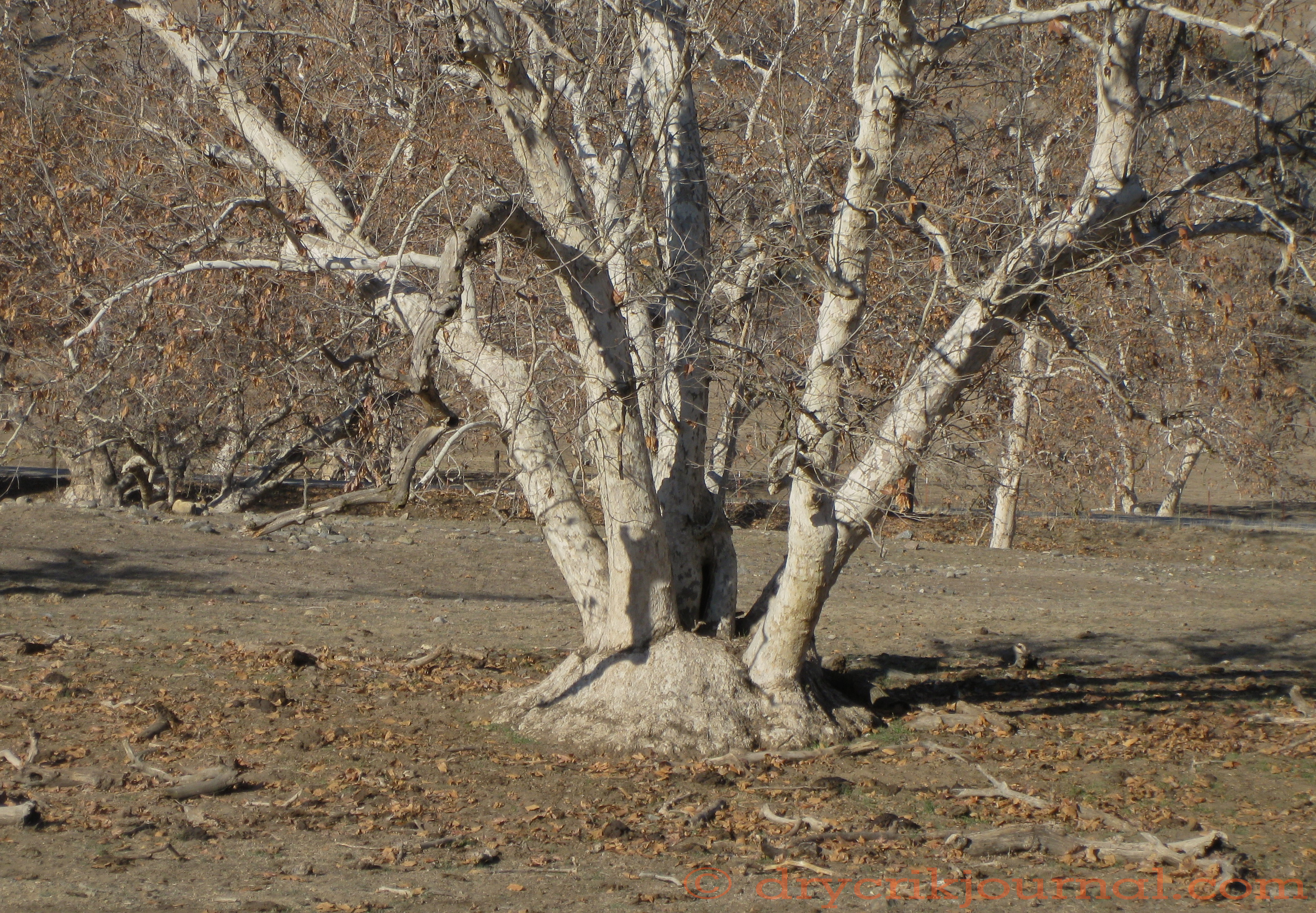
This family of sycamores (Platanus racemosa) is among the largest Sycamore Alluvial Woodlands in the Sierra Nevada ecoregion and one of 17 stands over 10 acres remaining on the planet. Located on Dry Creek (Tulare County, California), it is connected by a common root ball. Rarely exposed, some root balls measure 15 feet in diameter and have been pushing new stems for centuries. Some stems here are three to four hundred years old—alive, perhaps when Sir Francis Drake claimed California for Spain. Imagine how old the root balls must be!