COWBOY HEART

Lots of young men wanted to be cowboys, ride
with legends, dance down ridges, wear spurs and hat,
loiter at the local watering hole come sundown,
like on TV to paw and fight, get a foot hung over
some young heifer on the other side of the barbed wire—
a tangled and exciting life.

Branding a little bunch of calves in even a smaller pen
tucked in the Blue Oaks up the East Fork,
Homer picked one of them to bully in abstentia, one who
needed two hours to dress himself and his horse in the morning—
rode him hard, by God, preaching to a quiet choir
bent to calves we worked one at a time when I finally
interrupted lamely, thinking kindly, feeling guilty,
‘but his heart’s in the right place.’

Knife in hand, Homer stammered, his eyes flashing up at me,
‘You know, John, in this business there ain’t much call for heart.’

He said it all: boiled life down to a phrase—
made the distinction between enthusiasm
and try, make-believe and perseverance.

THREE RIVERS NUT FEED

                                                            Age brings hard burdens,
                    But at worst cools hot blood and sets men free
                    From the sexual compulsions that madden youth.

                                        – Robinson Jeffers (“Oysters”)

In those days, it was important to be included—
all the Kaweah’s loud cowboy sons of pioneers
shaking hardened hands, raising glasses before plastic
deadened the rattle of ice and whiskey, before
two divorces and twenty years of my crazed youth—
one more young one pacing the barbed wire.

Homer’s summer nut feed after the calves were marked,
he on the third or fourth of eight wives wed, gold
teeth winking, right-up to his last breath bragging
how he horned the young bulls off—our legend
and proof of the power of oysters to intensify,
to get high and go clear blind on testosterone.

It doesn’t matter now that he is gone, damn-near all
of them grazing other dimensions to yet hear the hollers
up and down this old watershed without the biscuits,
without the gravy, without the frittered golden brown
warm and melting on the tongue. Pass the salt and pepper.
A pagan feast of cowmen come to beat their drums.

                                                            for Forrest Homer

MOUNTAIN RIVER

I reach for a cold river to feel its urgency—
my esoteric metaphor for the force within
life off the flat ground, believing Newton
surrendered to numbers to quantify

the forces that drive us, the elastic thread
that tugs and stretches, floods and trickles
ever off the mountain where trees reach
desperately from the depths of well-worn

canyons, pine and cedar, smooth boulders
under the guttural roar of waterfalls, deep
pools, riffles of fish with water ouzels
skipping upstream—to feel rejuvenated.

                                                                        for JEG

IT’S COWS WE’RE AFTER

                    “Now Ed: listen here: I haven’t an ounce of poetry
                           in all my body. It’s cows we’re after.”

                                        – Robinson Jeffers (“The Wind-Struck Music”)

A bone or two to pluck like harp strings
beneath the petals of tiger-lily skies at sunrise
over sharp ridgelines, men still ride in awe—
words float and poetry rolls off their tongues.

And they dare not whine, dare not succumb
to freezing rain, or none at all, until the work
is done—calving after calving, brandings,
yearlings gathered on the hoof to ship

in circles ‘round the sun to somewhere,
out there. ‘It’s cows we’re after’ savored:
moments stolen with herds in rhythm:
a cow, horse and the hearts of horsemen

pause that acknowledges the wild gods—
all pleased to have arrived in harmony
beyond the corrals and loading chutes
waiting at the end of roads in these hills.

Time for Courting

Looking Ahead

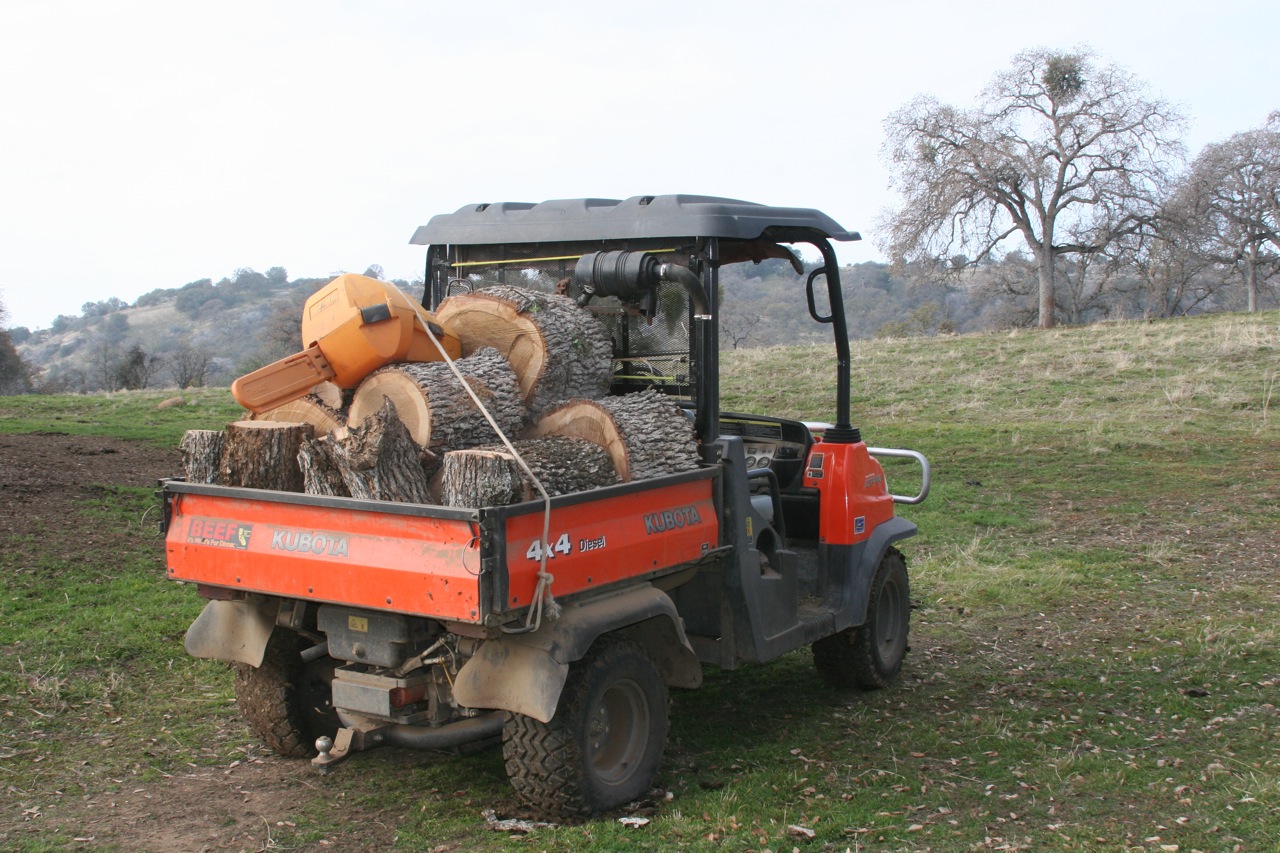
The Kubota is a godsend to grandfathers with aging knees, and always looking to kill a couple of birds with one stone, these rounds will warm several times over—twice already and they’re yet to be split, hauled in the house, burned in the woodstove or the ashes hauled out. Our eldest grandson is eight, and judging by photos from Kauai, he’s grown long and lanky, and perhaps beyond the busy work of splitting wood with grandpa to keep him occupied after he and Jessica arrive for Christmas on the ‘red-eye’ Saturday, but we’re ready.

It was a nice tree, a dead-standing Blue Oak that tipped over in last year’s wet weather. A Kubota-load of limbwood already hauled down the hill, another left to haul, these rounds are pushing 200 pounds each, over twelve hundred pounds judging by the back tires, and no, I didn’t load them by myself.

As a silly side note, the San Joaquin Valley traps perhaps the worst air quality in California, and as a result, burning wood to heat your home on bad air days is prohibited in town, turning neighbor against neighbor to tattletale to the SJVAPCD (San Joaquin Valley Air Pollution Control District). I understand that a second offense carries a $5,000 fine.

In the ‘Valley of a Thousand Smokes’*, it is, of course, courageous to try to clean up our air, polluted primarily from the populated and industrialized areas of the SF Bay and Sacramento Delta. With the work of cutting and hauling, and/or the cost of firewood, I wonder just how much Valley fireplaces now would really add to the mix. And in a good many cases, it is the poorer families utilizing orchard prunings to reduce the cost of using fossil fuels to heat their homes that are most penalized, none of who could afford the fine.

Like gathering acorns for winter, cutting firewood is a practical, cultural event for farmers, cattlemen and others in rural areas. Nothing heats like a fire, certainly not central air when you work outside in the winter, the fire has always been a place for people to gather. Our trend away from common sense, doing for oneself, becomes plain to see.

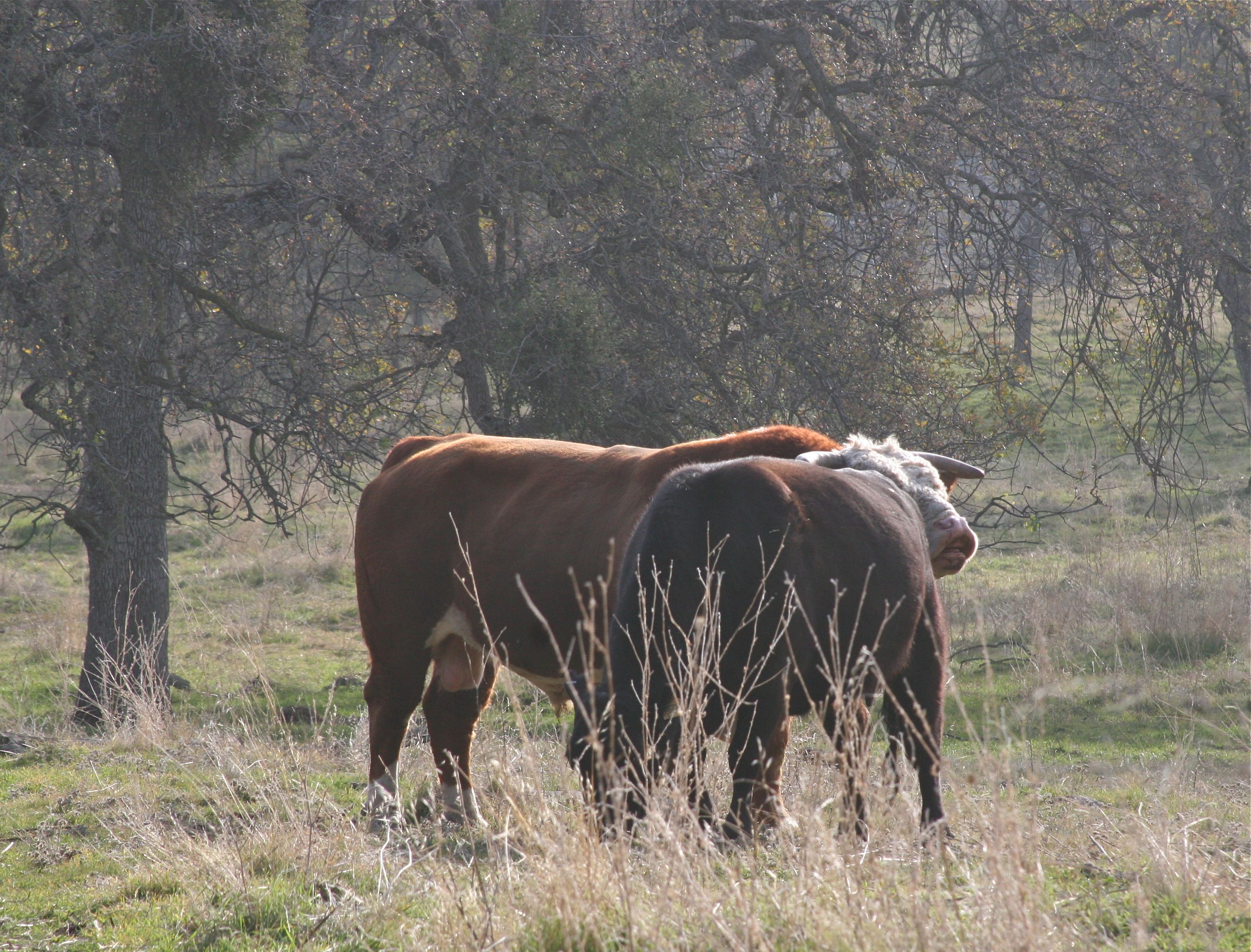
That our weekend rain didn’t materialize is no surprise, but sorely disappointing as we await an unforecast, wild card storm out of the Pacific. Here at 2,000 feet, our grass is holding in the granitic soil, but sparse and gray in the adobe along Dry Creek. We’ve begun feeding high-dollar alfalfa again to hold our heifers and young cows with first calves together during breeding season as low temperatures hover around 30º.

* disclaimer: this anecdotal, native name for the San Joaquin Valley may not be accurate, but you see how the stories go.

A SOLITARY GAME

Some things need to be saved, but not poetry’s
shuffle of words to fit an illusive moment
like shackles and chains bound in a book,

not the euphoric epiphanies we stumbled onto
out on the trail alone, or running the dark roads
between settlements of distant light, not those

rambling soliloquies when the radio fades
to poor company. It’s a solitary game
on the other side of numbers, pat answers

and scientific proof—primal sounds to mark
a trek beyond the veil of certainty shuffled
with the landscape and its latest inhabitants.

GROWING OLD TOGETHER

                    There are two vast cottonwoods near a creek
                    when I walk between them I shiver.

                                        – Jim Harrison (“Doors”)

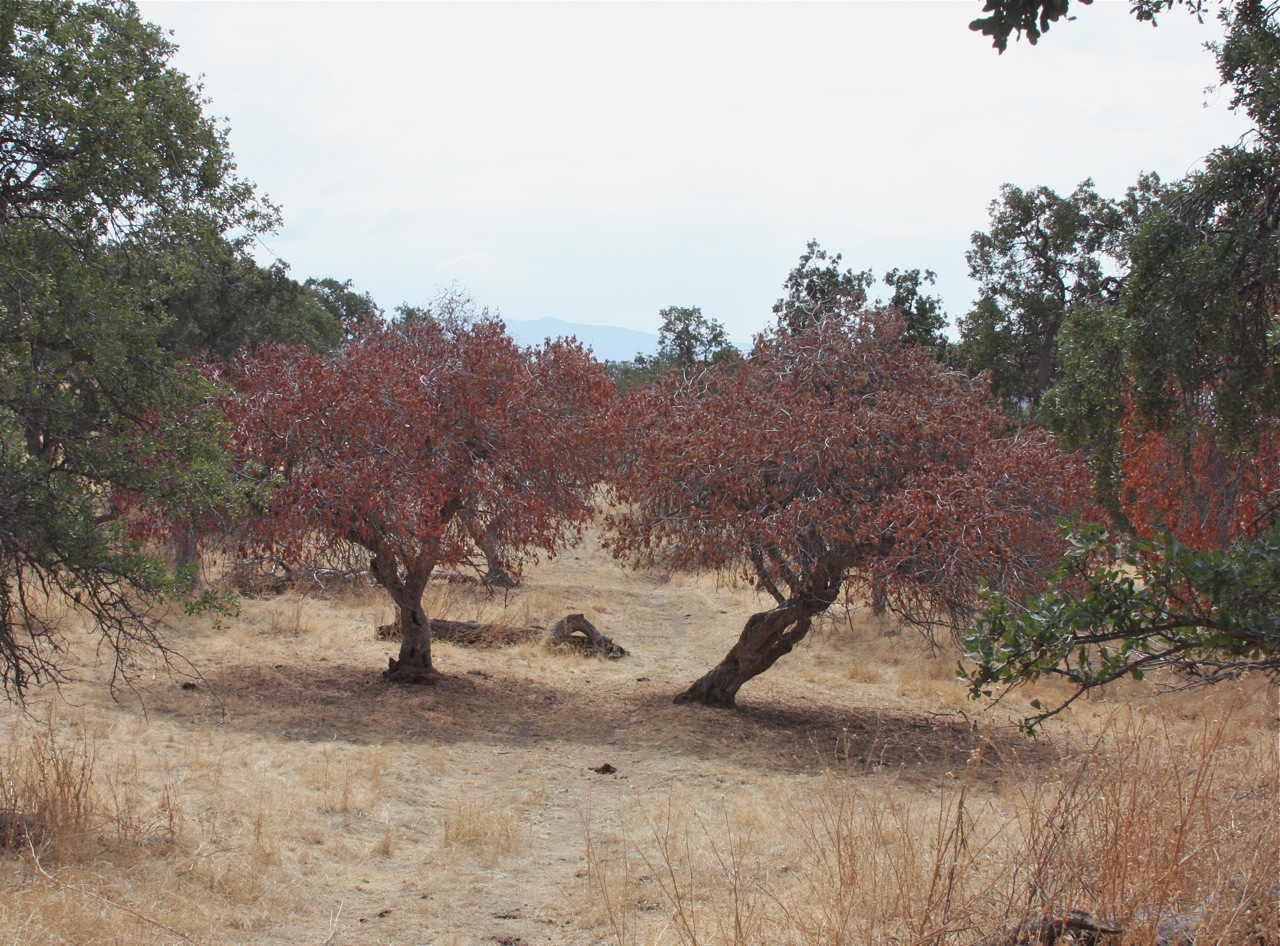
Our buckeye portal, a perfect pair to pass through.
Killion and Snyder’s yellow pines, side by side—
this partnership of trees for years near the top

of Sulphur, garnets, quartz and crystal, shafts
of granite thrust out of the earth as weathered
phallic totems among blue oak vast skies.

What words, what power lingers in the leaves,
whose dark eyes see more than mine, I wonder
with each welcome here—these gray limbs

dressed alike, or not at all, buckeyes arched
in season. Passing through either way
along this cow track refines the senses.

MY CHRISTMAS PLAY

                    He chooses a slim volume of Sapphic verse
                    from the nightstand, imagines skinny girls
                    on a Greek isle in the middle of the Mojave…

                                        – Red Shuttleworth (“Gabby Hayes (1951)”)

Whir of feathers from the brush, moments
can escape like quail in all directions—
the heart leaps backwards, freezes

as they buzz off to fractured rocks, or
we can read long-limbed verse, watch
sycamores shed enflamed leaves,

first hard rain after the first hard frost,
near the solstice, to dance naked
in the mist of morning, most years.

Beyond the bright lights, a man can
go a little crazy, make do and make sense
of things he thinks he sees, believing.

Somewhere in our brains are big
empty socks that hang from a mantle
with impossible names yet to be filled.

YOU’RE IT!

Looking forward to the last cows
among the fractured rock towns
and a wild band of oaks, at ease,

a Red Tail shadow streams
silently along the new green
between trees, suddenly—

as if playing tag, counting
coup with our silhouette: man
and beast. Why look up?