Roadrunnner

FIFO

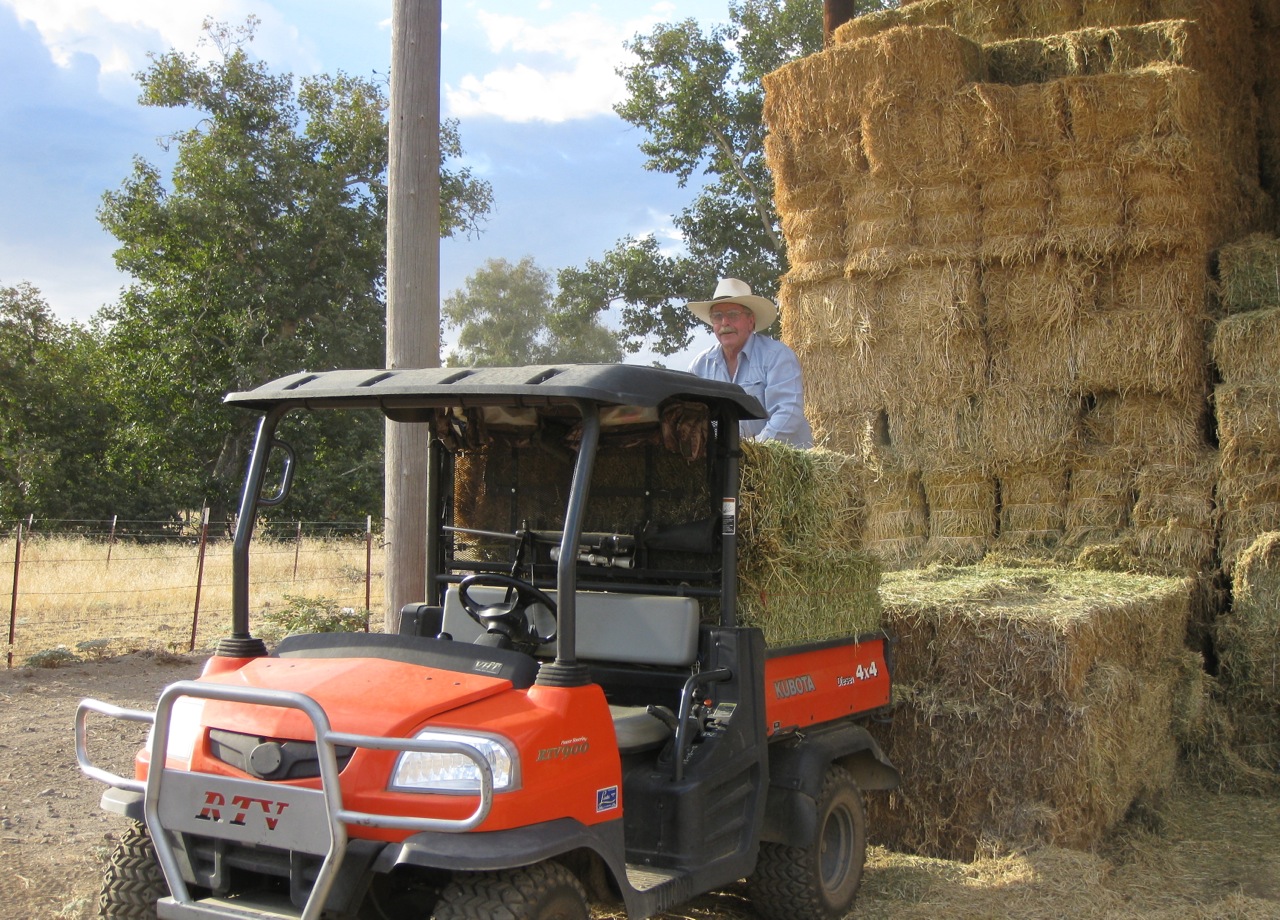
Two more loads of hay sail up the narrow road,
preceded by a diesel squeeze, decelerating
in pre-dawn light, looking for a barn to fill

before they can’t turn around, or back down
in these hills—we know about commitment,
the long way ‘round, the scenic tour

and feel like squirrels packing again for winter—
forethought not for us but for good cows
in this stale debate about climate change.

Expensive alfalfa, but cheap insurance
these old knees abhor where the denim fades,
old dreams creaking as I unlock the gate.

Drought Nebraska must be the heart breaking
as it grinds miniature ears and short corn stalks
into silage bins, young men wondering why

the old men stayed to make the payments
on new equipment they can’t use now,
or if punching a clock is even possible in town.

Dumb-assed farmers know no better than to hang
it all on a rainbow somewhere in the middle
of the old bread basket, in the belly of us all.

Grabbing hooks to climb and square the stacks,
I try to look like an agile, sure and wise survivor,
as saggy, baggy britches bound into a limp leap.

I take instruction from a fast-talking Portagee
I don’t understand—two-faced Janus in the squeeze—
but finally figure as he moves last year’s inventory

together. First in, first out keeps it fresh like poetry
bleeding from the sap of trees, floating like fallen leaves
to mold and rot—enrich the earth with song and thought.

MORNING STAR

                                                            The future, after all,
                                        is what comes after us.

                                           – Quinton Duvall (“Early Report”)

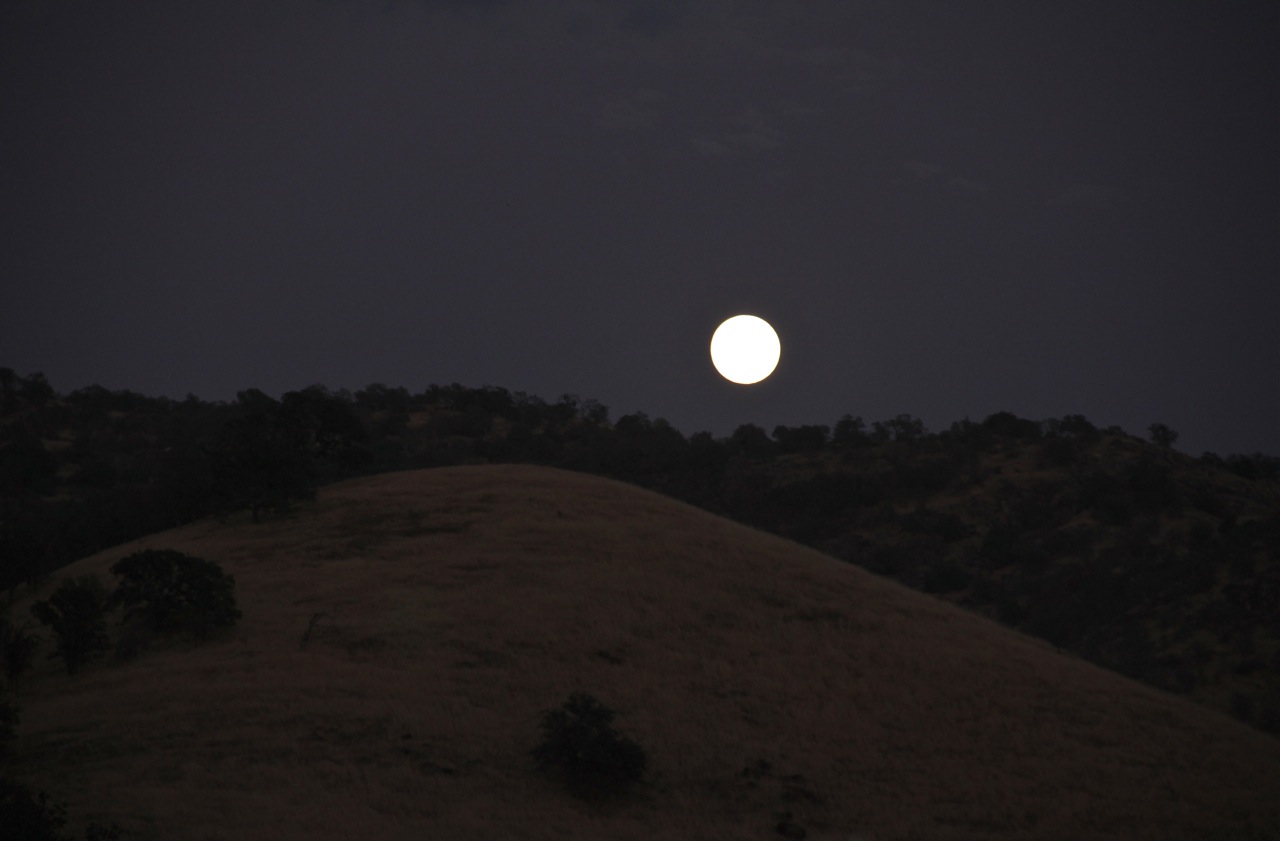
The full moon has fallen behind the ridge
and it is dark again before hot dawn spills
white heat in molten streams over the divide.

There is no hurry now, no rush to arrive
ahead of time to catch tomorrow’s news,
to know beyond this moment stretched

between few stars while you are sleeping,
dreaming in our foreign tongue of touching
details, the delicate webs of spiders spun

overnight that will glisten soon like silver,
the dawn’s long shadows ours to devour.
But we plan our days to graze the gloaming.

INTO CALIFORNIA, 1914

Slow boat from Edinburgh
around the Cape at eighteen
to teach the Indians in Fresno,

youngest of four daughters
wrought by the headmaster
of a proper school for girls –

a cork upon the ocean apart
from the main, from family
and culture in the steam

ship’s wake, but for what
she packed with her.
After a buggy-ride courtship,

she married an orangeman,
a horticulturist of all stripes.
And in the 30s, she had a bed

for Marian Anderson when
no one in Exeter would have her,
once they learned that she was black.

Lights in her bedroom
before she died at 92.
I have to believe her.

‘Sycamores are greedy…’

Sycamores are greedy,
take all the water they can,
believe in unlimited growth
they can’t support, lose limbs
with the crack of a rifle shot:
                    leave wilting proof
                    of gravity
                    upon fences
                    along the road
                    over and over again.
They never learn.

                                                                                (“July Outside”)

Dawn Shadows

WEBB SCHOOL CALLING

In the chapel young Thompson
built brick by brick, light beams
lifted dust to God while visiting

clergy brought long sermons
and prayed that one of us
in the pews of blue blazers

would hear the call
that hung unanswered
from the hammered timbers

stretched across the cool
adobe walls, I was inspired
to dream on Sundays:

to preach a calloused,
hands-on gospel
of an understanding God,

to walk among common
quandaries and offer all
the solace I could muster.

Of the many daydreams
that danced beneath the red-tiled
roof, you followed true.

                                          for Bill Ripley

On Guns and Poaching

I bought my first gun when I was 12 by saving my summer wages swamping lug boxes of Red Malaga grapes out of my father’s and uncle’s vineyards. A few weeks before the opening of Dove Season, I sent a $109.95 money-order to Sears and Roebuck for a 20 gauge Model 12 Winchester shotgun. The box came addressed to me in the mail.

Before that, I hunted dove and quail with Stevens .410 single-shot and roamed the foothills on cow trails shooting ground squirrels with a used, J C Higgins single-shot .22 rifle that my mother’s cousin, Stanley Dickover, had given me for Christmas when I was 10. Different days and times, my parents would likely have been thrown in jail today for turning a youngster loose with a gun. But I loved it—not the killing as much as the hunting and exploring.

In those days, finding a place to hunt was not difficult. For me, there was always the ranch. But most all of my teenage friends had permission from local landowners to fish and hunt whatever was in season. Poaching happened, but was seldom an issue in this small community where everyone knew everyone else, when a young man built his reputation early in life.

In the mid-60s with the advent of affordable air conditioning, the local population began to explode, and with more people, less places to hunt. Trespass and poaching became serious problems for landowners who lost livestock, had water troughs shot full of holes and experienced a general increase in vandalism that impacted their operations. Then again, the clash of cultures after the Vietnam War when many Hmong refugees, used to living off the land, were relocated to the Central Valley.

Today, the prices of guns and ammunition, as well as license and tag fees to the California Fish and Game, continue to increase while places to hunt have decreased dramatically. It’s not surprising that poaching has become a problem, and in some instances, a business where deer, feral hogs and livestock are butchered in backyards and the meat sold locally. While budgetary restraints have wardens stretched thinly, the problem of poaching falls precariously on landowners more than ever before. Rather than to have to sort the good guys from the bad, we are inclined not give anyone permission to hunt.

Today’s poachers seem to believe that if they have a gun, they have a right to hunt anywhere they want, indignant when caught, and blame the landowner when prosecuted. Our latest incident on July 22, 2012, a slam-dunk case for the Fish and Game and D.A.’s office with indisputable photographic evidence, has to be pursued if we expect help and support from local wardens in the future.

I’ve never been an advocate of stricter gun laws, but if the common belief that the purchase of a gun increases one’s rights while diminishing the rights of others, then something has to change.

At Dawn

Though high temperatures have dropped into the 90s, I’m trying get out and around early to keep the sun off my face. My back is taped with a battery of patches to give my dermatologist a clue as to what I’ve become allergic to that has triggered my immune system to keep producing new skin on my face to burn, peel and itch continuously. After feeding our replacement heifers, then starting my irrigation water, I caught these geese at the pond at dawn. Quite tame and never flew while I open the gate to let water into the pipeline.

A tough shot into the sun, the dragonflies of all colors and shapes have begun to show, and sparkled this morning.

Portrait of a Poacher

The evening before we were to ship our two loads of steers, this genius and his compadres were among them all on the irrigated pasture trying to kill a pig. He circulated so many photos of his hunting prowess, one was emailed to me. They left a gut pile in the creek and a trail of blood all the way to the road where they waited for someone to pick them up where they hid in the neighbor’s corrals.

Poaching is nothing new to us on Dry Creek, there’s always a new crop of youngsters that think that killing a hog makes them a man. Spencer (Rambo) Jensen used to crawl through grass without a gun and touch them before they knew he was there.

facebook