THE RESULTS ARE IN

Shrinking tribe of cowmen
and women at funerals play
the same songs, like

Riding Down the Canyon
in ever-changing light.
Otherwise alive and alone,

we glide miles of ranges
and ridges between us—
let the mind’s eye roam,

slowly digesting landmarks
on landscapes reminded
with details we had forgotten

until the song, until the stories—
watching together
the desert sun go down.

Image

BEGINNING

IMG_6959

Abandoned hay rake resting
in the sycamores has not moved
in my lifetime, unless with silt

under floods that rose against them
when farming across the creek
didn’t pay. How long have they

danced, changing clothes, adding
and subtracting limbs, courting
the moment to begin again?

BARE DIRT

With no puddles or streams
to wade, the Great Blue Herons
frozen in pastures wait

for movement of earth like
sentries over gopher mounds
all summer long. A Harris’s Hawk

claims a rock among a million
cow chips daring a squirrel
to make a living outside

his burrow. Everyone grounded,
we crave ascension—to leave
in a haze or rise with the dust.

Delirium: High Pressure Haze

IMG_2494

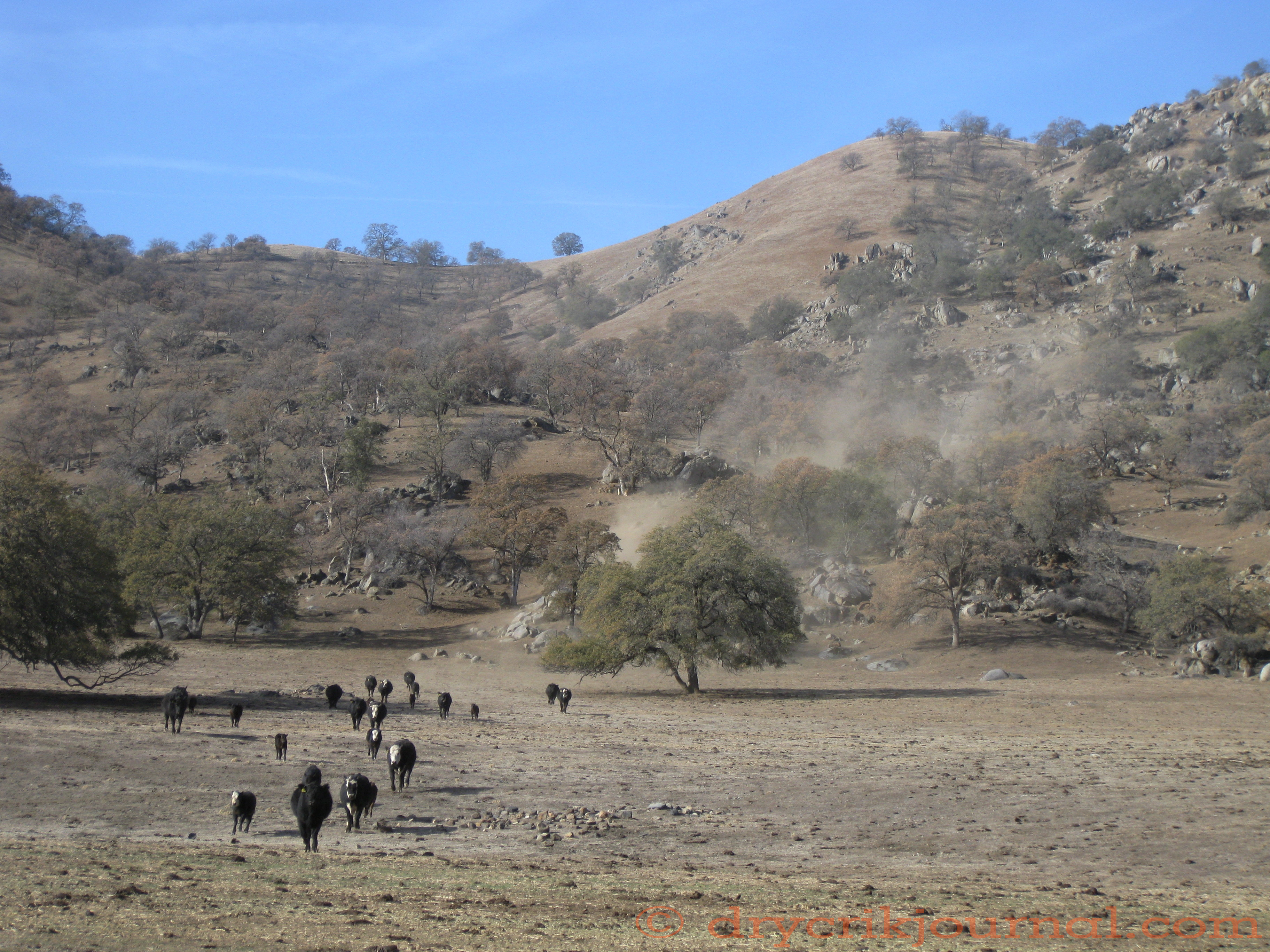
Though feed conditions may be worse other places, the entire Dry Creek watershed is slicked-off to the dirt. Robbin notes that someday the road will run red with clay.

IMG_2483

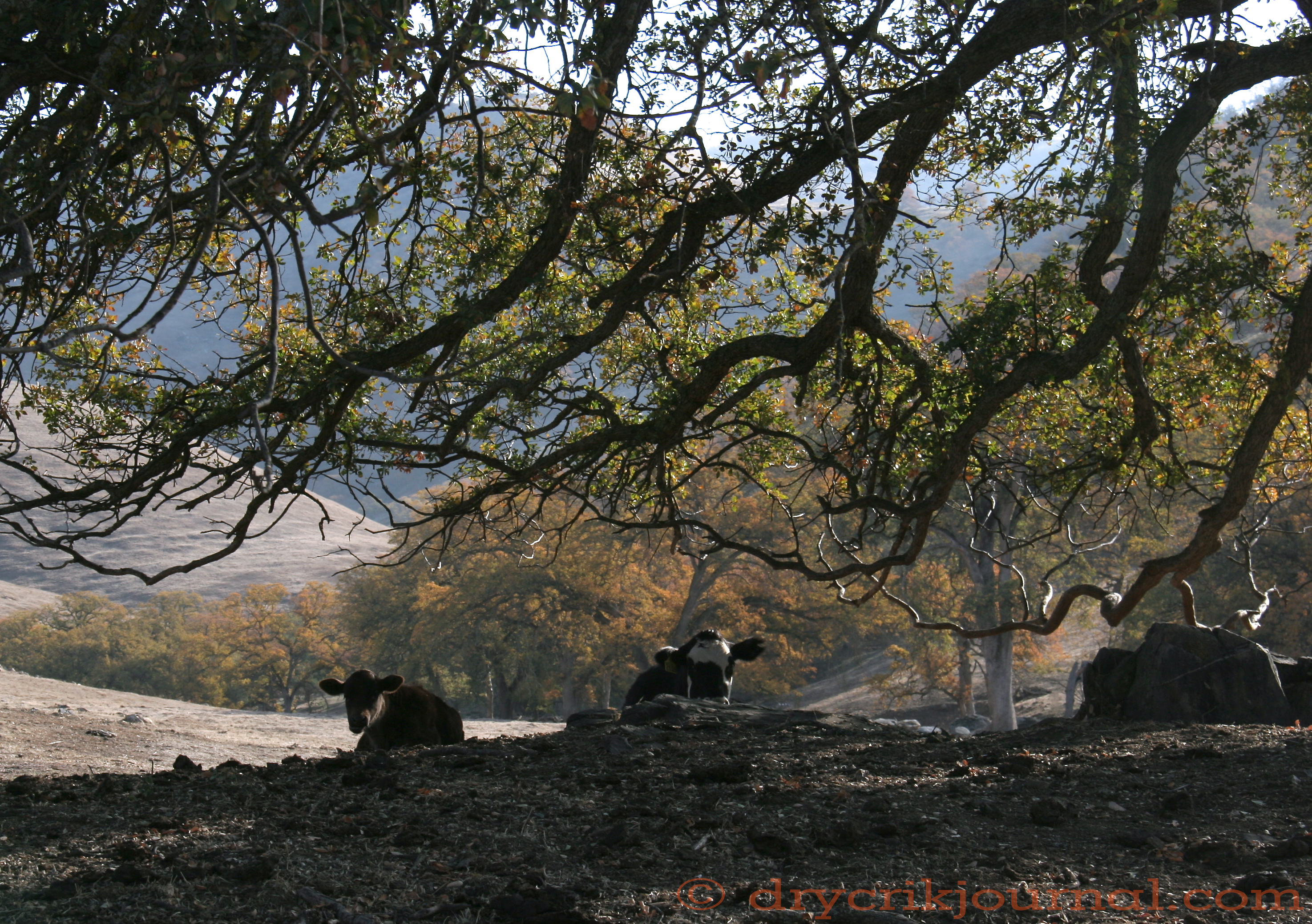
Feeding, feeding, feeding—all you could do was throw hay on the ground and pray to God it would rain.

IMG_6931

IMG_6982.a

Dinner Bell

January 1, 2014

January 1, 2014

ALWAYS THE ALLUSION

Like poetry over whiskey, neighbors
in from feeding, first day of two-fourteen,
glasses raised to the native cows and daughters

we prize in hard times. Another language
where words roll near the edge of vulgarity
and descriptive gerundives ricochet around

the kitchen like ice rattling our empty glasses.
But always the allusion of something more
that holds us to this ground, this watershed

we can’t shake, yet celebrate daily
for as long as we can. Crass and basic lines
I try to remember, steal for a poem

in the morning—always another way
of looking—seeing that it is
no small miracle, this earth adapting.

                                                            for Craig and Ronnelle

CATHARSIS

Some reason we
believe

moves and dangles
beyond dry leaves
clinging

into the new year,
this side of the Kaweahs
baring granite teeth—

some logic yet
to focus clearly,
every soul hungry

hunting something
to fill their bellies.
An urgency

in fragile air before
the haze and dust—
a quickening

to our plodding
like old horses
headed home.

What star has fallen
from dark heavens, what
holds the clouds back?

Some reason we
remain to see.

Kaweah Peaks: No Snowpack

December 31, 2013

December 31, 2013

RAINDANCE

Golden hours before the haze
rises from the Valley, all shades
of yellow and brown without green

blaze beneath a deep blue,
cloudless sky—old horses hesitate
to notice, find remarkable, shuffling

the same words day after day.
No one listens to the forecast
over coffee anymore. Dusty hills

wait for a plan. You suggest
we brand some calves—best chance
we’ve ever had to bring a rain.

2013: Driest Year

IMG_7006

Since 1894, when California began keeping rainfall records, this past year has been the driest yet. The year, as opposed to the grass or rainy season, runs January through December.

During the 2012-13 grass season, October 2012 through April 2013, Dry Creek received less than 10” of rain when the average precipitation during this period is around 16”, ( 8-year average ) leaving very little dry feed to sustain cattle during the summer months. To date for the 2013-14 grass season, Dry Creek has only received an inch. Less than eleven inches for the two seasons combined, leaving only four months in a grass season that has yet to begin.

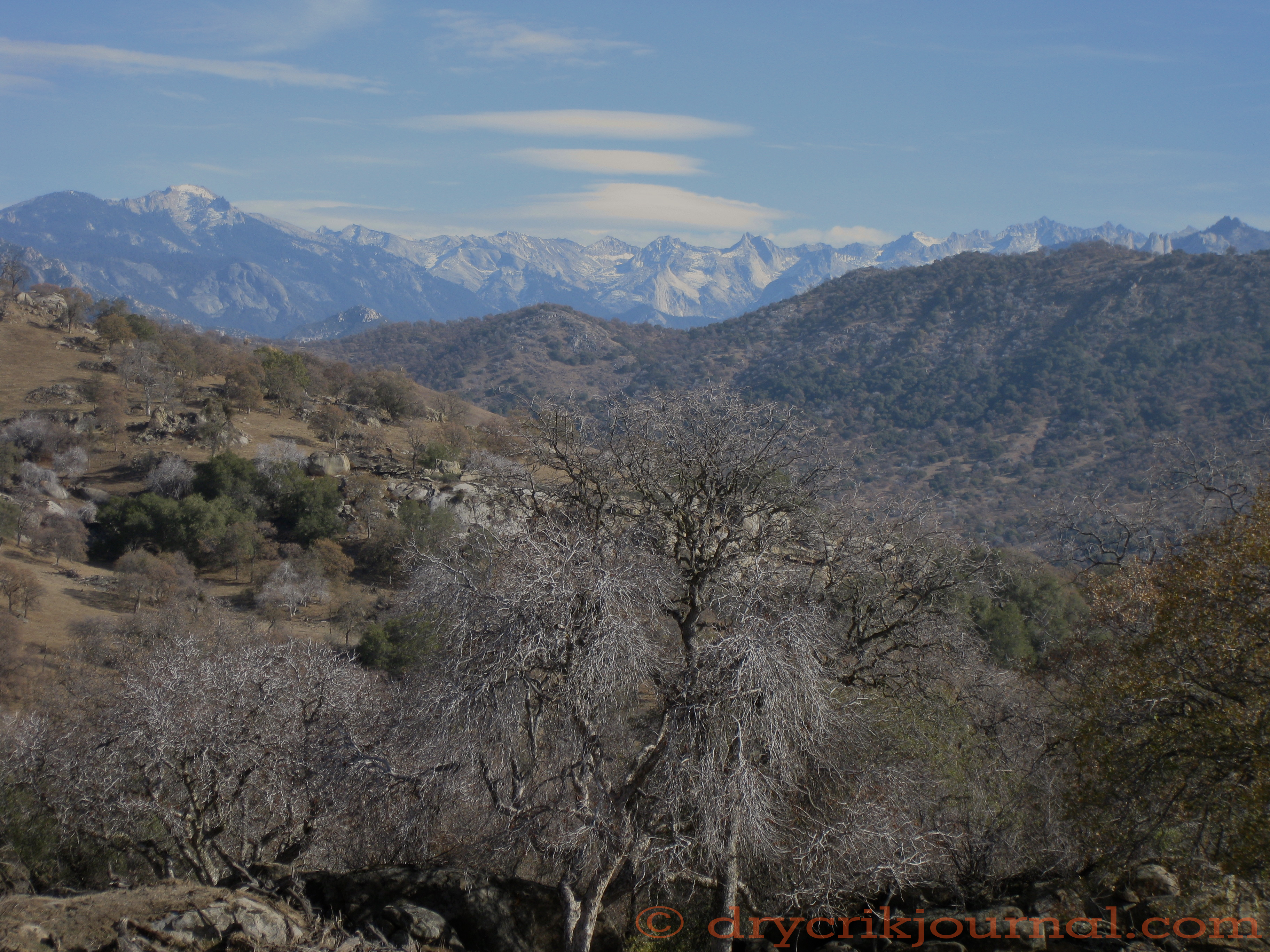
Impacts to California, the richest agricultural region in the world, have only just begun. Typically, snowfall in the Sierra Nevada range freezes during December and January to provide a slow release of water to meet demands from agriculture and metropolitan areas during the year. With what little snow that stuck earlier this month, all but melted, the Great Western Divide shows mostly granite. Heavy late snows increase the chance for flood.

No matter what happens, the stage is set for what we’ve never seen before.