Author Archives: John

TO LEAVE THE HOUSE

It is not the cold, compared to sledding hay
with teams to frosty cows in Wyoming,
or the frozen breath of calving barns

in Montana—now it is the bones that balk
at unfolding, at rising to lean forward
towards the door, the barn, the truck

and bales stacked high and waiting with
impatient bunches bawling at the gate.
It is the bones with joints worn round

that talk revolt, that threaten strike,
that would rather stay inside and write
than feed hay. All my buck is gone—

rolled downhill or bottom-bales engineered
into stairs, I build pyramids instead
to load the truck—and wonder why

in this modern world. But the bones know,
once slow momentum holds—it’s all
for the new on the same old ground to see.

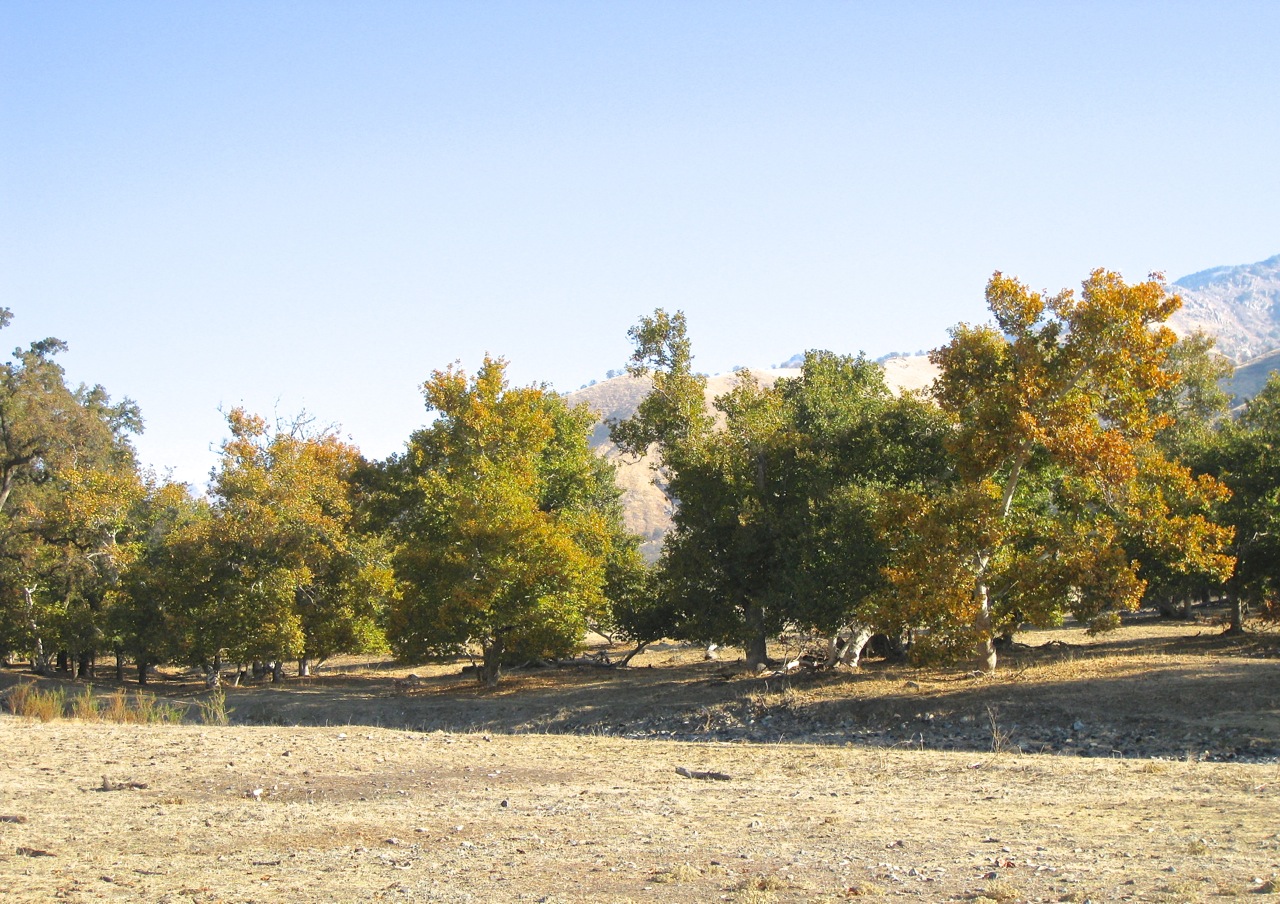
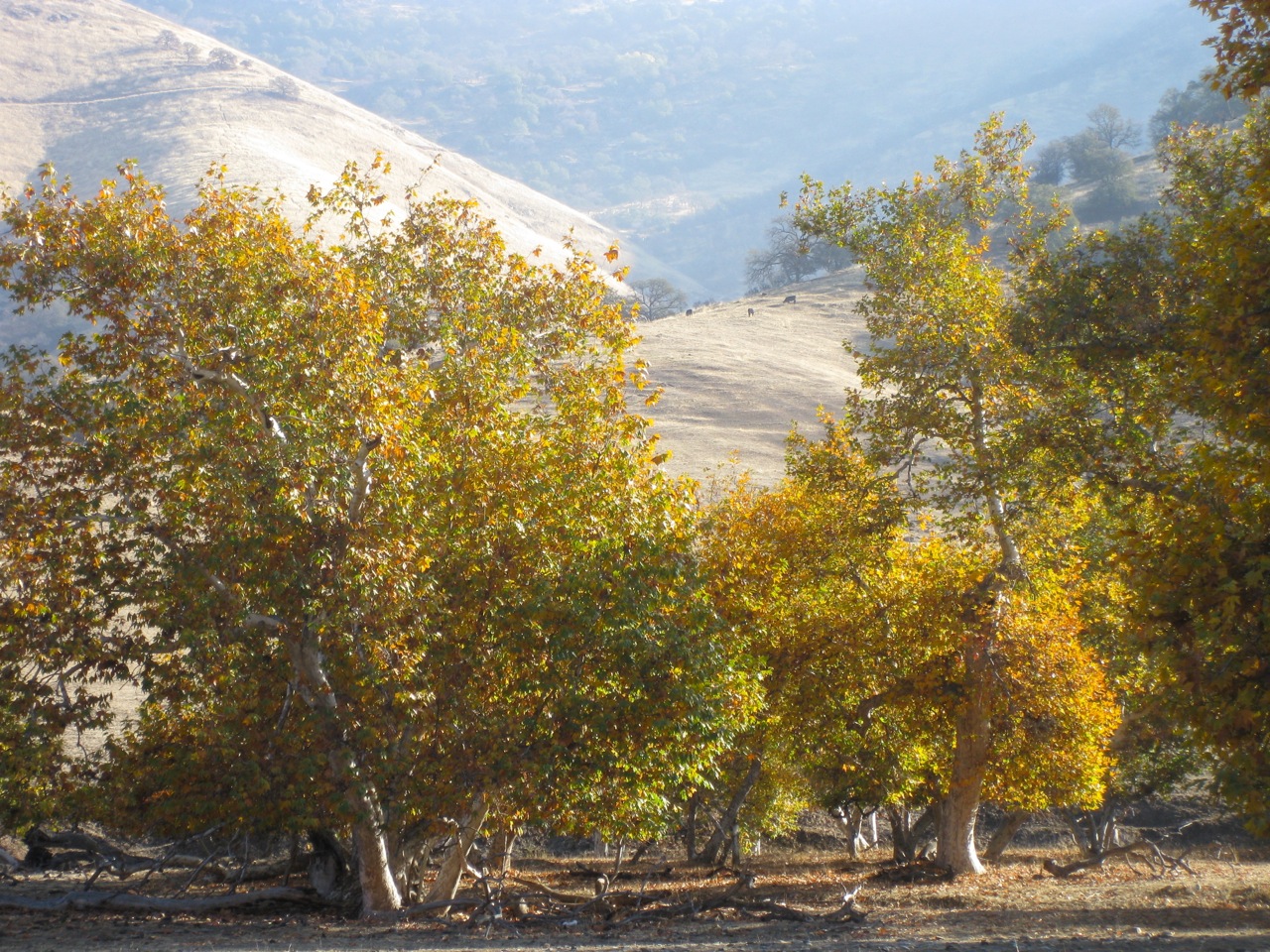
November Sycamores

November 24, 2012

November 24, 2012

November 24, 2012

THE GATE LEFT OPEN

We, of course, were not raised inside
like blanketed colts in a barn stall
and learned instead to stand up

on uneven ground—to wear scars
that would never see a horse show.
What was it then that turned us out

to play—to explore worlds beyond
our imagination? The calling,
yes, that drew us to new places:

thickets and rivers that consoled
the wild we sensed in our blood.
We came and went as we wanted

in another time, out from underfoot,
into a dimension that stretches to heaven
riding the ridge tops with our eyes.

Wagyu Bulls Arrive

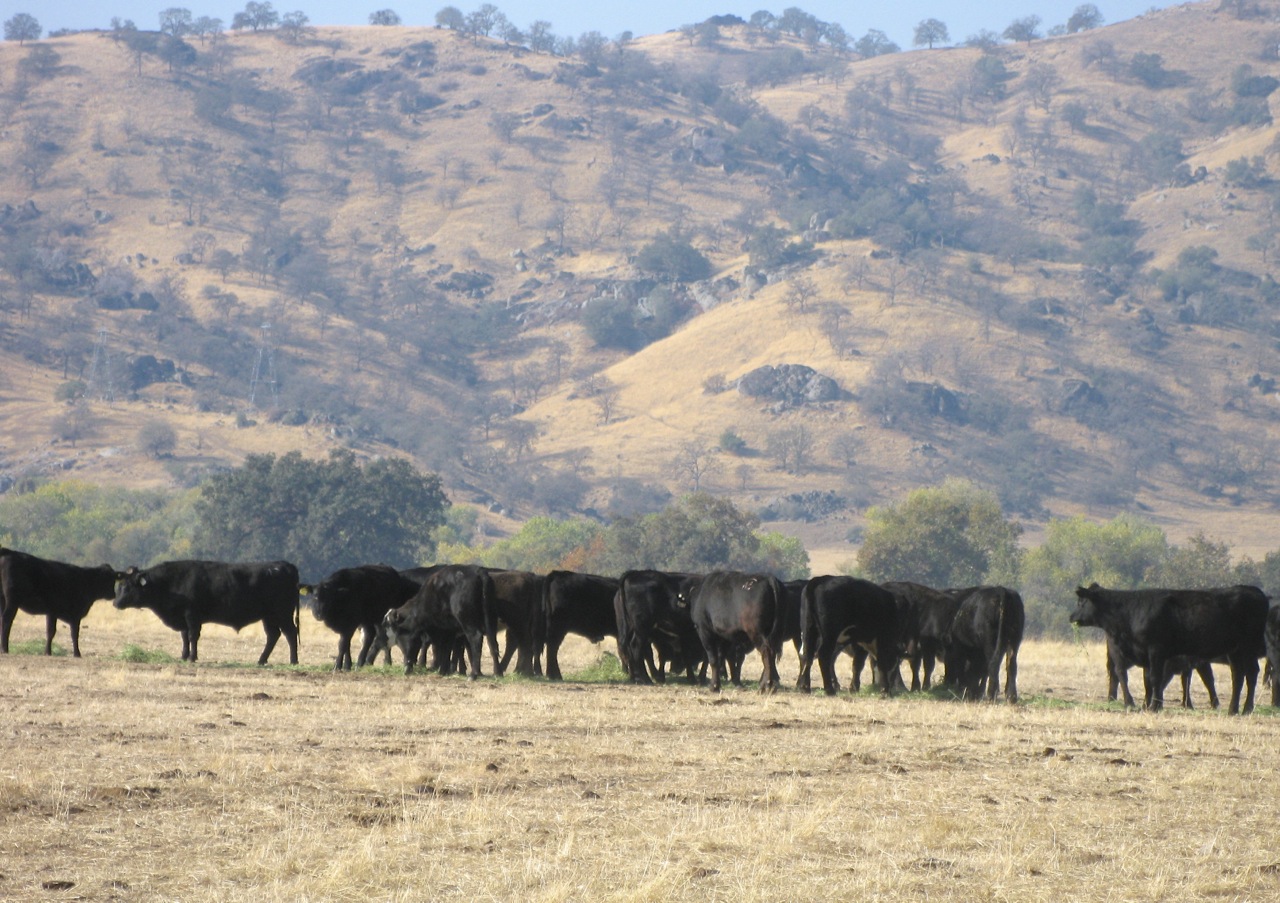
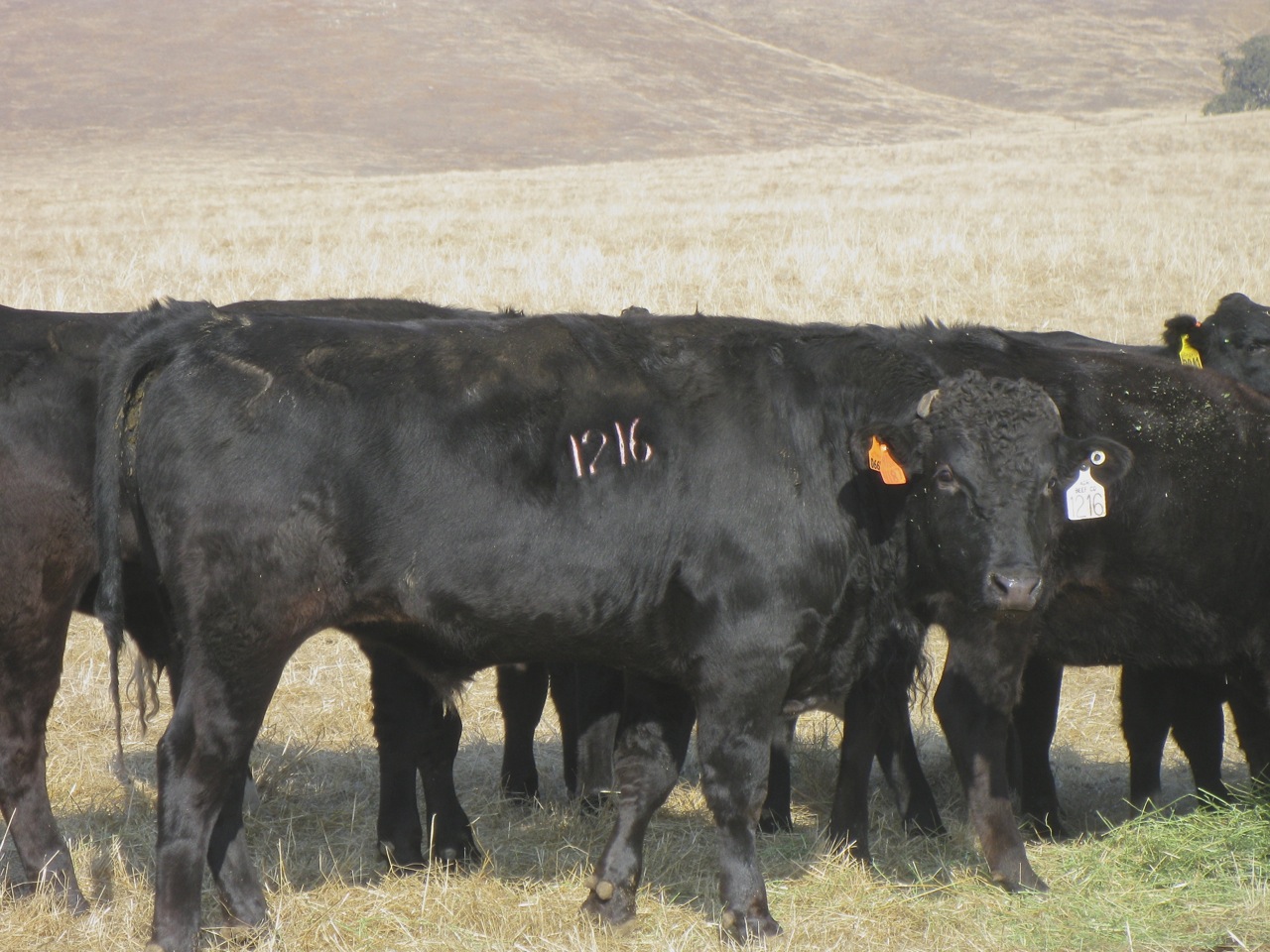
In the spirit of Thanksgiving, Clarence and I put the Wagyu bulls out to the heifers yesterday morning. They arrived early Tuesday from Snake River Farms in good shape, but we fed and let them rest before putting them to work anyway. As an answer to the often asked question as to what a Wagyu bull looks like, I’ve included some photos. These are yearling heifers and yearling bulls. And the cycle begins again.

Image

Happy Thanksgiving!!

WHAT TO BE WHEN I GREW UP

I

Always the frivolous question
grown-ups asked—taken seriously
when I was seven, 1955.

                                                                        Remember the Flood?

I had no talent, and everything
interested me, especially women:
curious, untouchable vessels
I thought held the answers—
but none under Susan Cline’s
petticoats on the playground.

After the War to end all wars,
they expected GREAT things:
doctor, lawyer, butcher, baker—
someone solid and dependable
from thick Germans and Scots.

                                                                        Granddad on a ladder
                                                                        pruning a peach tree.

It was a man’s world, heroic
and demanding. Only a few
wandered off, and some
never came back from the 60s,
or Viet Nam, for the double-talk.

                                                                        In the middle of a circle,
                                                                        draft cards and bras in flames.


II

What vocation, what purpose now?
I look under rocks and leaves nearby
just to enlist a commotion of bugs
and insects, disturbing their equilibrium
as if I were a perfect storm, a force
to address beyond their knowing.

Then to the river from the mountains,
then to the ever-changing sky for reason
in the cycles that touch everything—

                                                                        Lew Welch: teach
                                                                        your children…
                                                                        it’s all forgot.


III

I left school to work here
on a temporary basis, my
ever-ready exit for a lifetime
of cowboy turned cowman,
of lover turned husband,
of father with little left to say
for sure, except:

                                                                        nothing stays the same—

enjoy the change
of season, see opportunity
for your good nature
and leave no tracks,

                                                                        chew your food

and find satisfaction
with what your hands can do—
even a woodpecker
knows his purpose.

TO PRAY FOR RAIN

It is a luxury to pray to the goddess,
dress her with many names and myths,
sequined chains and gold bracelets,

or nothing at all. Young men beg
to be noticed on this semi-arid fringe
of habitation, and some go native

to explore the primitive pulse
in their blood, chant and dance until
exhausted to their knees. They learn

to leave themselves behind in the dust
of December that invades their dreams,
to ethereally escape the hazy delirium

trapped in the bottom of the San Joaquin.
Here we age and cure with each shallow breath,
inhale the earth until our dry skin cracks

like clay flats, like a pomegranate ripening.
It is a luxury to pray, or to reawaken
the forgetful old woman in charge of things.

WHEN NOTHING STAYS THE SAME

                                                  Nothing is nothing.
                                                  Nothing is not nothing.
                                                  Nothing is next to nothing.

                                                                 – James Galvin (“Woman Walking a One-Kick Dog
                                                                                Along An Asymptotic Curve”)


I

I want to be among oak trees
and big rocks that the natives held
sacred—solid and dense things

that neither charge nor change
much in tumultuous times—
good company for the spirit.

Quail have taken the garden,
moved-in for the moment, stroll
with impunity and giggle at

the cats. It hasn’t rained.
Only nothing stays the same,
but even that could change.


II

We walk the edge, hear voices
coming from no where, triggered
by circumstance, by details aligned

like stars in ever-expanding space,
black, we presume, as the ace of spades.
Yet, I hear my mother’s voice,

judgmental tone and see
through her buried eyelids
in a box above my father,

both looking up. How she hated
that perspective on her deathbed,
despite the new, light blue dress

for a closed casket—accepted
the inevitable like she always did,
like he trained her, begrudgingly.


III

We see Marilyn at the Country Club
at a table of survivors, widows or late
divorces, men gone on without them,

in a doctor’s soft collar she endures,
not interfering with her endearing
sarcasm. “I’ve been thinking a lot,” she

whispers, “about Margaret lately.”
“We have too,” I reply, two weeks
before Thanksgiving and the predictable

storm of alcohol during the holidays,
getting-even with my father, and the rest
of us, for all our expectations.


IV

I’ll be wearing khaki slacks, first pants
bought not blue denim for twenty years,
since my father’s funeral, worn now

only twice. She takes her time
critiquing the black Tommy Bahama top,
my leather Crocs to walk a tropic aisle

of plumeria petals swirling in a sea
breeze to give away my daughter
to a handsome, curly-headed Czech.

She is resigned to changing times, as she
shrugs-off her mother’s shrill judgment—
knowing in the end it was close

to nothing, that the only difference
it made was when she was alive,
always hearing voices from the void.

Moving the Wagyu

Having pulled the Wagyu bulls on February 8th, Monday and Tuesday we moved the first-calf heifers with Wagyu X calves up the hill where there’s more dry feed, after sorting off the heifers that are open or haven’t calved yet from our Angus clean-up bulls.

The Wagyu bulls were with the heifers for 80 days, providing 70% live calves as of today, one born dead and three unaccounted for. In the range of 3%, more than likely these MIAs fell prey to coyotes or the young Golden Eagle that hangs close by. Some of these heifers may have misplaced or forgot their calves, as the three mothers without calves are still wet, nursing someone else’s calf. In the mix with the numbers, the Wagyu X calves tend to be milk stealers, much more persistent than straight English calves, that also contributed to our MIAs. But all in all, we’re pleased with the percentages from our two year-old heifers.

Our remaining heifers have already begun having Angus calves, fairly easy to differentiate from the Wagyu X. When we brand the Wagyu X, we will tag and take a nasal swab of each to send to Snake River Farms to confirm what we think with DNA testing.

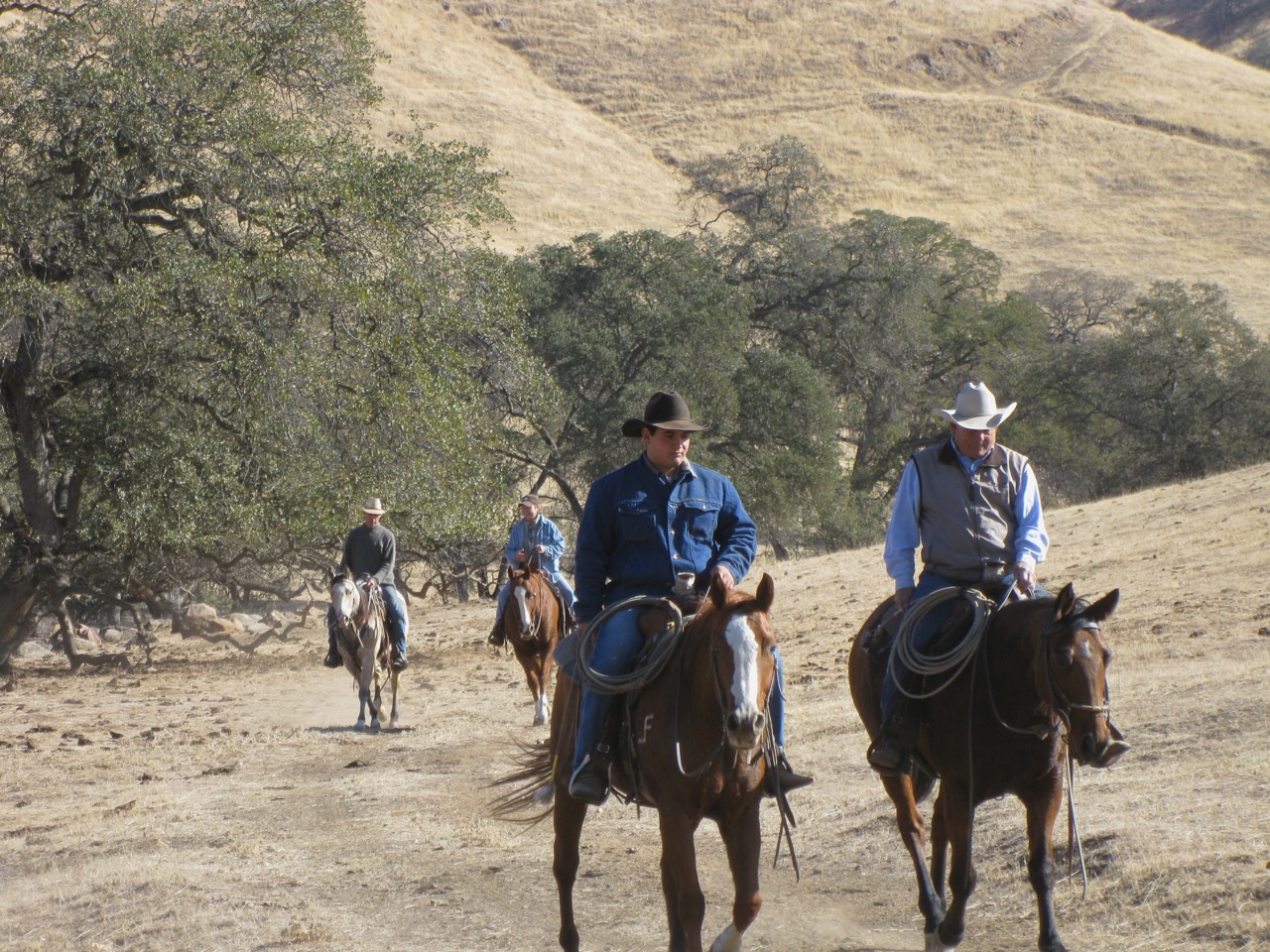
Douglas Thomason, Robbin, Zach and Clarence – November 13, 2012

THE COUNT

                         At least I know where my orange trees are.
                                   – Todd Dofflemyer

Cold in shade, in canyons,
or on the backside of mountains
where strays won’t stay between

sunlit ridges—like finding horses
at Five Lakes, in the Tamaracks,
standing in the first light of day.

How many pairs of boots
did I wear out tracking pack stock,
hearing the bell in my mind?

But always that moment alone,
empty-handed, searching,
sorting sign for the illusive truth

when we become boys again,
helpless and humbled
by circumstance and time.

Spreadsheets don’t fit
uneven ground that swallows
livestock—that seldom match

what’s in the corral. This is
no business for accountants
when the numbers move

to breach columns and fences,
or get inspired by the moment
to try an idea of their own.