Monthly Archives: July 2013

A CERTAIN LITTLE BROWN BIRD

                         …pulling what counts wherever it goes.
                                   – William Stafford (“Troubleshooting”)

We coveted those perfect farms
that seemed to run themselves in the Fifties,
ripe fruit and colorful vegetables waiting

for another painting in a bowl? How we
dreamed of retreating to a quiet life
we could not afford. We had no time

to take chances on little brown birds
chasing through the brush and brambles,
to keep our company secret and private.

And yet, despite the din of all the time-saving
diversions, it makes a living in our garden
and waits for the sprinklers to come on.

In the Shade

Cooper’s Hawk (Accipiter cooperii)

Cooper’s Hawk (Accipiter cooperii)

Image

Raw

IMG_2854

‘CLICK TO TOGGLE’

I draw a leaf floating,
one of many in a light rain
of color that pools in circles
stirred by breezes
on lawns like Arlington

or click

to black and white
blue oaks wrapped in the first
upcanyon scent of the Pacific,
sheets of dry leather leaves
you can hear hit the ground

or click

to the sleek machine’s
sterile perfection, add accessories
to flawless logic
like jewelry to ideals
to imprint in my mind.

‘Click to toggle’,
computer talk—
I think I know
what it means.

BLAZES

Pine sap leaking from blazes leading
straight off a mountain of trees—
McKee’s cutoff from Bench Lake
to the South Fork of the Kings—
like the laments of old men
living longer than they planned.

There is nothing else to tell
the future, its time-saving
complications, its instant speed,
its youthful dreams headlong
into possibilities I’ll not know.
We led our horses down

the steep north slope, following
my father to this point in time.
All-night thunderstorm at Marion Lake,
huge rainbows, then over Cartridge
to Simpson Meadow dressed
in colored tube tents—Sierra Club, 1958.

Dad, Cut and Don—all gone,
I may have had the best of times
with them: places where there is
damn-little trail to follow,
but only lately taking time
to leave blazes of my own.

Blue Oaks 2013—Summer Hibernation?

July 7, 2013

July 7, 2013

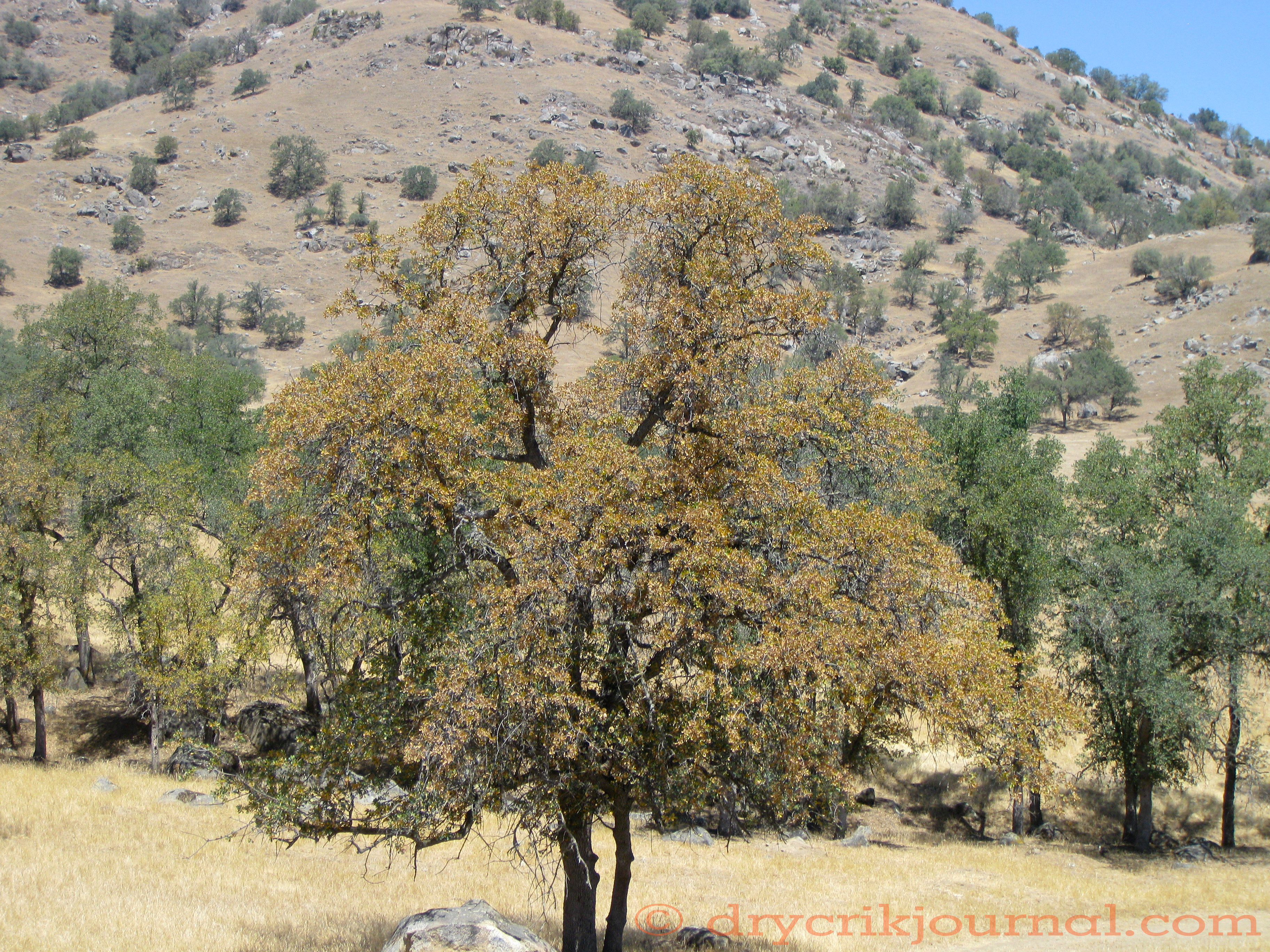
The Blue Oaks have shut-down dramatically in the past few days, apparently letting their leaves go to conserve moisture. We’ve had ten straight days of 100+ degrees, nothing abnormal for July. But last season we received less than 10 inches of rain, or 57% of the average of the seven years prior. Only once last season did we receive over an inch of rain in a 24-hour period on December 4, 2012. We’ve had no deep moisture.

I’ve seen this happen before after extended periods of excessive heat, more like 30 days straight over 100 degrees. But I don’t recall it happening so early in the summer, nor to such a large percentage of trees, what appears to be about 50% so far.

Most of these Blue Oaks are 100 years old, but there are a few grandfather trees that may be 200 or 300 years old. One has to assume that they are not only rooted in the right place, but that they have survived worse years than this.

I’ve misplaced my “Life of an Oak”, an informative book, and found nothing on the Internet about this phenomenon that is probably shared by many species of trees. We will monitor as we go forward.

July 7, 2013

July 7, 2013

July 7, 2013

July 7, 2013

NEWS FROM OREGON

God knows I’m mad,
displeased with his most recent
choices I can’t change.

I shake my head with eyes
downcast, side-to-side disgustedly
before looking-up to ask why

with so much evil in this world,
so much greed and power-lust,
so many egos to overcome:

we need all the good hands
we can get to make the gather
for the virtues we hold in common.

But time is on His side,
not mine, to make the most
of what’s left of the dead

and dying. To shake my fist
at heaven is wasted energy
I may need, instead

I hold their faces close,
feel them smile, blessed
to have known them.

                    for Alice Hancock and Leon Flick


Alice Hancock

Leon Flick

Western Flycatcher

Empidonax occidentalis

Empidonax occidentalis

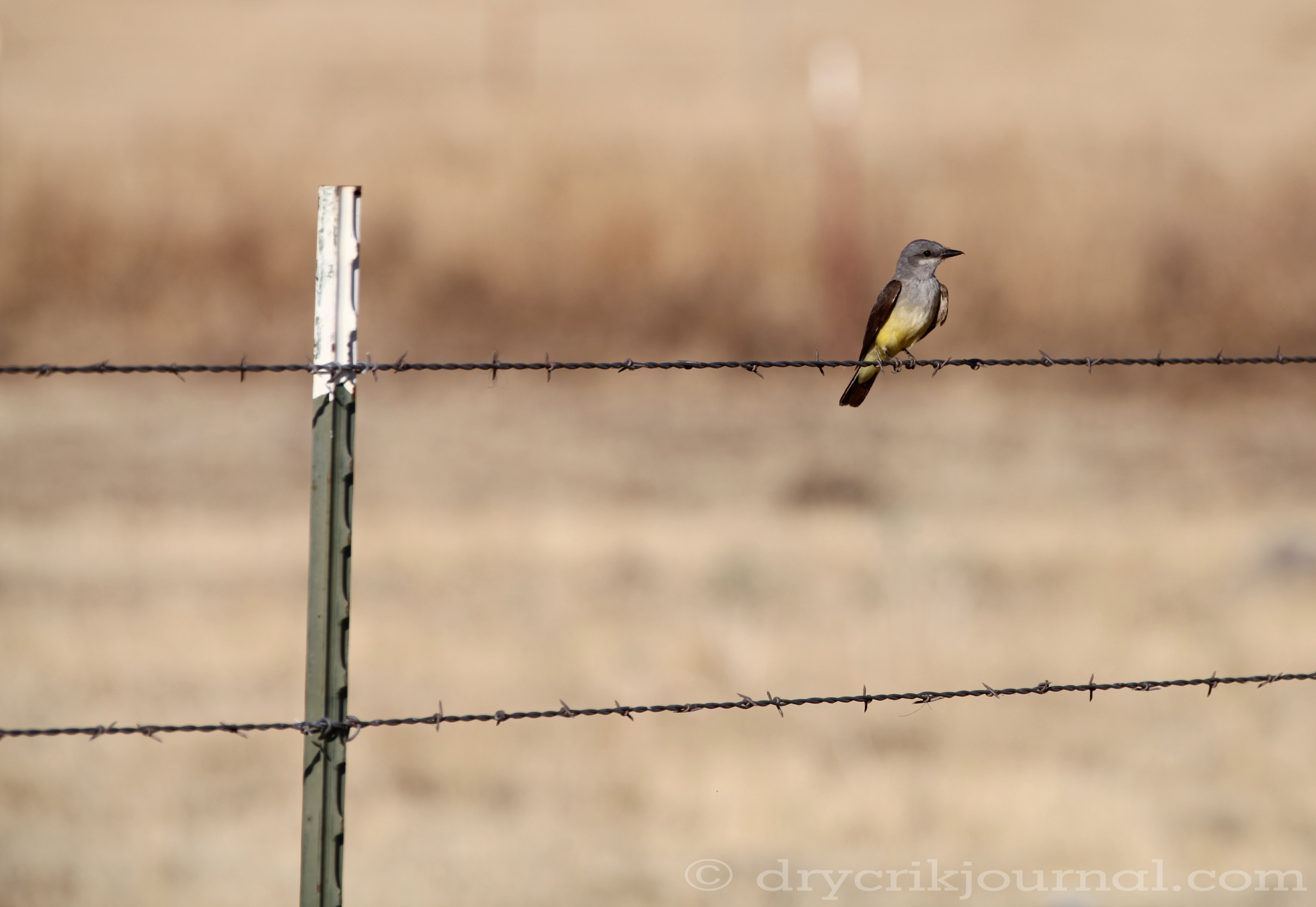
Among the small and nondescript, the Western Flycatcher was one of the first little birds I learned to identify as they seem to tread air while catching flying insects, darting quickly as necessary. Far more common than the crested, Ash-throated Flycatcher posted a few days ago, I include these photos to eliminate any confusion.

Always entertaining in the spring, they can be quite aggressive while nesting, escorting Red Tails and other larger birds away from their eggs and young, oftentimes sitting on the shoulder of a hawk while pecking its head in flight. I have even seen two flycatchers riding one Red Tail.

Empidonax occidentalis

Empidonax occidentalis

Wild Grape

 Wild Grape, Dry Creek, July 4, 2013

Wild Grape, Dry Creek, July 4, 2013

Button Willow

Cephalanthus occidentalis californica

Cephalanthus occidentalis californica

Cephalanthus occidentalis californica

Cephalanthus occidentalis californica

Aaron ‘Slick’ Sweeney spent a lifetime in this country before I came along fresh from college with only a few years of packing mules under my belt. He took me buck hunting for the first time when I was about eleven. He carried a broomstick and I my heavy British Enfield .303. We saw deer, but my eye wasn’t sophisticated enough to distinguish does from bucks on the run at a distance. I never shot.

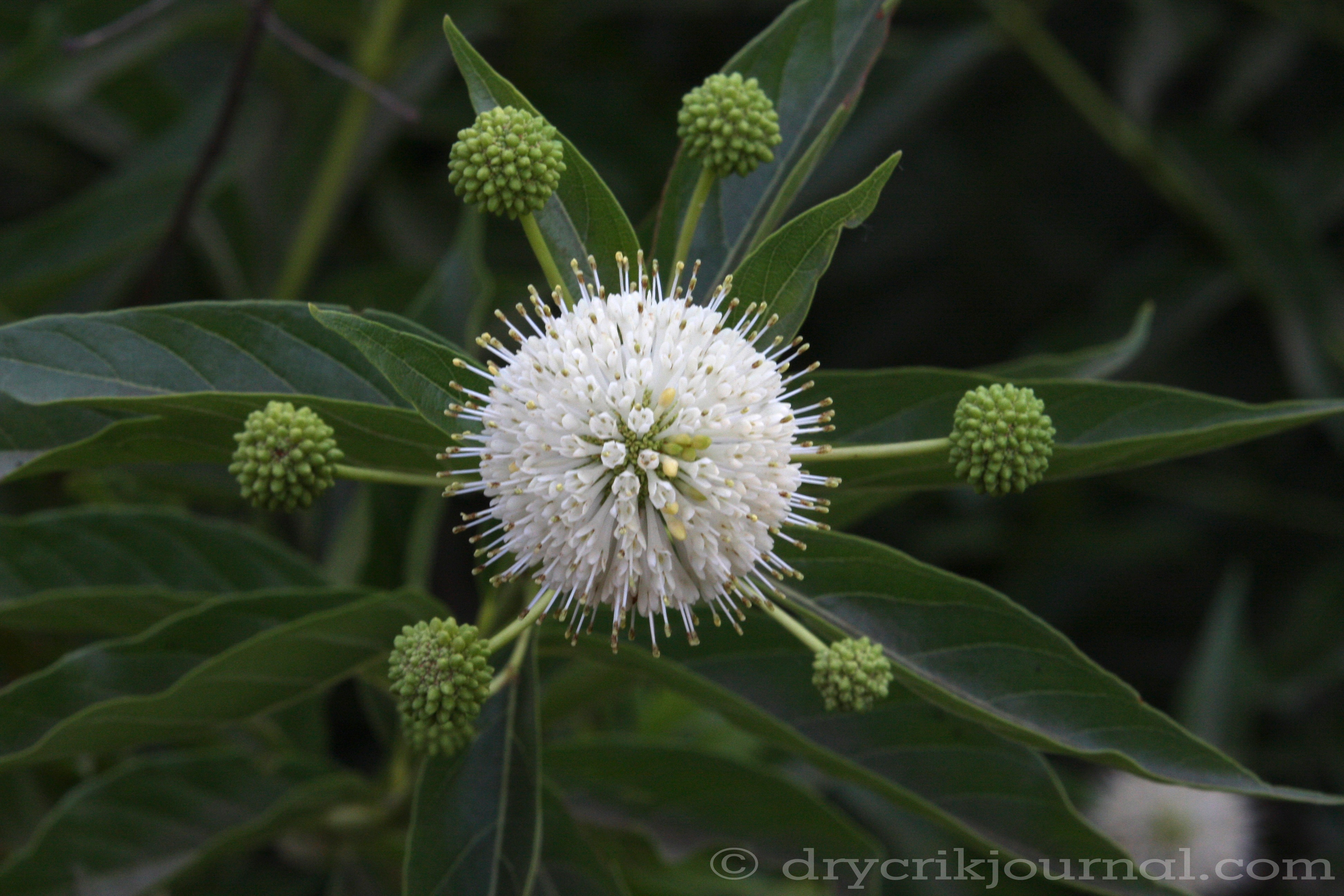
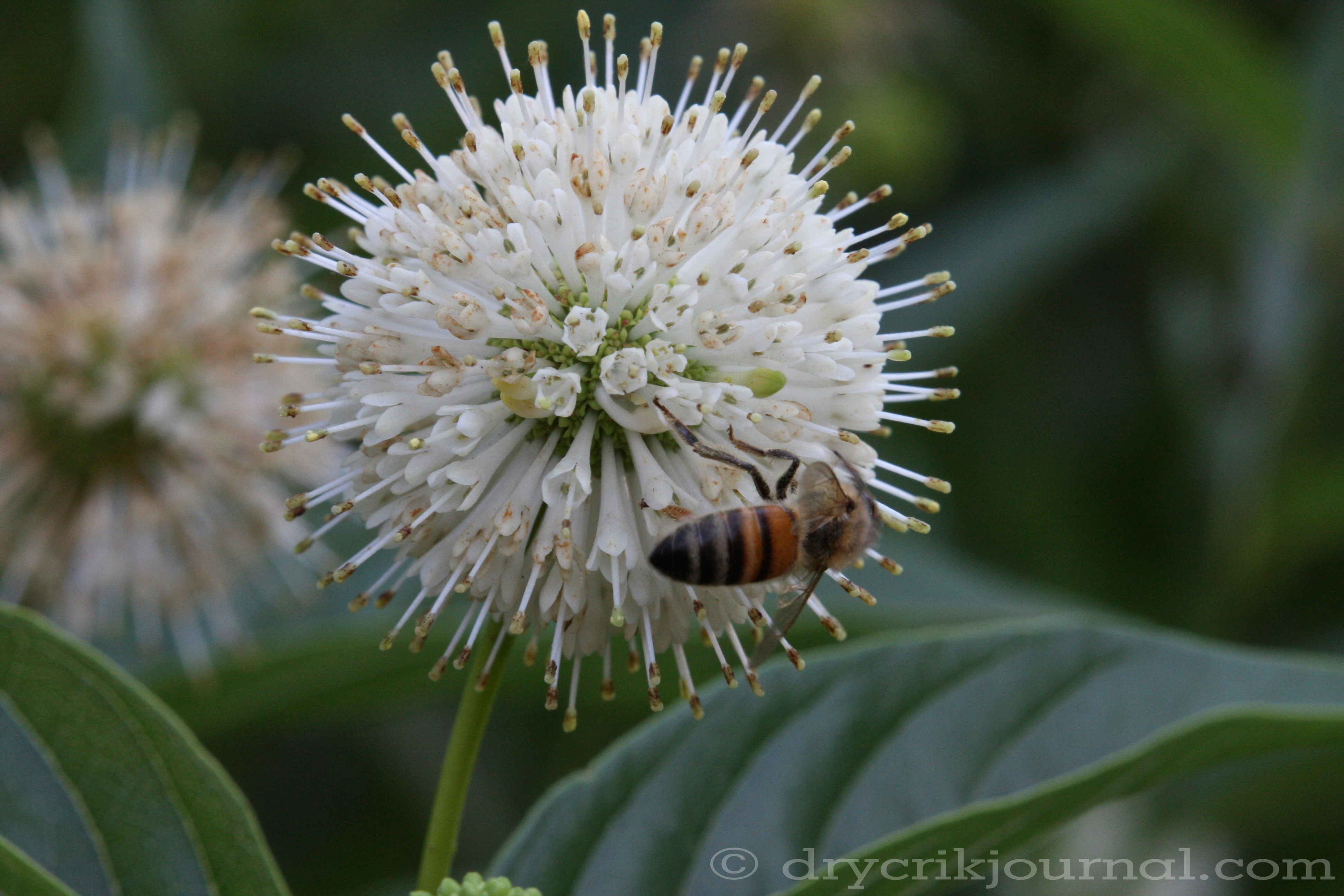
‘Button willow’ is descriptive enough to know one when you see one, and when he asked me one day in the early ’70s about the ‘button willow spring’ in a certain pasture, I knew exactly where he was talking about. He explained to me at that time that there’s almost always water enough to develop for cattle where there is a button willow tree.

Cephalanthus occidentalis californica

Cephalanthus occidentalis californica

                    Chorus:

                    It’s home to your home, wherever you may be,
                    It’s home to your home, to your own country,
                    Where the oak and the ash and the button willow tree
                    And the lark sings gaily in his own country.

                                 – Glenn Ohrlin (“The Button Willow Tree”, 1989)

                                 courtesy: The Mudcat Café