Monthly Archives: November 2012

WHEN NOTHING STAYS THE SAME

                                                  Nothing is nothing.
                                                  Nothing is not nothing.
                                                  Nothing is next to nothing.

                                                                 – James Galvin (“Woman Walking a One-Kick Dog
                                                                                Along An Asymptotic Curve”)


I

I want to be among oak trees
and big rocks that the natives held
sacred—solid and dense things

that neither charge nor change
much in tumultuous times—
good company for the spirit.

Quail have taken the garden,
moved-in for the moment, stroll
with impunity and giggle at

the cats. It hasn’t rained.
Only nothing stays the same,
but even that could change.


II

We walk the edge, hear voices
coming from no where, triggered
by circumstance, by details aligned

like stars in ever-expanding space,
black, we presume, as the ace of spades.
Yet, I hear my mother’s voice,

judgmental tone and see
through her buried eyelids
in a box above my father,

both looking up. How she hated
that perspective on her deathbed,
despite the new, light blue dress

for a closed casket—accepted
the inevitable like she always did,
like he trained her, begrudgingly.


III

We see Marilyn at the Country Club
at a table of survivors, widows or late
divorces, men gone on without them,

in a doctor’s soft collar she endures,
not interfering with her endearing
sarcasm. “I’ve been thinking a lot,” she

whispers, “about Margaret lately.”
“We have too,” I reply, two weeks
before Thanksgiving and the predictable

storm of alcohol during the holidays,
getting-even with my father, and the rest
of us, for all our expectations.


IV

I’ll be wearing khaki slacks, first pants
bought not blue denim for twenty years,
since my father’s funeral, worn now

only twice. She takes her time
critiquing the black Tommy Bahama top,
my leather Crocs to walk a tropic aisle

of plumeria petals swirling in a sea
breeze to give away my daughter
to a handsome, curly-headed Czech.

She is resigned to changing times, as she
shrugs-off her mother’s shrill judgment—
knowing in the end it was close

to nothing, that the only difference
it made was when she was alive,
always hearing voices from the void.

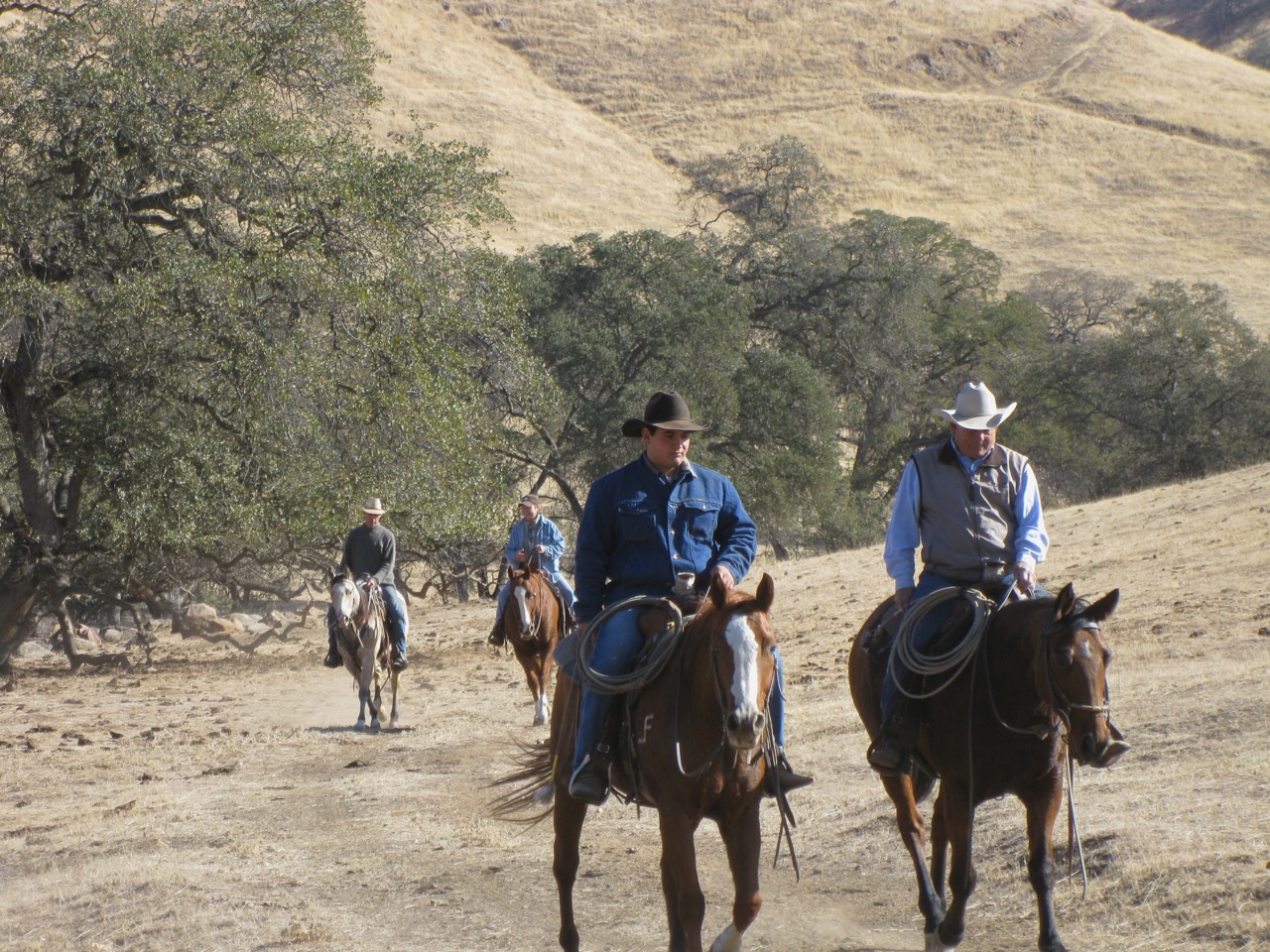
Moving the Wagyu

Having pulled the Wagyu bulls on February 8th, Monday and Tuesday we moved the first-calf heifers with Wagyu X calves up the hill where there’s more dry feed, after sorting off the heifers that are open or haven’t calved yet from our Angus clean-up bulls.

The Wagyu bulls were with the heifers for 80 days, providing 70% live calves as of today, one born dead and three unaccounted for. In the range of 3%, more than likely these MIAs fell prey to coyotes or the young Golden Eagle that hangs close by. Some of these heifers may have misplaced or forgot their calves, as the three mothers without calves are still wet, nursing someone else’s calf. In the mix with the numbers, the Wagyu X calves tend to be milk stealers, much more persistent than straight English calves, that also contributed to our MIAs. But all in all, we’re pleased with the percentages from our two year-old heifers.

Our remaining heifers have already begun having Angus calves, fairly easy to differentiate from the Wagyu X. When we brand the Wagyu X, we will tag and take a nasal swab of each to send to Snake River Farms to confirm what we think with DNA testing.

Douglas Thomason, Robbin, Zach and Clarence – November 13, 2012

THE COUNT

                         At least I know where my orange trees are.
                                   – Todd Dofflemyer

Cold in shade, in canyons,
or on the backside of mountains
where strays won’t stay between

sunlit ridges—like finding horses
at Five Lakes, in the Tamaracks,
standing in the first light of day.

How many pairs of boots
did I wear out tracking pack stock,
hearing the bell in my mind?

But always that moment alone,
empty-handed, searching,
sorting sign for the illusive truth

when we become boys again,
helpless and humbled
by circumstance and time.

Spreadsheets don’t fit
uneven ground that swallows
livestock—that seldom match

what’s in the corral. This is
no business for accountants
when the numbers move

to breach columns and fences,
or get inspired by the moment
to try an idea of their own.

IN THE DISTANT HAZE

                              Now I carry those days in a tiny box
                              wherever I go.

                                   – William Stafford (“Remembering”)

I feel for pocket-knife, keys and wallet,
handkerchief, cigarettes and lighter
before I pull on my boots, find my glasses

and pick which hat to meet the day’s
surprises, but this tiny box is always
with me. Before daylight, I crack the lid

to see what wants out on paper: a river,
a lake or Sierra pass take shape, pine smoke
curls through cedar boughs and I am

there with coffee before an eager fire
on another cold morning. Here money
buys nothing, and no more than paper

to ignite wet kindling after a thunderstorm,
all other urgencies are washed away, shed
downstream to mix and pool in the Valley—

like the Christmas flood of ‘67, when
they shipped food and freight into Visalia
by boat in May. We think we have

seen extremes, but the San Joaquin
has always been changing—begun
in the mountains, days above it all away.

BURRO CREEK, RIO SAN PEDRO

This is far as I want to go.

                    A series of cascades beneath
                    each tiny pool, clinging
                    to mossy rocks to cast a fly—
                    to catch a Brown. Remember

when you knew, heard
danger whisper in your ear?
Is this where I’ve come to die
so young? It could have been

anyone, any time, looking down
a cliff at death, waiting for a slip—
this place we fished as boys,
miles upstream, leapfrogging
for first cast on fresh water.
We came home with trout
you had to eat on Fridays.

                    My topo map of gray matter
                    where the Middle Fork flows
                    on granite through cedars—
                    my metaphor for everything.

Jeffers had it right, you know:
‘Let Them Alone’. Leave them
to their solitary art. Only a few,
like Maya Angelou, can fly
and fish at the same time.

A GRAND TREE

It happens gradually with time, the red bark peels
like paint, brittle limbs forget berries and leaves
when the roots grow weary of holding it all together.

I’ve been here before, to this Manzanita skeleton
well off the track, half on its side. I see the cut
and know the saw I used on a huge, uprooted other

half-a-stump, limbs all gone. The wind blows cold
and wants to rain miles from home as I start my Stihl,
bales of hay to thin cows fed. One young calf,

a perfect black Hereford cross with featherneck,
bald face, thick white belly and brisket, charges
to investigate, bucks and runs in circles, disrupts us all

to stop sprattle-legged—his curly head low before me,
challenging and bawls. I laugh and talk as if he were
a kid on the street and he relaxes to his mother

and the others that must endure his bully shenanigans.
It happens gradually with time, we grow efficient,
make plans, save steps, haul hay up and cordwood

down the mountain. These limbs I don’t remember
standing haven’t been dead long, bark the color of
coagulated blood—red heart dust from a grand tree.

WIN OR LOSE

                                        Then he’s no longer is an observer. He isn’t right,
                                        or wrong. He just wins or loses.

                                             – William Stafford (“My Father: October 1942”)

Like finding our glasses, FINALLY—we expect surety
to be handy, all of our basic certainties camped
on the nightstand, awaiting dawn like good soldiers.

My father pounded his need to be right into the table—
dishes, salt and pepper leaping to his command.
My brother and I studied well as my sister cried and

we all made excuses about the war and government,
except for mother, she never forgot or forgave him
long. I called it passion, but nothing stays the same,

time unravels even the best-knit tapestry, loose threads
in a breeze or bird’s nest, we’re tied to something
in the end. To follow the thread, I need good habits

to augment short-term memory, to balance necessities
like cigarettes and colored lighters that clutter landscapes,
ashes like town dog leavings on short-cropped lawns,

before I leave the house to face the world of men—
to construct a more common sense from the wild
metaphors and similes, just waiting outside the door.

I LOOK TO THE SKY

The pundits seemed less dramatic,
red wine in hand, asleep before
the results were in. A man hopes

for the best, that the heifers we gather
and process this morning, act
like good children, try to get along—

that we heed what Xiangmei suggested
in Elko, this country needs a lot of healing.
‘Seed Queen’ on the other side of the Sierras,

she has a green thumb, nurtures growth.
I look to the sky for patience, for thin clouds
thickening into rain enough to start the seed.

ELECTION DAY

Our polling place is nine miles away
on the other side of the second-closest town
and I offer my absentee ballot to Robbin

to vote, to double her voice among the two
hundred and thirty million in the U.S., or
the eighteen million registered in California—

half of which won’t vote. We’re inland,
the rural West, a shrinking minority. But
she still believes, reads and studies

the propositions, has an opinion I respect.
I’ll be glad when it’s over, perhaps forget
that this country doesn’t want to work

together anymore, when each of the elected vie
for an invite to every shindig on Easy Street
where it pays to do nothing. What an ego-trip

it must be to have arrived, play the angles
to pay all the contributors back twofold
the old way. Our polling place, nine miles away,

Sacramento two hundred and fifty, and no one
in Washington knows Lemon Cove exists—
our distance much greater than time and space.

STARTING OVER

Progress doesn’t bog you down, weigh
heavily and clutter the landscape, rather it
cleans as it goes into endless time and open

space to balance silence with the sweet
promise of convenience, making room
to plan ahead, options other than gridlock.

We cleaned the shed of useless history
saved just in case, like old farmers do—found
that photographs of young innocence fade

just like we do, relieved to let them go.
Twenty years we’ve done without
three dumpsters full, another ecosystem

for mud-dobbers and black widows,
rats and feral cats beneath a leaky roof.
Next the shed goes, before starting over.