
Railroad, October 11, 2011
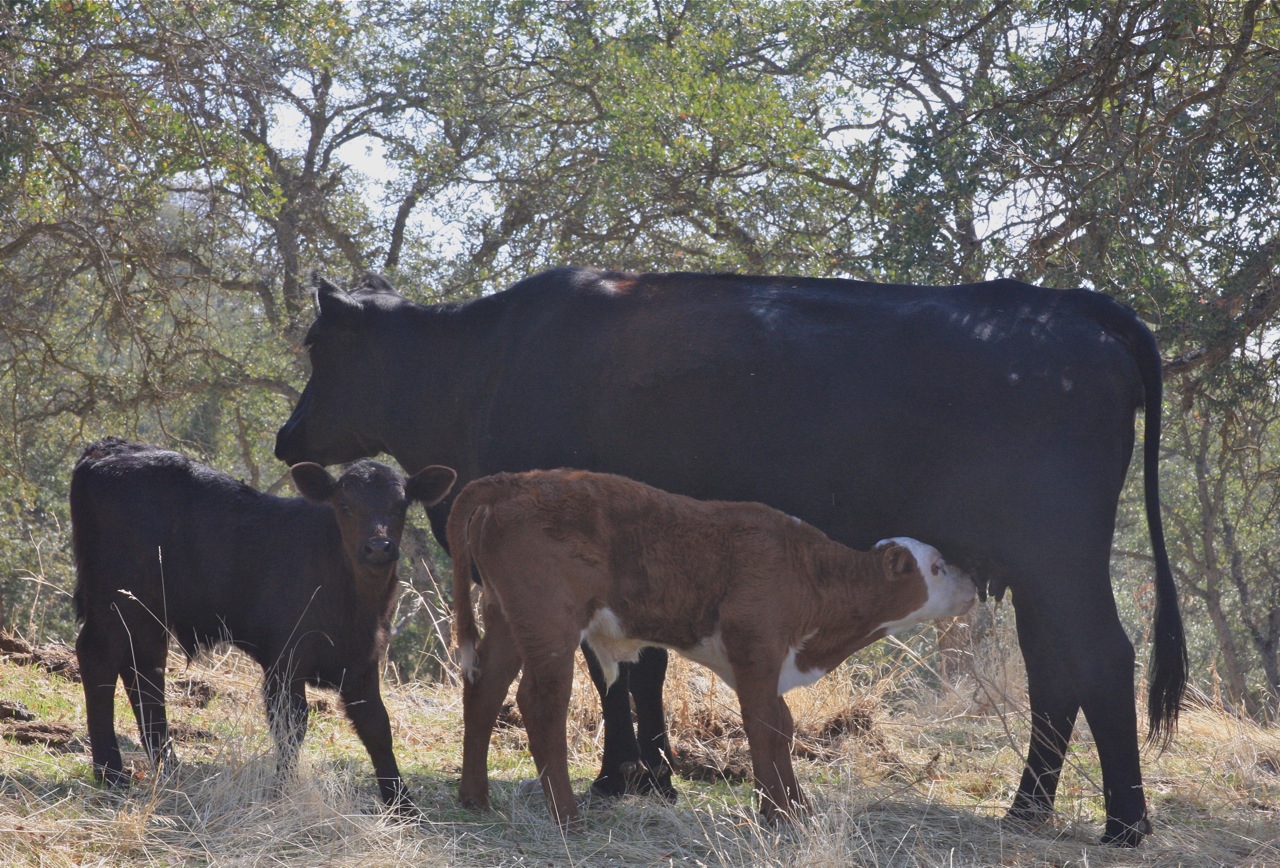
Since August, we’ve been focusing our attention on our first-calf heifers close to the house on either side of the creek, a hundred head or so of coming two year-olds that are having and raising their Wagyu-cross calves, checking them daily and feeding twice a week. What began as ten bales evolved to thirty quickly as the calves came, trying to keep the young cows in shape to cycle and breed back to Angus in six weeks to become a productive part of our cow herd. Not all make the team, but we give them the best chance we can.
As we come to the end of their exposure to the Wagyu bulls last winter, our focus has changed to the commercial cows that occupy our higher and less accessible ground, also calving. Only those cows that bring a calf to the branding fire remain here, those that don’t go down the hill, some for a second chance, some to town. Depending on the strength and amount of last year’s dry feed, these cows can stay in shape and raise a calf much better than the heifers, but often need a little hay. We tend to understock our high country because of the time and cost to have to feed these cows on a regular basis.
It’s always been a balancing act, feeding and maximizing the use of hay, not waiting too long to start feeding and then having to feed large amounts to catch up, or too often to where the cows chase the pickup. And now that hay has become so expensive and my knees begrudge every bale, the balance becomes even finer, demanding an even closer appraisal of their flesh and health.
Also in this balance is the start of the new grass after the first good rain germinates the seed, when the cows and calves leave for the ridges and taller feed. Some years when rain comes late in the season, the grass is slow to grow and the cows still need supplement. Some years when the rain starts the grass early with warm temperatures, it dies before the next rain comes along. This year, our 1.5 – 2” rain followed by a week warming near 90º today, we have the quickest and thickest start to new feed that I can remember, (yet my memory’s becoming suspect). But, for the most part, the cattle, thankfully, have lost most of their interest in alfalfa.
With days growing shorter in this balance, much depends on our weather for the rest of October.




 drycrikjournal