Tag Archives: Drought

San Joaquin Valley Quail


20151108-IMG_5400


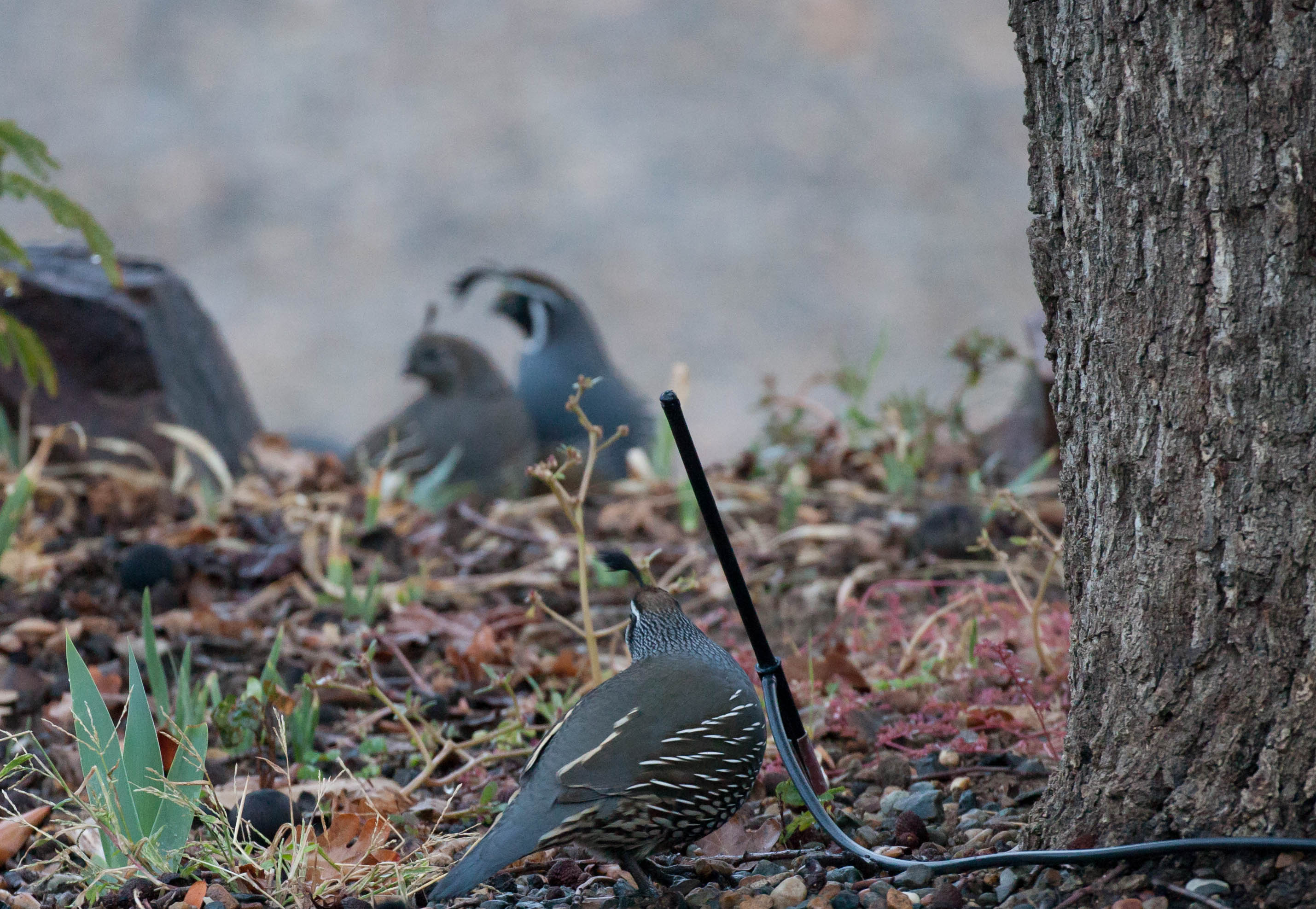
Four years of drought have reduced the quail population on the ranch by at least half, but the covey around the house has fared much better than most. There’s ample cover here from bobcats and Cooper’s Hawks, and they don’t seem concerned with our strain of half-feral cats. But it’s been the regular irrigation of the garden that holds them here most summers.

The Valley Oak that we planted years ago and a resident Blue Oak have also benefited from the regular irrigation, both with good crops of acorns, most of which have fallen to the ground now. Whether crushed underfoot or decayed and rotting, they attract the quail, much to the displeasure of the woodpeckers who dive and try to drive them away from the Valley Oak, their tree of choice.

For the past month or so, the morning routine of the covey is to leave the Palo Verde tree where they spent the night, to go through the garden and stop beneath the Blue Oak for a snack, then parade across the yard to the Valley Oak, their tree of choice, for their main course. They seem to be coming to breakfast earlier, or perhaps the woodpeckers are sleeping in, but they haven’t been harassed lately as our temperatures drop to around 40°.

A little cold now for coffee outside, I finally went for the camera yesterday, having chastised myself for weeks for too many missed opportunities. Overcast after a light rain overnight, photographing quail and maintaining any depth of field was a challenge. Constantly moving and pecking, manual focus was out of the question and auto focus limited me to a single bird or two. My philosophy is to shoot lots of photos, especially with a digital camera, to sort out later. The photo above has survived some severe cropping yet maintained its unique feeling thanks to a good lens.

Trivia: Quail were among the messengers in native Yokuts folklore.


YEAR OF THE BEAR


20151021-IMG_5134


1.

Don’t care,
go anywhere,
eat anything—leave little

evidence behind, but
barefoot tracks,
whole berries in black scat.

 
2.

Drought and fire,
slim pickin’s high,
bears lumber off the mountain,

hundreds in canyons
trying to make a living
on damn few acorns—

grubbing for bugs,
trashing trash cans
taking pets and an occasional calf.

Shaggy invaders
from the past
like science fiction.

 
3.

Oso,
Ursus arctos
own the moonlit mountain town
on Halloween,
rummage door to door,
wait on the porch for more
of anything to eat.
Trick or treat.


BETTER-NATURED


20150806-IMG_0399


When it rains, all the trees are leafless
women dead or dying, chests bared
to low gray skies, canyons running full

between limbs and hardened breasts, crying
helplessly with hope, with a taste for life.
And we join them, eyes cast upwards

to bare our thirsty flesh to gods returned
from far diversions, drink until the dust
runs off to settle with the mud.

We will sigh, rest easy for a moment—
count ourselves among the blessed
survivors, plod along with the better-natured.


BEARS


20150929-IMG_4938


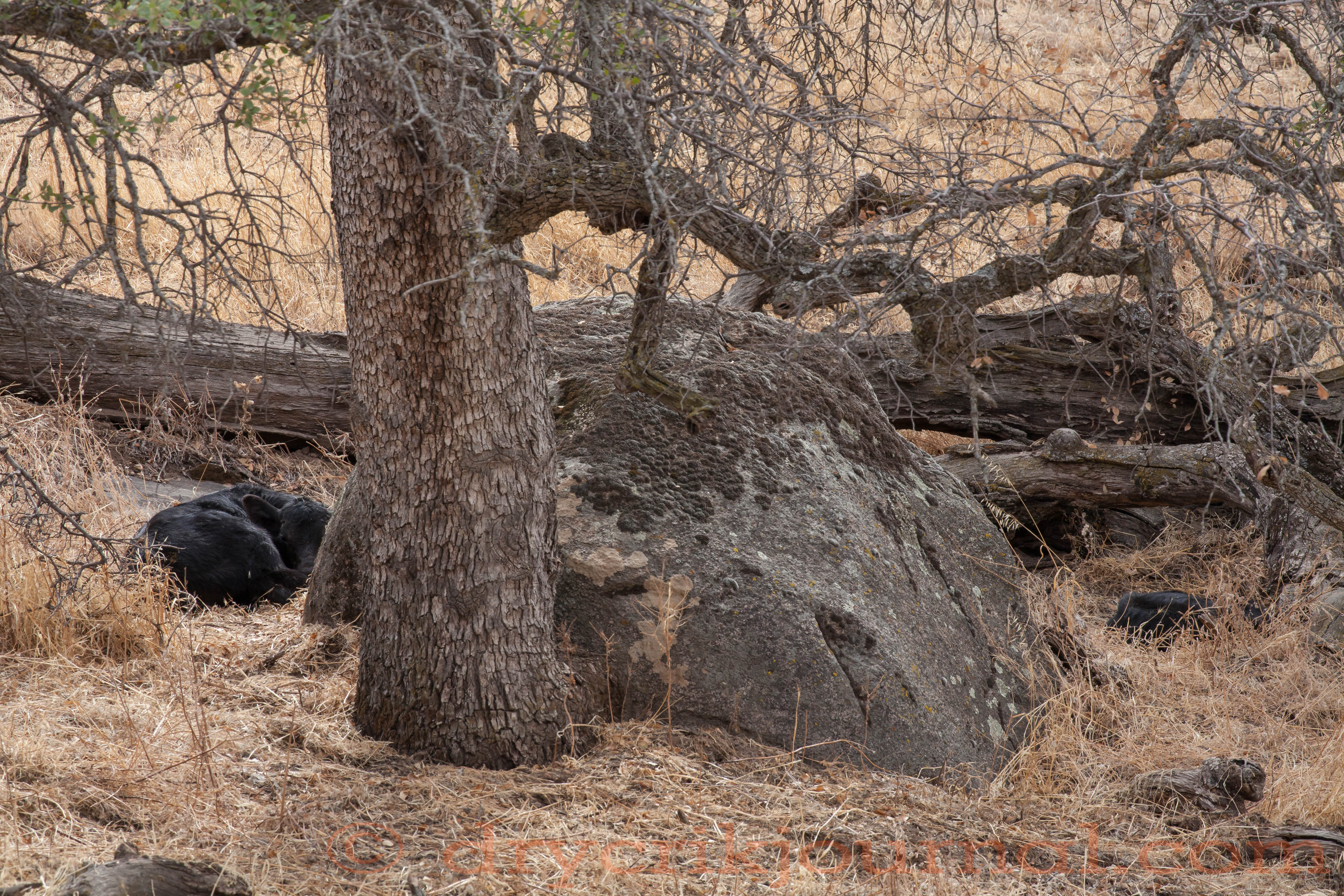
While calving, our cows are well aware of the recent influx of bears, displaced in part by the 150,000 acre Rough Fire in Kings Canyon, but primarily due to the drought and the lack of anything to eat at the higher elevations. Furthermore, there’s not much here to eat either, as only one in three or four hundred oak trees has any acorns and the percentage of oak trees that have died because of the lack of rainfall the past four years continues to increase and probably approaches 40% now. The remainder have lost most of their leaves, but there’s bear sign everywhere we go.

On Monday on my way to pump water at the Paregien Ranch, I found the mothers of these two calves high in Ridenhour Canyon, taking turns going to water while the other babysat. Though I didn’t see the calves on the way up, I knew the cows had been sucked. When I came down a few hours later, I found the cows and calves had moved to the top of a ridge. Both were well hidden and only a day or so old.

Most cows sort themselves before calving, as the ones close to calving begin running together apart from the bunch as they prepare their nurseries ahead of time. We’ve lost calves to bears in the past, but usually those of first-calf mothers. Older cows, or cows together, can bluff most bears, but with so little to eat in the middle of calving there are no guarantees. Bears will eat anything, and older bears unable to rummage for food begin to acquire a taste for veal.

Yesterday, on my way up to work on a trough, I found the same two cows together higher yet in the pasture, making their steep round trip to water to close to a mile. Once again, I didn’t see the two calves until I came off the mountain.


POSTCARD HOME


20150806-IMG_0414


Dear Dad, you never saw a drought like this,
four years running, so few cows left on the ranch—
nor I a war like yours: bait for Nazis in the Bulge.

The world has changed, the planet ever-changing:
ice caps melt, oceans rise, seasons out-of-sync
with what we know. New ground to graze

now that I am old. Nothing in the mountains
for bears to eat, they roll down ridges, track
dusty roads on the scent of fresh placentas,

lion pads everywhere you go. We cannot leave
this canyon, these calves, alone—all living
off this piece of ground that we are so bound.


CIRCLES IN AUGUST


IMG_0456


We track circles on the same ground
through brush and granite rock,
over mountains and down canyons

patched with spooky skeletons
of trees, broken limbs at their feet.
Last year’s blond and brittle feed

folds into dust under foot, under wheel
into decent firebreaks swirling around us
as we check springs and clean water troughs

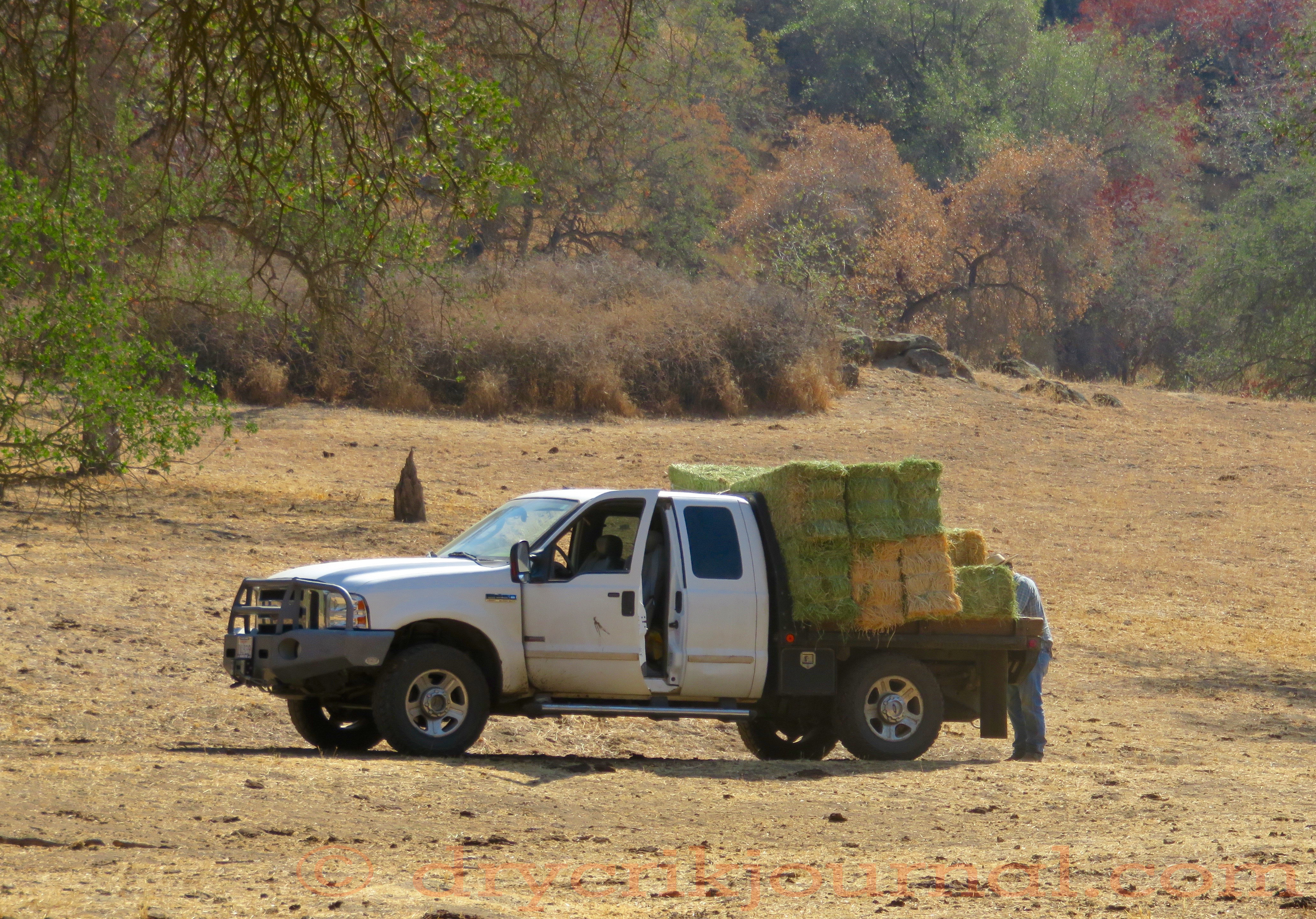
measured with our eye. We carry hay,
fat cows come running six to the bale
once a week, fresh calves knocking

at the door of a new and wobbly world—
waiting to inhale one hundred degree heat.
Too soon to rain, we plod like cows

in dusty circles, all soft trails
lead to water and shade, or to the hum
of solar pumps in abandoned wells.


DEAD AND DYING

 
20150806-IMG_0391


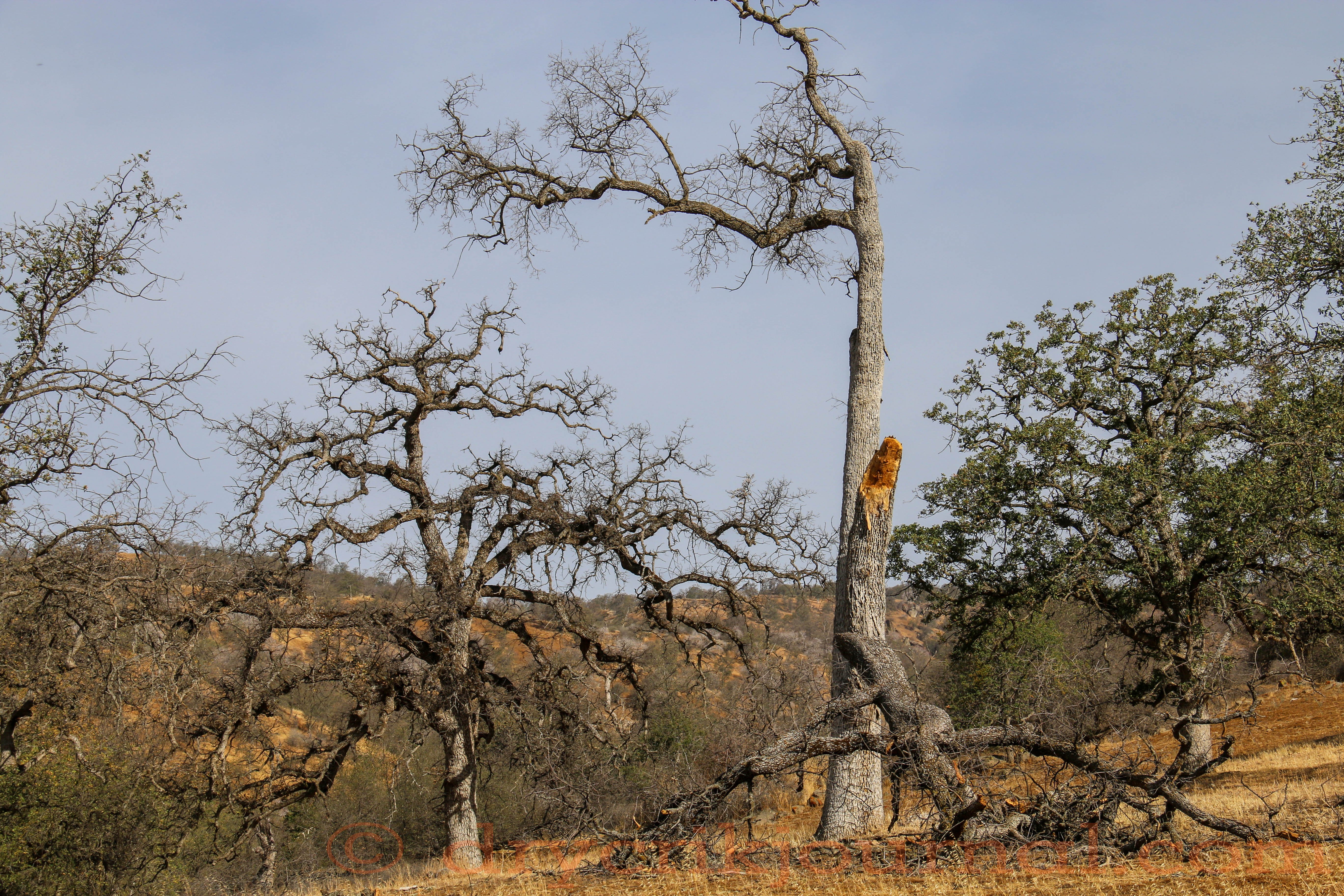
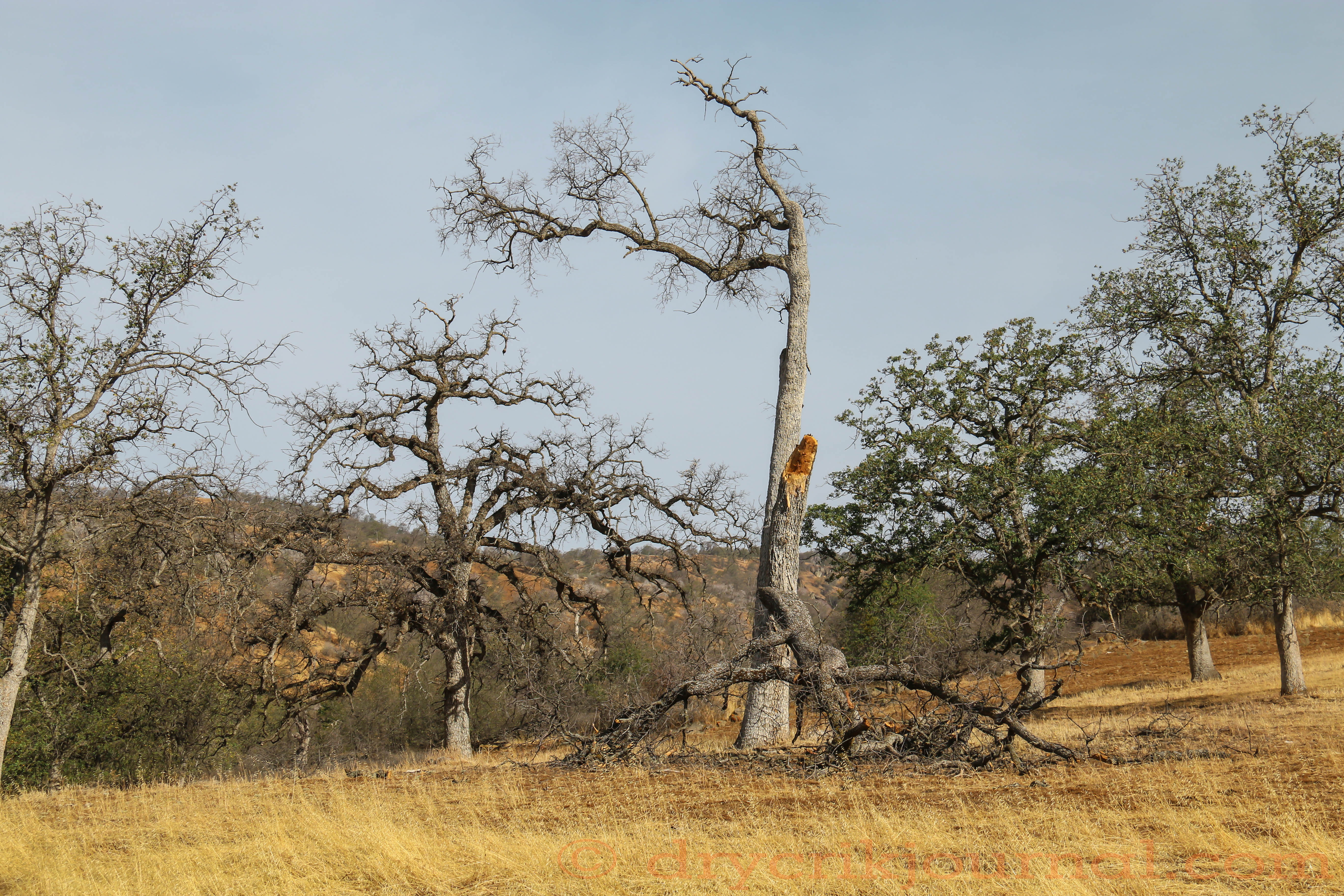
The dry casualties,
more cordwood and deadfall fuel,
litter the landscape.


IDES OF AUGUST, 2015


20150816-IMG_0563


The hills black,
faint pink cloud
over Sulphur

in first light cool.
Nights grows longer
with the shadows

when we dream
of winter storms,
four years dry.

We feed our future hay
until the time comes
we have nothing else to do.


COLORS OF AUGUST 2015


Following an old hill track within dry
grasses and trees, dust worn thin,
soft and deep by pad and hoof,

dark shadows reach for shades of brown.
Once blond heads of wild oats bent
by breezes, now bleached by the sun,

hang empty and delicate on hollow stems
awaiting grazing or a rain to lay them down
atop the rosy clutch of fillaree

claiming ground in brittle curls beneath.
Blue Oaks gray with turquoise leaves,
leather-like among the naked skeletons

of grandfathers shedding limbs, lesions
of good hardwood, too heavy to support
without water on these battlefields,

the wounded and dead-standing, but
decomposing monuments to better centuries—
a range of color spreading into dying light.


HALF & HALF


20150719-IMG_0300


Half full, half empty—
but differing perspectives
to prove fences work.


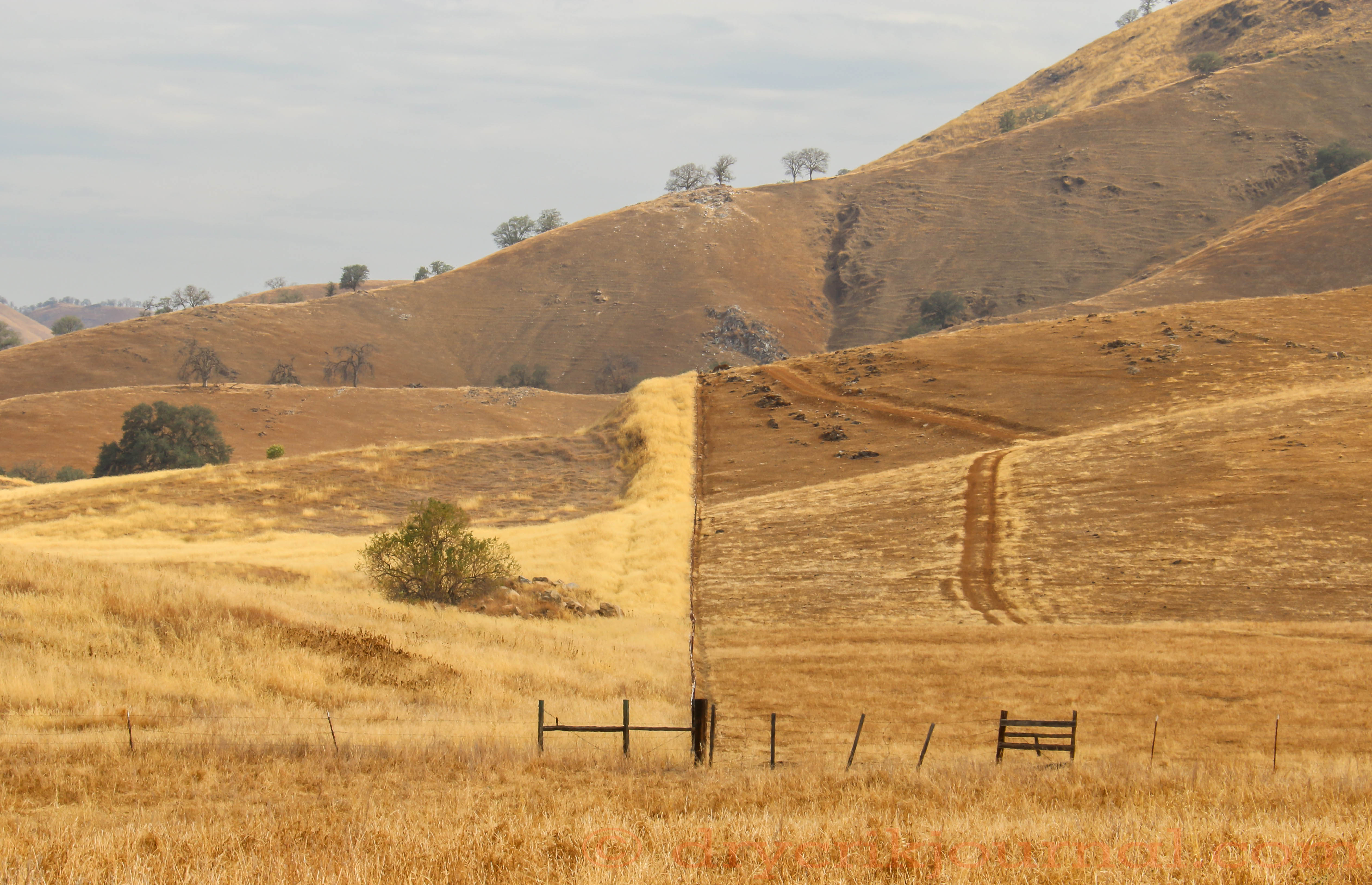
WPC (1) ‘Half & Half’